Indoor air quality services in Hanover, MD

The Impact of Cold Weather on Indoor Air Quality

Indoor air quality is critical for your family’s health and effectively and efficiently heating your home. However, cold weather can pose a unique challenge to maintaining good air quality. The air quality is complicated by naturally spending more time indoors than over the warmer months. This guide will explore the indoor air quality challenges that cold weather brings with it and how you can mitigate them to keep your home’s air healthy.

The Science of Cold Weather, Humidity and Air Quality

A good place to start is understanding the intersection between cold weather, humidity and airborne contaminants. Particulate air contaminants dry out when relative humidity drops below ideal levels of 30% to 50%, making them lighter and allowing them to stay in the air rather than falling on surfaces.

Relative humidity is a ratio that describes the maximum amount of moisture the air can contain before it condenses out of it. Hot air can hold more absolute moisture than colder air. Therefore, even at 30% relative humidity, colder air has less absolute moisture than warmer air.

Finally, there’s the dynamic of how air flows based on temperature. Warmer air is less dense than colder air, which allows it, and the contaminants it contains, to float up. Conversely, colder air stays closer to the ground, keeping more contaminants trapped. The dynamic of cold air outside with warmer air inside further traps more contaminants inside your home.

Ventilation and Winter Weather

Ventilation is extremely important for maintaining your home’s air quality, exchanging stagnant indoor air with fresh outdoor air. The Environmental Protection Agency (EPA) has found that indoor air often has two to five times higher contaminant concentrations than the air outside, making it incredibly important to have proper ventilation throughout the year.

Ventilation over the winter months can become more problematic because you’re less likely to open windows or leave doors open. Rather, you rely more on natural and mechanical ventilation. This can include mechanical vents like the range fan in the kitchen and the exhaust fan in your bathroom. However, you may need more ventilation.

A popular option is what’s called an energy recovery ventilator (ERV). These are mechanical vents that are installed as part of your HVAC system. They contain a heat exchanger that allows outgoing warm air to preheat incoming cool air. These improve your home’s heating efficiency, lowering your heating costs and reducing the wear on your heating system.

Use of Heaters and Fireplaces

The cold weather also means that you’re using one or more methods to heat your home. Gas furnaces, fireplaces, wood stoves and any other heating option that burns fuel can add contaminants to your home’s air.

Gas furnaces, one of the standards for heating homes around Hanover, produce hot exhaust, which heats the air circulating through the system. That exhaust travels through a heat exchanger before moving up into the flue and out of your house. However, a crack in the heat exchanger, or a leak anywhere in the exhaust system, can allow toxic gases to escape into your home, including carbon monoxide. This is why annual furnace maintenance and a functional carbon monoxide detector are both critical.

Fireplaces, or any option that burns wood in your home, can add substantial air contaminants. Depending on how well your flue is working, your fireplace can add carbon monoxide, soot, volatile organic compounds (VOCs) and butadiene to your home’s air.

Keeping current on maintenance is one of the best ways to reduce heating system contaminants. Furnace maintenance includes replacing your air filter, cleaning the system and optimizing its performance. Fireplaces need routine maintenance and cleaning. Regularly clean out the ash from the firebox and clean the inside and outside of the glass doors. Have the chimney professionally cleaned at least once each year to prevent a dangerous buildup of creosote and other flammable contaminants.

Seasonal Smells

The colder months bring with them the holiday season and gatherings. Part of setting the mood for both family and friends is scenting the air to match the event. Whether the air is scented by baking cookies and cooking flavorful meals or you use air fresheners, it can add contaminants to the air.

Of particular concern are artificial air fresheners, which often release VOCs like formaldehyde into your home’s air. To avoid this, stick with natural fresheners, such as essential oils and natural potpourri. Whenever possible avoid using aerosol products like cooking sprays. Use your range hood fan whenever you’re in the kitchen preparing goodies or meals.

Increased Risks of Moisture Issues

While the natural humidity tends to fall over the winter, the colder months bring with them an increased risk of moisture-related issues. This often happens because of a well-sealed home and insufficient ventilation, or failing to use the ventilation that’s available at the right times. The moisture from cooking, cleaning and bathing then gets trapped in the house, quickly leading to issues with mildew and mold.

One of the first ways you’ll notice a moisture problem in your home is condensation on the inside of your windows. Preventing this is as simple as keeping an eye on your home’s relative humidity and managing it as needed. If your home’s humidity is greater than 50%, consider using a dehumidifier.

Spending More Time Inside

The EPA found that Americans, on average, spend about 90% of their time indoors, which is especially true over the colder months. The cold weather also means that your furry family is indoors longer. The result is more contaminants like carbon dioxide, pet dander, viruses and bacteria.

The best way to help mitigate this is to use air purification methods. These may include a variety of filter options, from high efficiency particulate air (HEPA) filters to activated carbon, ionization and ultraviolet light purification. Depending on the specific needs of your home, options may range from individual room models to those that install as part of your HVAC system.

Pests: Fleeing the Cold

Pests, like insects and rodents, are always annoying but also contribute to air pollution. The winter is especially problematic as these pests seek warmth inside. Contaminants that these pests bring with them include dander, feces and urine. Further, trying to deal with pest problems can exacerbate air quality problems from pesticides and glues.

The first step to dealing with this is preventing it in the first place. Seal any leaks or cracks that can allow these pests to gain entry into your home. Use natural barriers to further repel these pests from the outside. Use filters and purification devices to help remove the pollutants that make their way inside.

Contact Us Today

People around Hanover trust their home comfort and repairs to the experts at Beltway Air Conditioning and Heating. Our team proudly provides indoor air quality solutions like air purifiers, humidity control and carbon monoxide detection, heating and cooling installation, maintenance and repair. We also offer a wide range of residential plumbing services like leak detection, plumbing installation and repair and drain cleaning. Call to schedule a consultation with one of our indoor air quality experts to ensure your home is ready for this winter.

AUX heating in Hanover, MD

7 Common Myths About Air Purifiers

Air purifiers can be a great way to improve the quality of the air inside of your Hanover, MD home. Portable units exist and can be moved from one room to another. However, there are also whole-house air purifiers that address all the air inside your home at one time. Air purifiers are a piece of equipment that is often misunderstood. This leads to many people choosing not to use them. Let’s debunk some of the most common myths about air purifiers.

1. Air Purifiers Eliminate the Need to Dust

While air purifiers can do a great job at removing particulate matter from your indoor air, there will still be some degree of dust and particles that remain on the surfaces of your home. It’s a good idea to keep up with regular cleaning of your interior, including dusting and vacuuming. These cleaning methods, combined with air purification, can help promote a much healthier environment in your Hanover residence.

2. Air Purifiers Kill Germs

This myth isn’t entirely incorrect. There are some types of filtrations and technology that can reduce bacteria, viruses, and pathogens that are in your home. However, more basic units may lack this ability. If you’re concerned with germs, opt for an air purifier that uses HEPA filters. Because of how tightly woven these filters are, they remove up to 99.97% of particulate matter in your indoor air. This includes bacteria and viruses, which become trapped in the filter.

You can opt for an air purifier that includes UV-C light technology. As air passes through UV-C light, microbes are inactivated by destroying their genetic material. This can help reduce the number of illnesses that are passed throughout your home.

3. Air Purification and Ventilation Are the Same

Air purifiers are designed to remove particulate matter from the air. Ventilation refers to the process of air exchange between the inside and outside of your home. Some degree of ventilation is necessary to maintain healthy indoor air quality. A home that has a very airtight seal will allow particulates, carbon monoxide, moisture, and volatile organic compounds to build up over time. As we are exposed to these contaminants, our health can be affected. Poor indoor air quality caused by reduced ventilation can lead to symptoms such as allergic rhinitis, coughing, fatigue, headaches, inflammation, and more.

If your home would benefit from increased ventilation, there are several changes that can be made. Aside from just opening your windows for a period each day, you can utilize the exhaust fans that are in your bathrooms and kitchen. These fans expel air from the interior of your home to the outside, allowing for fresh air to replace it. A ventilation system can be installed in your home. Through a series of mechanical fans and vents, old air is removed while fresh air is brought in.

4. Air Purifier Size Doesn’t Matter

Many homeowners assume that an air purifier will reduce particulate matter regardless of its size or how powerful it is. Portable units remove a minimal amount of particulate matter because of their size. Also, it’s inconvenient to have to move this unit around from one room to another. A whole-house unit should be selected based on the square footage of your home.

Other considerations include the contaminants that you’re dealing with. If your home has many volatile organic compounds in it, there are smokers living in your home, you have several pets, or pollution in the area is a concern, it will likely be beneficial to upgrade your purifier to something that’s powerful enough to handle all these concerns. Our team at Beltway Air Conditioning and Heating can help you determine what type and size of whole-house purifier you need based on an indoor air quality report and the specifics of your home.

5. Air Purifiers Filter Everything

With so many different potential contaminants affecting the inside of homes, it can be difficult to decide what kind of air purifier to invest in. It’s important to note that not all purifiers do the same thing. Some are very effective when it comes to removing particulates from the air. This includes pet dander, dust, mold spores, pollen, etc. Standard filtration won’t remove things like volatile organic compounds. To remove VOCs, you’ll want to invest in air purification that uses things like activated carbon filtration. Formaldehyde and other chemicals are absorbed by the activated carbon, preventing it from circulating in your home.

6. Air Purifiers Are a One-Time Investment

A lot of homeowners justify the cost of an air purifier because they think it’s a one-time investment. While this is a very smart investment to make for your health and well-being, there is a certain degree of maintenance and upkeep that your purifier will require over time. Depending on the type of system that you have, you’ll likely need to replace its filters periodically. Some filters are much more expensive than others. HEPA filters tend to be more expensive than a traditional pleated filter, but they do a better job at promoting healthy indoor air. Activated carbon filters are also pricey, but they’re a great way to reduce your exposure to VOCs.

Extremely advanced purifiers can result in hundreds of dollars being spent on filters each year. If this isn’t something that you can keep up with, it’s a good idea to choose a purifier that uses more affordable filtration. We can help you determine what kind of unit will remove the specific contaminants in your home while also helping to stick to a reasonable household budget.

There are some purifier units that utilize washable filters or electrostatic plates that need to be cleaned and dried before re-inserting them into your air purifier unit. This is a great way to reduce maintenance costs over time.

There may also be repairs and maintenance that are needed along with the routine maintenance of your HVAC system. You can have our team look at your air purifier when we’re at your residence for annual maintenance. We can clean the interior components of your purifier, inspect everything, and make repairs as needed.

7. Air Purifiers Address Indoor Humidity

Unfortunately, air purifiers aren’t an effective tool to use if you’re dealing with too much or too little moisture in your home. In this situation, you’ll want to investigate having a whole-house humidifier or whole-house dehumidifier installed onto your HVAC system. This is another great way to promote healthy indoor air. Air that is too moist can hang on to a greater amount of particulate matter. Dry air can cause your sinuses to feel dry and irritated.

If you would like to learn more about using a whole-house air purifier in your Hanover home, reach out to our team here at Beltway Air Conditioning and Heating. We offer the installation, maintenance, and repair of air purification and filtration equipment. We also service all types of heating and cooling equipment. We perform duct cleaning, indoor air quality testing, thermostat service, and more. Contact Beltway Air Conditioning and Heating today to schedule an appointment.

Thermostat repair in Hanover, MD

How Does Humidity Affect Indoor Comfort?

When it comes to interior comfort, humidity is a major factor. We are all vulnerable to the negative effects of excessive or inadequate humidity on our health, our homes and our quality of life. If homeowners are aware of these effects, it becomes easier to make a home healthier and more pleasant place to live.

Dry Skin and Irritation

Keeping our skin supple and healthy requires a specific amount of moisture. Skin dryness and irritation are two of the most noticeable symptoms of low indoor humidity. Extremely dry air, especially in the winter when heating systems are running, can even cause skin to become flaky, dry, and cracked. This can be especially problematic for people with sensitive skin or skin problems like eczema.

Increased Risk of Respiratory Issues

Air humidity is an important factor in lung health. Mold, mildew, and dust mites — all of which can cause allergic reactions — grow easily in environments with too much moisture. Allergies to these substances can set off episodes of asthma and other respiratory difficulties and allergic responses. Conversely, when relative humidity is low, nasal and pharyngeal mucous membranes become less lubricated and less effective at capturing and expelling airborne pathogens. As a consequence, respiratory problems are more likely to arise, making infections and diseases more prone to spreading easily.

Dehydration

The use of heating systems during the winter months can cause low indoor humidity, which can lead to dehydration. Increased fluid loss through the respiratory tract and skin occurs when air becomes drier because it takes moisture from our bodies. Symptoms include dry mouth, headaches, and exhaustion. Neglecting to treat dehydration can lead to more serious health complications, such as kidney issues or, in the worst circumstances, heat-related diseases.

Worsened Cold and Flu Symptoms

When breathing dry air, the nasal passages can become inflamed and dry, making it more difficult for the body to ensnare and eliminate germs. Not only can this prolong the effects of common colds and flu, but it can also make them worse. A dry throat, for instance, can cause itching and pain, while a dry nose can cause stuffiness or even bleeding. Improving the relative humidity in your house can help reduce these symptoms by maintaining moist mucous membranes, which are better equipped to fight off illness.

Increased Risk of Static Electricity

When there isn’t enough moisture in the air, electrical charges can accumulate on surfaces and garments, a phenomenon known as static electricity. Because of this, touching metal items or other people might cause unintended shocks. It can be annoying since it messes with gadgets and makes managing things like clinging clothing or frizzy hair a real pain. The presence of static electricity is a key sign that the humidity level in your home might be too low.

Difficulty Sleeping

Humidity levels, whether too high or too low, can impact how comfortable and pleasant sleep is. Because perspiration takes longer to evaporate in damp air, being in a humid environment hinders the body’s ability to cool down. As a result, the air may feel warmer than it actually is, which can cause discomfort, restlessness, and trouble falling asleep. Low humidity can cause dry airways and nasal passages, which in turn can also make it uncomfortable and difficult to breathe easily when sleeping.

Increased Perspiration

You might perspire more than normal if the relative humidity in your home is high. Sweat is the body’s natural way of cooling itself, but when the air is too humid, it can’t evaporate as quickly. In addition to adding to the risk of overheating, this can cause an unpleasant, sticky sensation. When combined with physical exertion, it can lead to heat stroke or heat exhaustion in the worst-case scenario.

Dry Eyes

When relative humidity is low, it can irritate and dry out the eyes, which is bad for eye health. This is because the tear film, which typically covers and protects the eyes, can evaporate more quickly in dry air, leaving them vulnerable and uncomfortable. A gritty sensation, redness, and itching are signs of dry eyes, which can make it feel like something is in the eye. Low humidity can also make wearing contact lenses uncomfortable and can potentially raise the risk of eye infections for some people.

Damage to Wood Furniture and Floors

Wood has a natural tendency to absorb and release moisture, depending on the humidity of the air around it. Cracks, splits, and warping can occur when wood dries out due to low humidity. This can cause major problems with wooden furniture, flooring and other home furnishings. Wood, particularly flooring, can swell and buckle in extremely humid environments.

Increased Energy Bills

Because humidity determines how pleasant a particular temperature is, it can have an impact on your energy bills. You may need to turn on the air conditioner more often to stay comfortable indoors when the humidity is high because it makes it seem hotter than it actually is. The opposite is true during the winter months when low humidity could make the air feel chillier and cause you to crank up the heat. In both cases, energy use and associated expenses rise. Keeping the relative humidity in your home at a steady level will help you save money on your energy bills and make your house more energy efficient.

Whole-Home Humidifier

Adding moisture to the air that circulates through your home’s HVAC system is how a whole-house humidifier works. The standard installation method entails integrating it into your HVAC system and linking it to the ductwork. Humidifiers work by evaporating or dispersing water before distributing the resulting humidified air throughout a home. All whole-house humidifiers, whether steam, bypass, or fan-powered, work toward the same goal: a constant relative humidity within the house.

Whole-Home Dehumidifier

When installed in a home’s HVAC system, a whole-house dehumidifier can remove up to 80% of the moisture from the air. Once installed in the ductwork, it takes in humid air, cools it down to make it condensation, and then releases the collected water through a drain. The system then reheats the dried air and distributes it back to the living areas. By regulating the relative humidity within a space, this system not only improves air quality and decreases allergens, but also helps keep mold, musty smells and structural damage to wood at bay.

Humidity Control for Ductless Homes

The lack of central ducting makes humidity management more difficult for ductless dwellings. On the other hand, there are workable answers. Some ductless HVAC systems, including heat pumps and mini-split air conditioners, include dehumidification capabilities that allow them to control the relative humidity in a room. Another option for managing high humidity is to install independent dehumidifiers in strategic locations. You can even get whole-house humidifiers in the form of freestanding units that you can put in any room you like.

Beltway Air Conditioning and Heating is here to answer any questions you may have about indoor humidity control or indoor air quality. We offer a wide range of HVAC services in Hanover, MD, including installations, repairs, and maintenance. We also offer plumbing services, duct cleaning and air purifiers. Contact us today to schedule an appointment and speak with an expert about humidity control.

Indoor air quality services in Hanover, MD

5 Health Risks Associated With Poor Indoor Air Quality

Poor indoor air quality in a home is one of the most common triggers for a wide range of health problems. Even if there doesn’t seem to be direct visual evidence of a specific problem, such as dust or mold, you need to consider the possibility that particular health issues are tied to your home’s air quality. Here is a look at five common health risks linked to poor indoor air quality, the signs that they’re present, and how our HVAC technicians at Beltway Air Conditioning and Heating help customers address them.

1. Mold Growth

Mold naturally occurs in the air almost everywhere, but the high humidity levels in Maryland’s Prince George’s and Montgomery counties make it a notable regional problem. This is especially true during hot and humid summers that produce an ideal environment for mold growth. Mold can cause multiple respiratory health issues, including coughing, wheezing and congestion. Some folks also have skin reactions to mold.

Visible mold growth is the most obvious sign of a problem. It can appear as discoloration of walls and ceilings, particularly on white surfaces. You may also notice a musty odor, what people sometimes think of as a “basement smell.” Extreme mold issues can even lead to surfaces that feel mushy and have some give when you press on them, such as a soft spot in your home’s flooring.

Fortunately, HVAC upgrades are well-suited to addressing mold issues. A good dehumidification system can get the humidity level into the 30% to 50% range that’s best for your health. Likewise, installing an HVAC system that supports high-efficiency air filters can clean the breathable mold from the air that the dehumidifier might miss. Also, an efficient HVAC system should have a high-quality air intake that will ensure a supply of fresh and properly conditioned air in your house. The combination of those three solutions ensures clean, dry and filtered air.

2. Dust

Many people react to dust problems in their homes by sneezing. Other people experience a runny or itchy nose. Your eyes could be red and itchy, and they may also water. As with mold, people often have skin reactions. If anyone in your household has an existing respiratory issue, such as asthma or COPD, they may have worse symptoms when they’re in the house.

Dust often accumulates in a home. If you see it settling or a lot or have to clean it constantly, then there’s probably a dust problem. The issue is often most noticeable in the low-traffic parts of a house. Similarly, dust will usually be more present near air registers.

High-efficiency air filters are the main line of defense against dust. Also, a good duct cleaning can make a major difference. Make sure to schedule duct cleaning as needed to deal with the problem. Sealing the ductwork is also a good idea since dust often sneaks into the ducts through a home’s basement.

3. Volatile Organic Compounds

Chemicals are everywhere in modern life, and many pose indoor air quality issues. Volatile organic compounds (VOCs) can come from an almost endless list of everyday items, including cleaning products, paints, solvents, hairsprays and perfume. They can even come from things like new carpets, printers, cookware and glues. Some dry cleaning chemicals can even track into the home.

Most of the signs are VOCs in your home are health-related. Your household may experience headaches, nausea, dizziness and fatigue. Some people may also experience red and itchy eyes. Existing respiratory concerns are likely to worsen in the presence of VOCs.

The one non-health-related sign is a strong chemical smell. VOCs often smell industrial and gassy.

An HVAC system with a good air intake is critical to dealing with VOCs because fresh air is the best solution. Very high-efficiency filters are also optimal. HEPA filters rated MERV 13 or higher can catch most of the bigger particles released from VOC-generating products. In April 2024, Maryland passed legislation requiring a minimum of MERV 13 for residences in the state. You may also want to consider an activated carbon filter because the carbon can react with the chemicals. Notably, keeping humidity in that 30%-to-50% range can reduce some chemical reactivity.

You may also want to consider using a programmable thermostat to run the HVAC for longer cycles. This works best when you know what the source of the VOCs is, such as a recently installed carpet, a piece of furniture or a dried paint or stain.

4. Carbon Monoxide

Carbon monoxide is one of the rare cases where the HVAC system itself could be the culprit. CO can come from a furnace or other heating system that’s malfunctioning. This may happen if the system was poorly installed or has aged to the point of inefficiency. Other sources of CO in the home include gas ovens, water heaters, improperly installed generators and clothes dryers. Homes with fireplaces and chimneys are especially vulnerable to CO build-up.

The presence of carbon monoxide can trigger headaches, dizziness and nausea. However, the most extreme scenario could lead to someone passing out or even dying. Making CO even scarier is that there’s no way to see, smell or otherwise perceive its presence. Without installing a carbon monoxide detector, you won’t be sure if there’s a problem.

Even if the HVAC system in your house is brand new, have one of our technicians check it. Manufacturing and installation issues are rare, but they happen. If the HVAC system is old, that’s another reason to check it. You can ask our technicians to install a CO detector because it’s a cheap way to avoid a tragedy.

If your HVAC equipment isn’t the source of the problem, there are still some solutions. A high-efficiency HVAC system with a good air intake can provide more fresh air and dilute the CO level. Also, test the air pressure in your home’s registers, ducts and vents. If the air pressure isn’t balanced, you can get back pressure. For example, the air from the kitchen might flow into other rooms, raising the CO levels in them.

5. Air Pollution

Outdoor air pollution can become an indoor air quality issue. You may notice chemical or smoky smells, especially if the pollution originates from vehicle exhausts or a nearby factory. It is rare to see old-school sooty pollution, but it can occur in high-traffic areas, especially near intersections and highways.

The health signs tend to be coughing and wheezing. Throat irritation is very common. Eye and nose irritation can also happen. As with other chemically induced issues on this list, headaches and dizziness can occur.

High-efficiency air filtration is essential for treating pollution. Also, regular duct cleaning and HVAC maintenance will make a major difference. You want the ducts to be sealed tight, too, to prevent pollution uptake.

Beltway Air Conditioning and Heating proudly serves Hanover, MD and the surrounding areas. We handle a host of HVAC needs, including work on oil and gas furnaces, heat pumps, air conditioners and ducts.

If you suspect an indoor air quality problem in your home, contact our technicians at Beltway Air Conditioning and Heating so that you can address the health risks immediately.

Why Your Building Needs a New Air Purifier

A comfortable home that is healthy for your family is essential. One overlooked aspect of a healthy indoor environment is air quality. Many buildings still use old, outdated air purification systems that can no longer effectively remove pollutants, pathogens, and allergens from the air. This can create health issues and general discomfort among everyone living in the home.

From cutting-edge filtration technologies to more energy-efficient and, therefore, cost-saving designs, modern whole-home air purifiers can offer solutions that improve air quality. They also create a healthier, more pleasant indoor environment for your family. At Beltway Air Conditioning and Heating in Hanover, MD, we pride ourselves on helping our customers find the perfect whole-home air purifier upgrade for their home or commercial building. Learn more about how an air purifier upgrade can help you save money and improve your health and well-being.

Why Is Indoor Air Quality Important?

Indoor air quality is important because it directly impacts health, comfort, and overall well-being. We spend a large chunk of our time indoors, and the quality of the air we breathe indoors is a major factor in our overall health. Poor indoor air quality can lead to a whole slew of health problems, including respiratory and breathing issues, allergies, asthma, and even long-term conditions like heart disease. It can also exacerbate existing health conditions, especially in vulnerable groups such as children, those with respiratory conditions, or the elderly. Good indoor air quality enhances cognitive functioning, sleep quality, and productivity.

Signs That Your Current Whole-Home Air Purifier Is Ineffective

Signs that your current whole-home air purification system is ineffective vary, but typically, you’ll see persistent allergies and respiratory issues in your household. This means bacteria, viruses, and pathogens are not being filtered out properly. You may also notice lingering odors or chemical fume smells as odor filtration stalls. You might also find visible dust buildup on surfaces even with regular cleaning, which typically means that your air purifier is unable to properly filter out dust particles. If you notice that your air purifier is making strange noises that may also be a sign that it isn’t working properly and is no longer filtering air.

Health Benefits of Upgrading to a Modern Whole-Home Air Purifier

Upgrading to a modern whole-home air purifying system provides numerous health benefits that can significantly improve indoor air quality. These devices are able to remove allergens such as pollen, dust mites, and pet dander, as well as limit respiratory issues and responses to indoor air. HEPA filters in modern air purifiers are so advanced that they can even remove microscopic pathogens such as viruses or bacteria. Enhanced air quality will help you and your loved ones sleep better as well as improve their overall well-being. This makes a significant difference in the health and comfort of the home.

Economic Advantages of Improved Air Purification

Improved air purification systems offer significant economic advantages over time. By reducing airborne pollutants, these systems help prevent costly health issues that are correlated with poor indoor air quality, such as allergies and breathing illnesses. Higher-quality air leads to lower medical expenses and fewer missed work or school days.

Additionally, modern whole-home air purifiers often feature energy-efficient designs that consume less energy and electricity, so you’ll see a reduction in your energy bill. Your new whole-home air purifier will also extend the lifespan of your home’s HVAC system. It does so by limiting the amount of dust and debris that builds up within the ducts and other components. This will reduce the number of ongoing repair costs. Investing in better air quality systems also enhances your property value and resale value to potential buyers or tenants.

Technological Advances in Air Purifiers

Technological advances in air purifiers have significantly enhanced their effectiveness and convenience. Modern whole-home air purifiers now feature HEPA filters that capture 99.97% of particles as small as 0.3 microns, which ensures high-efficiency particulate removal. Additionally, activated carbon filters can absorb odors and harmful gases. Innovations like UV-C light technology make it possible to quickly eliminate bacteria and viruses while providing an extra layer of protection. Smart sensors and air quality monitors give homeowners real-time adjustments to purification levels and help optimize performance based on the current air quality. Wi-Fi connectivity and smart home integration make it possible to use remote controls to adjust your air purifier and monitor effectiveness via smartphones.

Choosing the Right Whole-Home Air Purifier for Your Space

Choosing the right whole-home air purifier for your space requires several considerations to make sure it meets your specific needs. Start by evaluating the size of the area you want to purify and select a unit with a coverage capacity that matches or exceeds your room size. Look for air purifiers that have HEPA filters so that fine particulate matter, such as pollen, dust, and pet dander, will be properly filtered out. Make sure that you also look at the purifier’s Clean Air Delivery Rate (CADR) to determine efficiency. Consider features such as noise levels, energy efficiency, and smart technology integration. At Beltway Air Conditioning and Heating, we can help you choose the best air purifier for your needs.

Whole-Home Air Purifier Installation Process

The air purification installation process for homeowners involves several key steps to make sure that your new air purification system works well in your home. First, an expert will assess your home’s layout and current HVAC system to figure out the best location for the whole-home air purifier. This initial assessment includes evaluating factors such as airflow patterns, existing ductwork, and specific areas that may require enhanced air quality.

Next, your professional will select the best air purifier for your home’s needs. They will consider important factors such as pollutant types, family health concerns, your AC system, your ventilation system, and the square footage of your home. When your professional has chosen the unit, the installation begins. Experts will securely mount the air purifier and make sure that the duct system works. They may need to install new ducts or cut into existing ducts in order to facilitate efficient airflow and distribution. Then, the professional will connect your air purifier to your power supply and test the system to make sure that it operates correctly.

Future-Proofing Your Space With State-of-the-Art Air Purification

Modern air purifiers come equipped with features like HEPA and activated carbon filters, UV-C light, and smart sensors that identify and then respond to indoor air quality in real-time. These systems are better at removing pollutants, bacteria, VOCs (volatile organic compounds), and viruses. By using advanced features, you are more likely to have a healthier, more comfortable environment that meets future air quality standards and addresses emerging health concerns.

Contact Us Today

Investing in a new air purifier for your home is a smart decision that will improve the well-being of your family. Modern air purifiers offer advanced filtration technologies that are capable of removing a large number of pollutants, pathogens, bacteria, and allergens from your home so that your family can breathe better. This is particularly important for households with elderly members and young children or anyone with respiratory conditions.

Beyond health benefits, new air purifiers can also create a more comfortable and pleasant living environment. By eliminating unpleasant odors and maintaining optimal humidity levels, these devices contribute to a fresher, more inviting home atmosphere. Contact us today for your new air purification system! We also provide heating, cooling, plumbing, duct cleaning, and commercial building services at Beltway Air Conditioning and Heating.

Why Air Ducts Should be Cleaned by a Professional

The air ducts in your Hanover, MD, home play an important role in keeping you and your loved ones comfortable. By circulating air from your heating and cooling system to the various rooms in your house, air ducts help ensure that the desired temperature of your living space remains consistent throughout. If neglected, air ducts can accumulate dust particles, mold, pollen, and various other types of debris. These pollutants building up in your air ducts can lead to a number of issues, making having your air ducts professionally cleaned highly beneficial.

Let’s look at the benefits of having your air ducts professionally cleaned.

Improving Air Quality

The air that circulates through your ducts is the air you and your family breathe daily. This indoor air contains potential contaminants, such as pet dander and dust, which get pulled into your HVAC system. Over time, there can be an accumulation of these pollutants in your ductwork that can re-enter the living areas of your home.

When you breathe in these contaminants, there is a greater likelihood of respiratory illness. You also run a greater risk of triggering allergies. Even if you or the other members of your household do not suffer from these issues, taking in lower-quality air can make breathing more difficult. It can also diminish the ability to focus and affect mood. Having your air ducts professionally cleaned helps to eliminate these harmful contaminants, improving your IAQ and health.

Boosting HVAC System Efficiency

If dust particles and other contaminants build up beyond a certain point in your ductwork, there is a likelihood that your airflow could be compromised. This leads to airflow inefficiency, causing hot and cold spots throughout your home. Your HVAC system winds up having to work harder to do its job of circulating enough warm or cool air for your household. This can be seen in your energy bill, which will get progressively higher. Keeping your air ducts clean allows for the free flow of air, maintains system efficiency, and prevents utility bills from needlessly increasing.

Eliminating Odors

Paint fumes, food, tobacco smoke, and various other smells can permeate a home. These odors can get trapped in your ductwork and be recycled through your home repeatedly. Awful smells can also occur from a buildup of mildew, mold, and bacteria in your ducts. There is also the potential for rodents or other vermin to either leave droppings in your air ducts or to get trapped and die. These types of smells do not go away by simply cracking a window or using an air freshener. Having your air ducts professionally cleaned helps to minimize the chance of bad odors in your household.

Keeping Your Home Safe

When dirt, lint, and other materials accumulate in your air ducts, a fire from them is possible to ignite. Not only can this cause immense damage to your property, but it also puts the lives of your family at risk. The risk of such an occurrence increases exponentially if you have an older HVAC system or if you utilize propane to power your stove, furnace, or fireplace. Having a professional regularly clean your air ducts helps to keep your home and family safe by minimizing the chance of a fire.

Extending the Lifespan of Your Unit

When your ductwork is dirty, your unit has to work harder. The strain on your system can cause wear and tear, potentially leaving you with a broken-down system that requires repair during an inconvenient time of the year. Continual use of a system that is overburdened can eventually tax the motor and compressor to the point that your HVAC system may need to be replaced altogether. By regularly having your air ducts cleaned, you can prolong the life of your system by years.

Making Air Filters Last Longer

The air filters in your HVAC system trap dirt and other contaminants. Should there be excessive amounts of these pollutants built up in your air ducts, your filters will get clogged faster than is typical. This means that you will have to have them replaced more often. This can become tedious, but by having your air ducts professionally cleaned, you can avoid having to switch out your air filters at such a rapid rate.

Why You Should Not DIY Cleaning Your Air Ducts

Doing DIY projects around the house can be fun, rewarding, and save you money. Cleaning your air ducts, however, is not the type of task that should be done on your own. First off, there is the issue of safety. A professional has been properly trained and certified to handle the task of cleaning your air ducts. They will also have the appropriate tools for the job. If you take on cleaning your air ducts, you run the risk of injury or worse by trying to do the job without the appropriate experience or tools.

There is also the matter of warranties. Some HVAC manufacturers do provide warranties that cover ductwork. You may also have coverage for ductwork in your home warranty. Warranties may cover things like normal wear and tear, replacement, or repairs. However, warranties are typically voided when there is clear neglect, or the maintenance that is performed is not professionally done. If you opt to do your air duct cleaning on your own, there is no guarantee that you will be covered should anything go wrong. That means you could be financially on the hook for any necessary repairs or replacements.

Another reason not to go the DIY route when it comes to cleaning your air ducts is that a trained technician may spot other important issues in your ducts. When a professional cleans your air ducts, they will also typically inspect the ducts for any loose connections, gaps, rust, or leaks. A technician will also insulate your air ducts, should it be necessary.

A professional who cleans your air ducts may identify problems that trace back to your HVAC system that you would not notice. Once these HVAC system issues are identified, a technician has the expertise to fix them. Trusting a professional to possess the knowledge and skill to spot and fix related issues while they are minor is a major reason not to DIY a project like this.

Your Hanover Air Duct Cleaning Team

If you are a homeowner in Hanover or the surrounding area, you can trust the experts at Beltway Air Conditioning and Heating to keep your air ducts clean. We have been providing the community with stellar heating and cooling services for several years. Being a locally owned and operated organization, we take great pride in being the go-to for HVAC services for so many of our Hanover neighbors.

We honor these relationships by always keeping customer satisfaction as our number one priority. Our company wants to be the first team you think of for local home services. That is why we provide heating, cooling, and plumbing services all under one roof. If you are ready to experience the Beltway Air Conditioning and Heating difference, call our team today.

Air Filters in Hanover, MD

The Role of Air Filters in Enhancing Indoor Air Quality

The quality of the air that we breathe in our Hanover, MD, homes is incredibly important. Since many of us spend so much time indoors, it makes sense that we should be prioritizing air filtration. Unfortunately, a house can experience contamination from several types of particulates and pathogens. This often results in headaches, more allergy symptoms, irritated nasal passageways, and inflammation. Luckily, there is room for improvement using air filters and air filtration technology. Let’s discuss your options.

What Contaminants Need to Concern You?

Before we talk about the different types of filters that are available, it’s important that you know what contaminants you may need to deal with. Your specific indoor air situation will determine what kind of filtration you need. These are some common indoor air quality issues you need to be aware of.

Pollen

In the spring and summer months, Hanover can experience high levels of pollen in the air. Even if you’re keeping your windows and doors closed, no home has a tight enough envelope that nothing will make its way inside. As you’re exposed to pollen, you may experience sneezing, itchy eyes, a scratchy throat, or a cough. If you also deal with asthma, seasonal allergens can increase your risk of attacks.

Volatile Organic Compounds

Volatile organic compounds (VOCs) come from a variety of products. These chemicals occur in cleaning products, beauty products, and building materials like countertops, cupboards, and furniture. You can also find them in air fresheners and scented candles. You can make some changes to the products you buy to ensure you’re using more natural items, but some VOCs can’t be completely avoided.

Pet Dander

Pets are a wonderful addition to a household, but they release dander that circulates throughout your home. If you are allergic, pet dander can make you sneeze, itch, and cough.

Dust

Even the cleanest homes have dust particles circulating in the air. If you’re using optimal filtration, it can cut back on dust particles. This not only keeps your home cleaner but also improves your indoor air quality.

The Importance of Air Filters

Air filters can trap and remove particulates from your indoor air as they move through your HVAC system. Filters often last 30 to 90 days, depending on the type of filter you’re using. How often you’ll need to change them will depend on how frequently your HVAC system is running, how often you open your windows and doors, whether you have pets, and other factors. Not only do filters help improve your indoor air quality, but they also protect your HVAC system.

Filters come with a MERV rating, which stands for minimum efficiency reporting value. The higher the MERV rating, the fewer particulates that can pass through that filter. While you may think it’s best to go right out and purchase the filter with the highest MERV rating, this isn’t the case. Filters with a high MERV rating must work with an HVAC system that is capable of passing air through the filter with ease. Otherwise, they will place strain on your system that may result in the need for more repairs.

HEPA Filters

High-efficiency particulate air (HEPA) filters can remove as much as 99.97% of the particles that are in your indoor air. This includes things like pet dander, pollen, dust, mold spores, and more. Typically made from plastic or fiberglass layers, HEPA filters often come in an air purification device that has been installed in your HVAC system. HEPA filtration is optimal because it can also reduce the number of viruses and bacteria that are in your home. It’s ideal in cold and flu season.

Fiberglass Filters

Fiberglass filters are very affordable, and they are the most frequently used filters in HVAC systems. Made from strands of fiberglass, these filters generally have a very low MERV rating. In many cases, they have a MERV rating as low as 2 or 3. They are effective along with some other types of air filtration, especially with regular filter changes.

Pleated Air Filters

With a fan-like design, pleated air filters come in a range of efficiencies. Most will last for 30 to 90 days. They are usually made from paper, fiberglass, or cloth. The MERV rating of a pleated air filter can range from 3 or 4 up to 13. To choose the right filter, you need to take into consideration the type of HVAC system that you have. If you don’t have an HVAC system that can handle a high MERV filter, you may need to consider an upgrade. Adding a whole-home purification unit to your setup can also be beneficial if you’re not able to trap enough contaminants with your filter alone.

Electrostatic Filters

By using electricity to capture particles, electrostatic filters can remove particles that are as small as 0.1 microns in size. The filter is charged, while particulates are charged oppositely. This allows for particle removal before air circulates through the home. This is an affordable filter option, as many units utilize electronically charged plates over a replaceable filter. You simply clean the plates and place them back in the unit.

Washable Filters

For homeowners who are looking to reduce their carbon footprint and save some money, there are reusable filters to consider. They look like a disposable filter option, but you remove the filter, rinse it off, and replace it once it has dried. You’ll likely want to have a couple of these filters on hand so that you can still run your HVAC system while one filter is drying. Placing a filter back into your system before it is completely dry and ready can result in mold growth. Some people question if a washable filter ever really gets completely clean. While they can be quite effective, you might prefer a disposable option if you suffer from severe allergies.

Filter-Free Options

In addition to utilizing a filter in your HVAC system, there are other options that work in tandem with your filter setup. This will enhance filtration, so you will experience even better indoor air quality. UV-light technology is available. As things like mold spores, bacteria, and pathogens pass over the light, which is on the UV-C spectrum, they will be broken down. Cleaner and healthier air will pass back into your home through your HVAC system. Another option is using a dehumidifier. When you remove excessive moisture from your indoor air, fewer particles will be present. This also inhibits the growth of mold spores and increases overall comfort in your home.

If you would like to learn more about the different filters that are available for your Hanover home, reach out to the team at Beltway Air Conditioning and Heating. We are ready to help you achieve and maintain a healthy indoor air quality level. We can also help with the installation, repair, and maintenance of your heating and cooling equipment. We offer whole-home dehumidifiers and humidifiers, plumbing services, and thermostat installation, too.

Contact Beltway Air Conditioning and Heating today to schedule an appointment!

Bright Solutions: 10 Benefits of UV Lights in Air Purification

Bright Solutions: 10 Benefits of UV Lights in Air Purification

As homeowners and business owners look for better ways to clean and purify indoor air, the role of ultraviolet light (UV light) has come into play. These powerful lights are not only wonderful for illuminating spaces, but they can also help eliminate harmful pollutants and bacteria from the air we breathe. At Beltway Air Conditioning and Heating in Hanover, MD, we are committed to helping our clients improve their IAQ with unique, custom solutions, and we love incorporating UV lights because of their myriad benefits. Let us look at the top 10 benefits of UV light in air purification to improve indoor air quality.

1. Bacteria and Virus Elimination

UV lights eliminate bacteria and viruses by disrupting their DNA, making it impossible for them to replicate or cause infection. When the air contains bacteria or viruses and passes through a UV purification system, the ultraviolet rays deactivate the ability of the cells to reproduce, meaning that all the air circulating indoors is sanitized. UV systems can limit the risk of illnesses moving through the air and keep everyone in your home healthier.

2. Mold Prevention

UV lights play an important role in preventing mold by inhibiting the growth of mold spores. When UV lights are installed in HVAC systems or air purifiers, the UV light can target tiny airborne mold particulates and neutralize them. Neutralizing these tiny particles keeps them from landing on surfaces and multiplying. UV radiation prevents mold spores from reproducing and sanitizes the air, which helps people who suffer from allergies, respiratory problems, fungal infections, and general colds.

3. Allergen Reduction

UV lights can help reduce allergens by targeting common allergens such as dust mites, pet dander, pollen, and other contaminants. When we install UV lights in air purification systems, the UV lights can break down the DNA of these allergens and make them inactive so they cannot trigger homeowner’s allergic reactions. Eliminating air allergens means you will have a cleaner and healthier indoor environment. This is particularly important for allergy sufferers more prone to sneezing, congestion, coughing, and skin irritation. Improving your indoor air quality will improve the well-being of everyone living in your household, with or without allergies.

4. Odor Control

Say goodbye to gross odors and hello to fresh, clean air with UV lights. When added to your HVAC system, UV lights can help control funky smells that linger throughout your house. Whether it is a musty smell from the basement or leftover cooking smells in the kitchen, UV lights can neutralize those odors and keep your space fresh and clean. UV lights are particularly effective at neutralizing odors because they tackle the problem at the source — the air. Freshly cleaned air will give your home a clean, comfortable feeling that you will enjoy.

5. Improved Respiratory Health

UV lights protect your respiratory health by removing harmful viruses, bacteria, and allergens. UV lights will create a cleaner and healthier environment for you and your loved ones to breathe in. You can forget about sneezing fits, itchy eyes, stuffy noses, itchy skin, and other breathing problems when you add UV lights to your home’s HVAC system. We will walk you through how UV lights can protect your respiratory health and the custom installation options available.

6. HVAC Efficiency Improved

HVAC systems see a marked improvement in efficiency when UV lights are added. These little lights enhance efficiency by eliminating nasty bacteria and allergens that can gunk up your system and force it to work harder. With cleaner coils and air ducts, your HVAC system will run smoother, last longer, and save you money on energy bills. At Beltway Air Conditioning and Heating, we offer custom HVAC solutions that maximize the impact of UV lights for your home.

7. Cost Savings

UV light systems keep your air clean and help you save some cash along the way. UV lights reduce the need for expensive filters and frequent maintenance by zapping away airborne germs and allergens. Plus, they are energy-efficient, so you will see your electricity bills fall. With UV lights in your house, you can breathe easier knowing that you are not only getting cleaner, fresher air but also protecting your wallet.

8. Eco-Friendly

UV lights are like little environmental warriors that battle airborne bacteria and pollutants without releasing any harmful chemicals or byproducts. That means you can breathe easy, knowing you are not harming the planet while you clean your indoor air. The lower carbon footprint leads to decreased greenhouse gas emissions. Plus, UV lights have a long lifespan, so you will not need to worry about replacing them and adding to landfills constantly. They are a sustainable choice for keeping your home healthy and green. You will also find that you need to use fewer chemicals in your house to clean because you will have fewer harmful microorganisms present. This makes it possible to focus on a greener cleaning approach using more natural cleaners without harsh chemicals.

9. Long-Term Health Benefits

UV lights in air purification systems are like superheroes for your health. They work tirelessly to zap away all the nasty bacteria, viruses, mold, and allergens floating around in your indoor air. By doing this, they help keep you and your loved ones safe from respiratory infections, asthma flare-ups, and allergies. Over time, having UV lights in your air purifier can make a big difference in your overall health and well-being. It is like having an extra layer of protection against everything that can make you sick. Investing in UV air purification is not just about cleaning your air; it is also about investing in a healthier future for yourself and your family.

10. Peace of Mind and Stress Reduction

Knowing that everyone you love is safe when they visit your home provides peace of mind and reduces stress. UV lights in air purification systems add an extra layer of protection against indoor air pollutants and harmful bacteria. You will feel an added sense of security, especially during flu season, when UV lights work to zap allergens and harmful pollutants from your home. Minimizing your risk of exposure to harmful microorganisms, UV lights will help you to feel more comfortable and relaxed in your surroundings, which will also lead to a healthier and happier living or working environment.

Contact Us Today

The benefits of UV lights in air purification are undeniable, offering numerous solutions to indoor air quality problems. From eliminating harmful bacteria and allergens to preventing mold growth and neutralizing gross odors, UV purification systems can provide high-quality air treatment for homes and offices or any indoor spaces. UV purification systems can enhance HVAC system efficiency, boost respiratory health, improve sleep quality, and help homeowners save money.

Ready to add UV lights to your home or business? Contact us today, and we can set up a consultation to provide you with a custom UV lighting solution for your space. Our team can also assist with heating and cooling repairs, installation, and maintenance in Hanover.

10 Signs Your Air Ducts Need Immediate Attention

10 Signs Your Air Ducts Need Immediate Attention

Your home’s air ducts play a critical role in circulating air throughout your home and are an important part of your home’s indoor air quality as well as the efficiency of your HVAC system. From visible mold growth and unpleasant odors to uneven heating and cooling, understanding the top signs that your air ducts need immediate attention will help you take care of both your HVAC unit and your health.

If you notice any of the following top 10 signs, we recommend addressing the problem quickly with a professional HVAC team. Restoring your HVAC unit and fixing any problems will improve indoor air quality and the efficiency of your HVAC system and benefit everyone who lives in your home.

Sign #1: Visible Mold Growth

If you see visible mold growth in your air ducts, it’s a sign that your HVAC unit requires immediate attention. Mold spores can circulate throughout your home via the HVAC system, potentially causing respiratory issues and other health problems. Addressing mold growth quickly is critical to prevent the spread and potential health risks for you and your family. A professional HVAC inspection and remediation are necessary to remove the mold from your air ducts.

Sign #2: Musty or Moldy Smells Coming From The Vents

If you notice musty or moldy smells coming from your vents, you may have a mold or mildew growth problem. Even if you cannot see any mold, the musty smell is a telltale sign of moisture buildup and condensation. Where there is moisture accumulation, there is the potential for mold. Ignoring these odors can lead to poor indoor air quality and create potential health risks for everyone who lives in your home. These health risks can be particularly damaging if you suffer from respiratory issues or allergies.

Sign #3: Dust Everywhere

Excessive dust accumulation throughout your home can be a sign of issues with your HVAC system or with your air ducts. Dust particles can circulate through the ductwork and settle on surfaces, requiring extra cleaning in order to keep spaces dust-free. Too much dust can also decrease indoor air quality. To fix the excess dust issue, it’s important to have an HVAC technician address the root cause of the problem. Too much dust could be a result of dirty air filters, poor ventilation and filtration, leaky ducts, or various other reasons. A thorough cleaning of the air ducts, as well as looking for the underlying issue to repair, is the recommended next step for homeowners who notice too much dust in their homes.

Sign #4: Rising Energy Bills

Higher energy bills could mean that there are issues with your HVAC system or your air ducts. If your system has leaks in the ductwork or a malfunctioning thermostat then the system might have to work harder in order to reach your desired temperature. Working harder can lead to higher energy costs and can put a strain on your finances. The best way to resolve both your higher energy bills and your malfunctioning HVAC unit is to repair the unit.

Sign #5: Pests, Pests, and More Pests

Are you seeing signs of a possible pest infestation around your home? If you see signs of pests around your home or around your HVAC unit, then you may have a pest infestation in your unit. Pests like rodents, insects, or even small animals sometimes use ductwork as a pathway to move around homes. As these pests move through your ductwork, they tend to create tears and leave droppings, as well as dander, behind. Pests can damage your HVAC system and negatively affect your indoor air quality. It is important to bring out pest control professionals to eradicate the infestation and HVAC technicians to fix any damaged ductwork.

Sign #6: Bad Allergy Symptoms and Respiratory Problems

Experiencing ongoing allergy symptoms and respiratory issues might mean that you have poor indoor air quality, which could be due to your ductwork. Dust, pet dander, bacteria, mold, mildew, and other airborne allergens can move through ductwork and exacerbate allergies and respiratory conditions. If you’re experiencing symptoms such as sneezing, coughing, congestion, and wheezing, and these symptoms are increasing, your indoor air quality might be poor. Bringing HVAC technicians to your home can fix your indoor air quality by cleaning and repairing the air ducts.

Sign #7: Strange Noises Coming From the Ducts

Do you hear strange noises such as banging, rattling, whistling, or popping sounds coming from your HVAC system? If so, then you may have damage to your system. Investigating and addressing the source of the noises in your HVAC system can prevent additional damage and repair the existing damage. Contacting an HVAC professional to diagnose and repair the issue will restore peace and quiet to your home as well.

Sign #8: Dents, Holes, or Disconnected Ductwork

Dents, holes, and disconnected sections in your ductwork can significantly impact the efficiency of your HVAC system. These issues can lead to a whole host of problems, including air leaks, causing heated or cooled air to escape into unused spaces and leading to energy wastage. They can also allow contaminants such as dust, pests, debris, and allergens to enter the ductwork and ruin your indoor air quality. Regular inspection and maintenance of ductwork can help prevent these issues from occurring and maintain a healthy indoor environment.

Sign #9: Insulation Damage

Insulation damage within your HVAC system should be rectified immediately. Damage leads to energy loss and will allow heated and cooled air to escape. Compromised insulation can also lead to condensation buildup, which promotes mold and mildew growth. HVAC technicians can address insulation damage by repairing and replacing the affected sections of your system.

Sign #10: Limited Airflow From Your HVAC System

Limited airflow from your HVAC system can be a result of several issues, all of which require prompt attention. Limited airflow places a greater strain on your system and can burn out mechanical parts if not fixed quickly. The limited airflow can typically be fixed with regular maintenance, including filter changes and duct cleaning. HVAC technicians will search your unit for the root causes of the limited airflow and fix those issues during their inspection.

Contact Us Today

Notice any of these 10 signs in your home with your HVAC air ducts? Whether it is visible mold growth, strange odors, or airflow issues, each warning sign provides valuable information about the condition of your air ducts. By being proactive and addressing any issues promptly, you can prevent potential health hazards, prolong the lifespan of your system, and improve overall energy efficiency.

At Beltway Air Conditioning and Heating, we can help you clean your ducts and make any necessary repairs. We also provide ductwork installation and a full range of heating, cooling, and indoor air quality services. Contact us today, and we will help you restore your air ducts to pristine condition and perform a thorough inspection of your HVAC unit.

carbon monoxide detector in Hanover

Carbon Monoxide Detectors: Why They Are Important

Though we often take precautions to keep ourselves and our homes safe, like child-proofing before a new infant or putting fresh batteries in smoke alarms, one measure often slips peoples’ minds: carbon monoxide detectors. At Beltway Air Conditioning and Heating, we want to help keep you and your Hanover family as safe as possible, including when it comes to carbon monoxide, or CO2. Read on for a rundown of carbon monoxide, CO2 detectors, and how they can impact your home.

What Is Carbon Monoxide?

Carbon monoxide is a dangerous gas that has no color, odor, or taste. When present, you likely will not notice it without some type of detection system, though some areas add a compound that smells like rotten eggs to help residents detect it. CO2 gas is flammable and can cause serious health issues when inhaled in high amounts.

How Does Carbon Monoxide Get Into Our Homes?

Carbon monoxide is released by burning fuels such as gasoline, natural gas, oil, kerosene, and charcoal. This gas often accumulates in poorly ventilated areas and from improperly installed situations.

Some of the top sources of carbon monoxide in the home include:
  • Gas appliances such as your stove, dryer, furnace, or water heater
  • Gas or wood fireplaces
  • Coal or oil furnaces
  • Wood stoves
  • Space heaters
  • Oil or kerosene heaters
  • Charcoal grills and camp stoves
  • Automobile exhaust fumes (especially dangerous in a closed garage)

How Can I Lower the Risk of Carbon Monoxide Poisoning?

When you know where carbon monoxide comes from, you can arm yourself with education and take steps to improve your home’s safety.

Some of the best ways to lower the risk of carbon monoxide poisoning in your home include:
  • Be sure all appliances are properly installed and vented
  • Have your furnace and fireplace inspected annually by a professional
  • Ensure your outdoor air intake for your furnace is not blocked
  • Do not burn charcoal inside your home
  • Never operate gas-powered engines in an enclosed space
  • Do not leave your car running inside the garage

What Effects Does Carbon Monoxide Have on Health?

Inhaling carbon monoxide can present symptoms that range from mild to severe or even deadly, depending on the concentration level of the gas and the length of exposure. Breathing in low levels of carbon monoxide may produce symptoms similar to the flu.

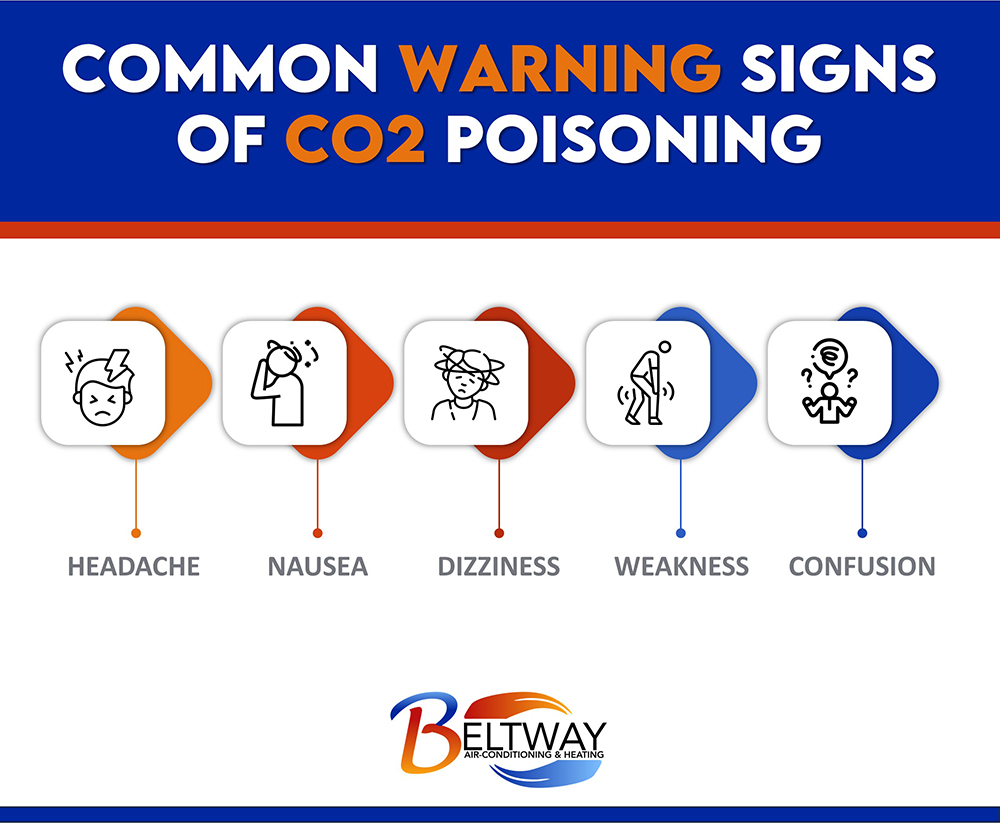
Some of the most common warning signs of CO2 poisoning are:
  • Headache
  • Nausea
  • Dizziness
  • Weakness
  • Confusion & disorientation
signs of co2 poisoning

At higher levels in your home, carbon monoxide poisoning becomes very dangerous and can lead to serious illness, permanent mental and physical disability, and even death. Because you cannot see, smell, or taste the gas inside your home, many people don’t recognize carbon monoxide poisoning until it is too late.

Here are just some of the symptoms of high levels of carbon monoxide:
  • Sleepiness
  • Nausea & vomiting
  • Anxiety or depression
  • Confusion & disorientation
  • Impaired vision
  • Impaired coordination

Statistics show that more than 50,000 people visit emergency rooms every year for carbon monoxide poisoning, with over 400 deaths annually.

How Do I Know if Carbon Monoxide Levels Are Too High?

Having Beltway Air Conditioning and Heating install carbon monoxide detectors inside your home is the best way to be alerted to dangerous levels of carbon monoxide. You will not see, smell, or taste carbon monoxide at any level, so you need a detection system to monitor and alert you to its presence.

How Does a Carbon Monoxide Detector Work?

Carbon monoxide detectors are designed to measure the amount of carbon monoxide inside your home. There are different types of detectors that do this in different ways. Most devices work based on a chemical reaction occurring when levels are high enough to be dangerous. This monitoring happens continuously to constantly be on the lookout for carbon monoxide. The detection system then alerts you to the presence of higher-than-safe amounts of the gas.

Where Should I Install Detectors?

The National Fire Protection Association (NFPA) recommends having a carbon monoxide detector installed on every floor of the home and in a central location outside of each room where people sleep. There may also be local or state codes where you live that dictate placement and the number of detectors required in your home. Be sure to remember the basement and attic if applicable.

When installing your carbon monoxide detectors, first consult the manufacturer’s information. Some detectors should be mounted to the ceiling, while others are best installed on the wall a few feet lower than the ceiling.

Are There Different Types of Carbon Monoxide Detectors?

There are several different types of carbon monoxide detectors available. You may decide to choose one over the other based on your personal circumstances.

Battery-powered devices are portable and can be installed easily anywhere in your home.

Hardwired detectors are connected to your home’s power source and will continuously monitor the gas level in your home at all times when electricity is on.

Combination units use both battery and electrical power, using one source as a backup method if the other power source fails.

Most carbon monoxide detectors have an audible alarm that will sound continuously until manually turned off or the threat has diminished. There are also monitors with a digital display that show the level of carbon monoxide.

What Maintenance Is Needed for Carbon Monoxide Detectors?

Similar to smoke detectors, there are measures you should take to ensure your unit is still protecting you and your family.

Test your carbon monoxide detectors regularly to ensure they are still functioning properly. Most detectors have a test button on them. If you’re using a battery-powered unit, the batteries should be replaced at least once per year or as instructed by the manufacturer.

Regardless of type, your carbon monoxide detectors should be replaced with new units after several years, as dictated by the manufacturer of your specific model.

What Should I Do If My Carbon Monoxide Detector Goes Off?

If your carbon monoxide detector indicates a high level of the poisonous gas in your home, you should immediately leave the area. Step outside for fresh air and call 911. Seek medical attention for anyone displaying signs and symptoms of carbon monoxide poisoning.

Now that you understand what carbon monoxide is and how dangerous it can be, it’s time to make sure you have carbon monoxide detectors in your home. These detectors should be appropriate for your space and needs for best results. They also need to be installed properly in order to work correctly.

The best way to ensure proper installation and functioning of your carbon monoxide detectors is to call a professional. A trained and knowledgeable technician will know what type of detector is best for your home, where to install them, and how to install them. For this type of professional service, call Beltway Air Conditioning and Heating today. We’ll schedule a time to install units in your home and teach you how they work.

Book Online

"*" indicates required fields

This field is for validation purposes and should be left unchanged.
Phone confirm*