Air Purifier System in Hanover, MD Residential Home

Humidifiers vs. Dehumidifiers: How to Choose the Best Option for Your Home

Humidifiers and dehumidifiers are appliances that help stabilize moisture levels within rooms. These appliances can help achieve ideal indoor relative humidity (RH). According to the Environmental Protection Agency (EPA), ideal indoor relative humidity falls between 30%-50%, and humidity levels should never exceed 60%. While the standard recommendation makes sense on paper, you may have additional questions based on the climate, the appliance model, and your household needs. A comparison between humidifiers and dehumidifiers can help you make an informed decision about improving the indoor air quality of your home.

What Is a Humidifier?

A humidifier is a device that adds moisture to the air by emitting water vapor or steam. Humidifiers may help alleviate problems associated with lower humidity levels, such as dry nasal passages or dry skin. Most humidifiers operate using a basic sensor mechanism. This sensor detects the humidity level in a room or enclosed space. The humidifier then switches on whenever humidity levels drop too low. Once it switches on, the device releases vapor or steam from its reservoir to raise humidity levels. Sizes of humidifiers include central humidifiers for the whole house, console humidifiers for specific rooms, and portable humidifiers that you can use while traveling. Types of humidifiers include whole-home humidifiers, evaporators, ultrasonic humidifiers, impellers, and steam vaporizers.

Whole-Home Humidifiers

Whole-home humidifiers are central humidifiers hardwired directly into the HVAC system. These humidifiers provide moisture to the entire house at an adjustable rate. Whole-home systems can include bypass humidifiers that connect to your ducts or power humidifiers fitted with fans that help generate greater humidity. While this type of system represents more of an investment than other varieties, it can also help ensure consistent humidity levels and air quality throughout the home. Other benefits include the reduction of static electricity and dust levels indoors. If your household’s occupants include vulnerable populations, like infants or the elderly, whole-home humidifiers may help alleviate breathing problems or dry skin. They are also popular since there is no risk of direct contact with the appliance itself.

Evaporators

If you have ever noticed that the water level in a covered glass lowers or evaporates after a certain period, it is easy to see how evaporator humidifiers work in the same way. This humidifier cools air by drawing water from a reservoir and blowing the moisture through a wick, filter, or belt. Fans propel this appliance and disperse cool mist into the air using a single-unit system.

Ultrasonic Humidifiers

An ultrasonic humidifier consists of a diaphragm or disk immersed in water. The disc vibrates at an ultrasonic frequency outside of the range of human hearing. This vibration creates water droplets that the device can expel as mist, steam, or fog to increase indoor humidity. Ultrasonic humidifiers tend to be small and compact, making them suitable for limited space areas. And because ultrasonic humidifiers use vibration instead of a heating source, they are also popular in children’s rooms.

Impellers

Impeller humidifiers use rotating discs with comb-like fins that break water down into tiny droplets. The droplets then pass through a mesh filter, leaving the device as a cool mist that increases the humidity of your room. Impellers are most popular for use in single rooms.

Steam Vaporizers

Steam vaporizers use a power source to heat water in a reservoir. Once the water is boiling, the warm mist exits the device in the form of steam. Some steam vaporizers also allow you to add inhalants or essential oils for more comfortable breathing. But because they contain hot water, these vaporizers are not popular among households that have children. Homeowners who have children tend to choose whole-home humidifiers instead.

What Is a Dehumidifier?

A dehumidifier is a device that pulls excess moisture from the air. The device typically works by extracting water from air that flows through the unit. Most dehumidifiers use a refrigerator-based or a heater-based system along with a coil to remove moisture from the air. A fan or motor blows the air over a coil that causes the moisture to condense into vapor and collect into a reservoir or tray. The result is dry air that flows back into the room. Removing excess moisture from the air is an important way to stop the growth of mold, mildew, bacteria, dust mites, and other allergens. Types of dehumidifiers include whole-home dehumidifiers, refrigerated coil dehumidifiers, desiccants, electronic dehumidifiers, ionic membrane dehumidifiers, and makeshift dehumidifiers.

Whole-Home Dehumidifiers

Whole-home dehumidifiers connect directly into the HVAC system. Using the ductwork, this type of humidifier helps remove moisture from all rooms in the home at a steady rate. Whole-home dehumidifiers are popular choices for homes in high-humidity regions as well as older homes.

Refrigerated Coil Dehumidifiers

Refrigerated coil dehumidifiers are also known as mechanical or compressor dehumidifiers. These appliances have a built-in compressor, and they operate using a mechanism similar to your refrigerator. In a refrigerated coil dehumidifier, a small fan pulls the moist air over the coil. Refrigerant in the coil causes the moisture in the air to condense. The condensation then drips from the coil into a reservoir or tray.

Desiccant Dehumidifiers

The word desiccant means “drying agent.” Desiccant dehumidifiers use chemical substances to absorb moisture from the air. The substances are usually hydrophilic materials, such as silica gel. When a silica-coated wheel or belt rotates through the system, it helps dry out the surrounding air. Desiccant dehumidifiers work best under conditions of low temperature and extremely high humidity. They are popular during the winter and for industrial purposes.

Electronic Dehumidifiers

Electronic dehumidifiers often rely on heat pumps, fans, and exchange coils to pull in moist air. The moist air then passes over heat-exchange coils, causing the moisture to condense and collect into a reservoir or tray. Dry air then circulates back into your room. Electronic dehumidifiers are popular for enclosed spaces or small rooms.

Dehumidifying Ventilators

Dehumidifying ventilators draw in humid air and then use an exhaust fan to expel the moisture outside. These devices are useful for crawlspaces, basements, and attics. Compact in size, they function much like other window units.

Ionic Membrane Dehumidifiers

Ionic dehumidifiers help remove water from the air at a molecular level. This type of dehumidifier has traditional applications in chemical engineering, water filtering, and the fuel industry. However, homeowners may also find devices with ionic membrane filters by exploring options with an HVAC professional.

Why Is It Important to Maintain the Right Humidity Levels?

Indoor humidity levels that reach either extreme can become a source of great discomfort for all occupants of the home. Even if you set your thermostat at the ideal room temperature, you can still feel uncomfortable if humidity levels are too high or too low. Specifically, high humidity levels can make the air feel overly warm and smothering during hot weather, and low humidity levels can cause the air to feel even drier during cold weather. In addition, both high and low humidity levels can cause dehydration since these conditions disrupt natural sweating. Since sweating is one of the body’s primary cooling and regulating mechanisms, it is important to keep humidity as stable as possible.

Humidity also has an environmental impact as well. High humidity levels create the perfect breeding environment for mold, mildew, algae, and bacteria. Household pests like termites and carpenter ants also thrive in humid environments. On the other hand, low humidity can cause wood furniture and floors to experience dry air damage. Low humidity may also increase the likelihood of respiratory illness since some viruses thrive in dry environments. When moisture levels are insufficient, viral particles have an easier time settling in airway receptor sites, leading to a greater chance of infection.

What Signs Indicate the Need for a Humidifier or Dehumidifier?

Humidifiers

You may need a professional to install a humidifier if your indoor air becomes too dry. Signs of dry air include the buildup of static electricity due to low humidity. This can disrupt the proper performance of your electronics. Household occupants may experience dry skin, lips, or nasal passages. Individuals with eczema and dermatitis may find that these conditions worsen if indoor humidity is too low. In fact, the American Academy of Dermatology (AAD) recommends that people with these skin conditions install a humidifier at least during the winter. Other signs that you may need a humidifier include dry eyes or sore throat. Even books or papers within the home can become brittle if the air is too dry.

Dehumidifiers

Signs you need a dehumidifier include condensation on windows and furniture as well as the accumulation of mold, mildew, or dust mites in rooms. These occurrences indicate high levels of moisture in the air. You may also notice rotten or musty smells due to mold or the growth of other organisms. High humidity can increase the staying power of allergens, like pollen or dust particles, resulting in respiratory irritations. When moisture is too high, you may notice that dry kitchen goods become stale faster and even clothes take longer to dry.

Should I Use a Humidifier or Dehumidifier?

The optimal indoor humidity level falls between 30%-50%. An HVAC technician can use a professional hygrometer to measure the humidity within a particular space to determine whether you should choose a humidifier or dehumidifier. Indoor humidity that falls below 30% can require a humidifier, and levels above 50% may require a dehumidifier. In addition, seasons can also help determine humidifier or dehumidifier use. Homeowners often use humidifiers in the wintertime to combat the dryness of winter air. Humidifiers help saturate winter air with water that traps heat, creating a blanket effect that helps you feel warmer. Likewise, homeowners may use dehumidifiers during the spring and summer to combat seasonal allergens, like pollen, and reduce the sticky or stale feeling that can occur when indoor humidity is too high.

Contact Us Today

When used correctly, humidifiers and dehumidifiers can improve the indoor air quality of your home. Beltway Air Conditioning and Heating provides whole-home installation for households in Hanover and the surrounding areas. We can help you select the right device, and we offer professional installation, replacement, or maintenance of humidifier or dehumidifier systems. Contact Beltway Air Conditioning and Heating today to create the perfect indoor environment for the home.

7 Signs Your Home Has Poor Indoor Air Quality

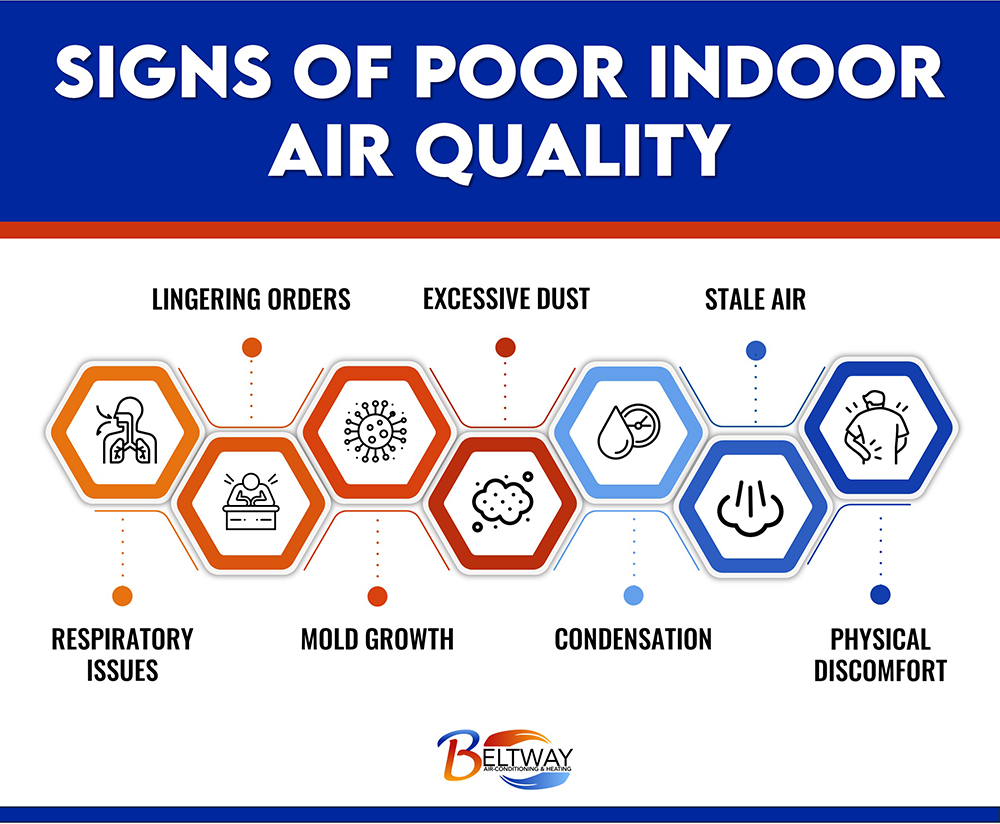
Indoor air quality is a crucial aspect of our overall well-being, yet it often goes unnoticed until signs become apparent. Understanding the indications of poor indoor air quality can help identify potential hazards and take necessary measures to improve the air you breathe within your home. When our living spaces lack adequate ventilation or harbor pollutants, our health can be negatively impacted. In this article, we will explore the telltale signs of compromised indoor air quality. These signs manifest themselves in various ways, from persistent odors and excessive dust accumulation to physical discomfort and increased allergies or respiratory issues.

1. Frequent Allergies or Respiratory Issues

If you or the people in your home frequently endure issues such as sneezing, coughing, teary eyes, congestion, or asthma, it could indicate inadequate indoor air quality. These symptoms often arise due to pollutants in the air. Persistent and unpleasant smells in your abode, like musty or chemical scents, can also suggest subpar air quality. These odors may arise from mold, pet dander, or volatile organic compounds (VOCs). The growth of mold and mildew is another telltale sign. These fungi thrive in damp settings, releasing spores that can cause allergies and respiratory ailments. Excess dust on surfaces may also indicate poor air quality, as dust often carries allergens like pollen, mold spores, and pet dander.

signs poor IAQ

Condensation or high humidity levels can create an ideal environment for mold and bacteria, negatively impacting the air you breathe. Stuffy or stagnant air within your dwelling is another indication of compromised air quality. If you often experience headaches, fatigue, dizziness, difficulty concentrating, or general discomfort when indoors, it may be due to poor air quality.

2. Lingering Odors

Lingering smells within your dwelling, like musty scents, mold odors, or potent chemical fragrances, could signify substandard air quality. These odors might emanate from mold growth, pet dander, VOCs, or additional airborne contaminants. Identifying the source of these persistent smells is crucial for rectifying the issue. Mold spores, which thrive in damp environments, can be released into the atmosphere and trigger respiratory problems or allergic reactions. Pet dander, comprising microscopic flecks of skin, can also contribute to the presence of unpleasant odors and worsen air quality.

Furthermore, VOCs, originating from various household products and materials, release gases that can have detrimental effects on health. By addressing these sources and taking appropriate measures to improve ventilation, filtration, and cleaning practices, you can effectively combat the problem of lingering odors.

3. Mold and Mildew Growth

Mold and mildew flourish in moist surroundings and emit spores that trigger respiratory problems and allergies. Detecting observable mold growth on walls, ceilings, or various surfaces serves as an indication of excessive dampness, which, in turn, suggests inadequate air quality.

Addressing these mold and mildew concerns is crucial for maintaining a healthy indoor environment. Eliminating the excess moisture and rectifying the underlying cause are vital steps in mitigating the problem. This may involve improving ventilation, addressing water leaks or seepage, and employing dehumidifiers or air purifiers to reduce humidity levels and airborne contaminants.

4. Excessive Dust

Excessive dust buildup in your home goes beyond mere visual inconvenience; it can serve as a clear indicator of compromised indoor air quality. You may notice a thick layer of dust settling on furniture, countertops, shelves, and floors, signaling potential issues. However, what makes this accumulation concerning is the hidden dangers it harbors. Dust particles consist of tiny airborne substances and debris, creating the perfect environment for various contaminants to thrive. Among these contaminants are pollen, pet dander, mold spores, bacteria, viruses, fungi, insect droppings, chemical residues, and a host of other allergens. It’s like a microscopic party happening right under your nose, and unfortunately, it’s not a party you want to attend. The trouble arises when these dust particles are disturbed, becoming airborne once again and posing a risk for inhalation.

5. Condensation or High Humidity

Excessive humidity within your home can result in condensation forming on windows, walls, or pipes, which provides an ideal environment for the growth of mold and bacteria. These microorganisms release airborne particles, including spores and VOCs. You can inhale them and trigger respiratory issues such as allergies and asthma.

Condensation poses risks beyond health concerns, extending into potential structural damage. When moist air encounters cooler surfaces, tiny water droplets form, leading to condensation. Over time, these accumulated water droplets can seep into building materials, such as wood or drywall, causing deterioration and weakening of the structure. Prolonged exposure to moisture can result in rotting, warping, or even mold growth, compromising the integrity of the building.

6. Stale or Stuffy Air

If your dwelling feels stuffy, deprived of proper ventilation, or if the atmosphere seems motionless and devoid of freshness, it could serve as an indication of subpar indoor air quality. Inadequate circulation of air can confine impurities within your living space, resulting in a heightened density and detrimentally impacting the air that you inhale. This lack of proper airflow creates an environment where pollutants amass, posing potential health hazards. By allowing the air to become stale or stuffy, you inadvertently create conditions that encourage the accumulation of various contaminants.

These contaminants may include allergens, dust particles, pet dander, VOCs, and other detrimental substances. As a result, the air quality within your home deteriorates, potentially leading to discomfort and adverse health effects. Headaches, fatigue, dizziness, difficulties in concentration and an overall sense of discomfort may arise due to the inadequate freshness of the air you breathe.

7. Physical Discomfort or Fatigue

Experiencing physical discomfort or fatigue could be clear signs of compromised indoor air quality, and they should not be ignored. When the air you breathe is contaminated, it can lead to a range of symptoms that impact your well-being. Headaches, for instance, can become persistent and debilitating, making it difficult to carry out your daily activities. The feeling of fatigue can set in, leaving you drained of energy and struggling to find motivation. Concentrating on tasks becomes challenging, affecting productivity and overall performance. Moreover, the general discomfort that accompanies poor air quality can leave you feeling unwell and unsettled in the very place you call home.

It is important to recognize these symptoms, especially if they seem to arise primarily while indoors. Poor indoor air quality can be caused by various factors, such as inadequate ventilation, the presence of pollutants or allergens, or even mold growth. These factors can contribute to an unhealthy indoor environment and exacerbate the discomfort you experience.

If you find yourself frequently facing these physical discomforts within your home, it may be time to investigate and improve your indoor air quality. Taking proactive measures, such as improving ventilation, regularly cleaning and dusting, maintaining humidity levels, and addressing potential sources of pollutants, can significantly enhance the air quality within your living space.

Contact Us Today!

Our team in Hanover, Maryland, provides ductwork, duct cleaning, and air purifiers for your home. Our well-skilled team also provides heating, cooling, and oil-to-gas conversion services. Contact Beltway Air Conditioning and Heating for more information today!

Air Purifier System in Hanover, MD Residential Home

Improving Your Indoor Air: The Role of Air Purifiers

Do you ever wonder how the air in your home or office can affect your health and well-being? Air pollutants such as dust, pollen, and pet dander can aggravate allergies and asthma, while chemicals and volatile organic compounds (VOCs) can cause headaches, nausea, and other unpleasant symptoms. Fortunately, an air purifier can help clean the air and improve indoor air quality. But exactly how does an air purifier work? Read on as we explore the inner workings of air purifiers.

What Is an Air Purifier and How Does It Work?

An air purifier is an electronic device designed to remove contaminants from the air inside a room or building. These contaminants can include smoke, dust, pollen, and other airborne particles that can negatively affect indoor air quality and cause health problems.

Air purifiers draw air through an intake vent and pass it through a series of filters or other purification technologies. The clean air is then released into the room through an exhaust vent. Some air purifiers also have sensors that can detect the level of pollutants in the air and adjust the fan speed or purification settings accordingly.

Types of Air Purifiers

Different types of air purifiers use various technologies to clean the air. Below is a description of five popular types of air purifiers.

HEPA Purifiers

HEPA air purifiers are the most popular and widely used type of air purifier today. HEPA stands for high-efficiency particulate air. HEPA purifiers can trap particles as small as 0.3 microns, including most airborne allergens, dust, and pollutants. HEPA purifiers force air through a fine mesh that traps airborne particles. They are very effective at removing allergens, dust, and other particles from the air, but they do not eliminate odors or harmful chemicals.

Activated Carbon Air Purifiers

Activated carbon purifiers utilize a highly porous material treated with oxygen to create an extensive network of tiny pores between carbon atoms. The purpose of these pores is to trap chemicals, gases, and unpleasant odors. The untreated air passes through the activated carbon layer to eliminate pollutants and contaminants. The tiny pores then capture the unwanted substances, thus purifying the air.

UV Air Purifiers

UV purifiers use ultraviolet light to kill bacteria, viruses, and other microorganisms in the air. UV purifiers work by exposing the air to UV-C light, which is the most effective type of UV light for killing germs. UV light disrupts the DNA of the microorganisms, rendering them harmless. UV purifiers effectively kill bacteria and viruses but don’t remove particles or odors from the air.

Ionizers

Ionizers are air purifiers that emit negative ions into the air. Negative ions bind with particles that carry a positive charge, including common irritants like dust and allergens, leading to an increase in their overall weight and a subsequent drop to the ground. Ionizers effectively remove particles from the air but do not remove odors or harmful chemicals.

Ozone Air Purifiers

Ozone is a highly reactive gas that interacts with pollutants and contaminants in the air, breaking them down into harmless substances. Ozone generators work by producing ozone and releasing it into the air. Ozone generators are effective at removing odors and killing bacteria, but they can also harm humans and pets if not used properly.

Benefits of Air Purifiers

Improved Respiratory Health

Contaminants like smoke, dust, and pet dander can irritate the lungs and exacerbate asthma and respiratory distress. One of the most important benefits of air purifiers is their ability to remove harmful pollutants from the air, which can significantly impact respiratory health.

Allergy Relief

Common allergens, such as pollen, dust mites, and pet dander, can trigger allergic reactions and cause symptoms that include sneezing, itching, and congestion. Air purifiers can pull these allergens from your environment and provide significant relief for people who suffer from allergies.

Improved Sleep

Poor indoor air quality can lead to sleep disturbances, including snoring, coughing, and congestion. By removing pollutants, air purifiers can create a more comfortable sleeping environment, allowing for better sleep quality and more restful nights.

Reduced Risk of Illness

Bacteria, viruses, and other pathogens can be transmitted through the air and cause various illnesses, from the common cold to more serious respiratory infections. Air purifiers can help reduce the risk of illnesses by removing these harmful contaminants from the air.

Improved Indoor Air Quality

Finally, air purifiers can improve overall indoor air quality by removing pollutants and allergens from the air. This results in multiple benefits, from reducing unpleasant odors to creating a more comfortable and healthy indoor environment.

5 Factors To Consider When Choosing an Air Purifier

There are several factors to consider before purchasing an air purifier to meet your needs. Here are five things to think about:

1. Room Size

Air purifiers are designed to work within specific square footage, and using an air purifier that is too small for a room will not effectively clean the air. On the other hand, using an air purifier that is too large for a room can result in unnecessary energy consumption and expense.

2. Noise Level

Air purifiers can produce noise, and some people find this distracting. If you plan to use the air purifier in a bedroom or another quiet space, consider the amount of noise it produces before you purchase it. Look for models with a low decibel rating or a night mode that runs at a quieter level.

3. Energy Consumption

Air purifiers can use a significant amount of energy, so it is crucial to choose an energy-efficient model. Look for air purifiers with an ENERGY STAR® certification or a low wattage rating.

4. Maintenance

Air purifiers require regular maintenance to continue functioning effectively. Additionally, consider the cost of replacement filters, as this is an ongoing expense to factor into your decision. Some models have washable filters, while others require replacement filters every few months. Choose a model that is easy to maintain and has replacement filters that are readily available and affordable.

5. Additional Features

Some air purifiers come with additional features that may be useful for your specific needs. For example, some models have built-in air quality monitors that display the current air quality level. Others have multiple fan speeds or a timer that you can set to turn the purifier on or off at specific times. Consider which additional features are important to you and choose a model that includes those extras.

Call Professionals Today!

Are you concerned about the indoor air quality in your home or office? Look no further than Beltway Air Conditioning and Heating! Our team of experienced professionals is dedicated to providing top-notch heating and cooling services to keep you comfortable year-round. We also specialize in improving indoor air quality through air purification systems, duct cleaning, whole-house humidifier installation, and more. Customers in Hanover and the surrounding areas trust us to keep their spaces healthy and comfortable. Contact Beltway Air Conditioning and Heating today to schedule a consultation!

Duct work in Arbutus, MD

6 Benefits of Getting Duct Cleaning

How clean is the air you breathe? Many people don’t realize just how polluted indoor air can be. They also fail to realize the benefits of cleaner air for their health and overall lifestyle. Breathing healthier air keeps your body operating at optimal performance levels. But how do you improve indoor air quality?

Getting your home’s ductwork cleaned is an easy and effective way to quickly improve the quality of air inside your home. Duct cleaning will benefit you and your family in several helpful ways.

1. Breathe Cleaner Indoor Air

Heated and cooled air making its way through your home’s ductwork will mix with any dirt, dust, and debris that it comes into contact with. Keeping each duct clean will, of course, minimize the chance of airborne cross-contamination. As a result, you’ll breathe cleaner indoor air.

2. Get Rid of Bad Smells

Tobacco smoke can embed itself into ductwork. The same goes for odors from cooking. The dirtier the duct, the easier it is for the smell to attach itself to it. The smells can coat the ductwork, causing the entire home to wreak of putrid odors. With duct cleaning, a professional will use special cleaning agents to completely remove any coating on the ductwork as well as any odors.

3. Decrease Exposure to Allergens

Whether you’re heating or cooling your home, the HVAC filter captures allergens and other types of contaminants to keep them from recirculating back into the air. As the filter gets dirty, it becomes less effective at capturing tiny particles. These particles can make their way into the ductwork, thus compromising your home’s indoor air quality. This is why it’s so important to clean or replace the air filter as needed.

In addition to changing the filter, getting the ductwork cleaned will serve as an extra layer of protection against the spread of pollen, dust mites, and other irritants. In homes where allergy or asthma sufferers reside, regular duct cleaning is particularly vital to the occupants’ health.

4. Enhance Energy Efficiency

If you keep your air ducts clean and fresh, your monthly energy costs will go down. Your air conditioner and heater work best in dust-free settings, which is why cleaning the ducts once a year is so important to their overall efficiency.

5. Minimize Moisture and Condensation

The development of condensation is never a good thing. With too much condensation come excess moisture levels. And with too much moisture comes the growth of mold and mildew. If the ductwork itself becomes damp, this can result in black mold spreading throughout your entire home.

There are several types of mold remediation services. You’ll need to obtain them if mold ever becomes present in your home. To keep this from happening, get your ductwork cleaned at least once a year to ensure it doesn’t get full of moisture.

6. Live in a Cleaner Home

Cleaner ductwork translates into a cleaner house. As air flows through clean ducts, it won’t have any dust or dirt to mix with, meaning you can keep your home dust-free for longer periods of time. Anytime you notice your home getting dustier in shorter time periods, make sure to contact a professional to inspect the ductwork. There’s a good chance it’s full of dust.

How Messy Is Duct Cleaning?

Duct cleaning is not a task to do yourself. It requires professional cleaning with professional equipment. If mold becomes present in the ductwork, extreme safety guards must be in place to remove the mold during the duct cleaning process.

What Happens If I Don’t Clean the Ductwork?

You’ll face a lot of consequences if you don’t get the ductwork cleaned on a regular basis. For starters, you’ll increase the risk of mold development. As mold spores spread throughout the dirty ductwork, they will harm your respiratory health.

Dirty ductwork also impairs the efficiency of your heating and cooling systems. The longer you go without cleaning it, the dustier it will become. Eventually, the ducts will clog, hindering airflow and reducing heating and cooling efficiency. The HVAC system will have to work harder to keep the room at the temperature you want, causing it to wear out faster than it should. This will result in costly repairs and increase energy usage. If completely ignored, all of the ductwork will eventually clog and keep the HVAC unit from cycling on.

Another thing that will happen if you don’t clean dirty ductwork is that it will become a haven for pests and rodents. Whether it gets full of cockroaches, mice, spiders, or all three, these pests will have full access to the entire house through the ductwork.

Should I Get Ductwork Cleaned Every Year?

Your home’s indoor and outdoor humidity levels impact how often to clean the ductwork. Duct cleaning is recommended once a year in high-pollen, high-moisture locations. The same holds true if there are smokers, pets, or allergy or asthma sufferers in the house.

4 Signs It’s Time for Duct Cleaning

It’s not all that easy to overlook the importance of duct cleaning. The longer they go without getting cleaned, their dirtiness becomes more noticeable. Here are four warning signs to invest in duct cleaning:

1. Dusty Vents and Grills

Wall and ceiling air ducts are normally covered with a grill. If you notice the grills keep getting dusty, there’s a good chance dust in the ductwork is getting stuck to the grills as air flows through them. This only happens if there is an excessive amount of dust, indicating that it’s time to clean the ductwork.

2. Poor Airflow

Airflow impacts HVAC efficiency as well as temperature control. Dirty ductwork hinders proper airflow by reducing the amount of air that makes its way through the HVAC system. If you notice less air flowing through the system, this is a sign to have a professional check the ductwork for dust and grime buildup.

3. Bad Smells

If you detect a foul odor in your home, observe whether the odor improves or worsens when the HVAC system turns on and off. If it gets worse when cycling on, you probably have dust burning in the ductwork. The dust gets stuck in the ductwork, and heat from the HVAC system burns it. The only way to fix this problem is to get the ductwork cleaned.

4. Constant Dusting

Minimal dust buildup is natural in all homes. If you find yourself having to dust on a daily basis, though, you may want to consider duct cleaning. With fresh ductwork, you can reduce your weekly cleaning time.

Take Advantage of Duct Cleaning Today!

Consider duct cleaning a regular aspect of home upkeep. Maintaining clean air ducts is an easy way to save money on utilities and extend the life of your home’s infrastructure. Contact Beltway Air Conditioning and Heating now to schedule a duct cleaning appointment. We offer a variety of indoor air quality, heating, and cooling services.

Mom and Daughter After Indoor Air Quality Service in Hanover, MD

Why You Need a Whole-House Humidification System to Combat Dry Air in Your Home

Maintaining a balanced level of humidity in your house is important for protecting both your home and your family. Seasonal changes severely affect the humidity levels in your home. Colder seasons like autumn and winter cause humidity levels to drastically decrease, which makes the air in your home incredibly dry.

Humidity levels in most homes should be around 40% to 50%, but dry weather has been known to plummet humidity levels in homes down to 25% or lower. Humidification systems in your HVAC unit allow you to maintain healthy humidity levels throughout your entire home no matter what season it is. Here are all of the benefits you’ll enjoy by installing a whole-house humidification system in your HVAC unit.

Lower the Risk of Viruses and Other Airborne Illnesses

Viruses and bacteria thrive in environments with low humidity. In a home where it’s warm and dry, your family has a higher chance of catching terrible illnesses. What makes a dry home environment even worse for bacteria and viruses is that the air is fairly stagnant. In autumn and winter, most people don’t open their windows because it’s too chilly outside. The heating system only circulates the air instead of introducing fresh air into the home. A humidification system keeps moisture levels in the home at a moderate level to keep viruses and bacteria down and keep everyone in the house healthier.

Improve Respiratory Health

Dry air is a nightmare for people with respiratory problems like asthma, allergies, COPD and lung disease. When the moisture levels in the air are low, it dries out the mouth, nasal passages and throat, which causes them to become irritated and makes it more difficult to breathe comfortably. Even temporary respiratory issues such as colds and respiratory infections become much more difficult to recover from when breathing in dry air.

A whole-house humidification system continuously introduces moisture to the air to soothe your breathing passages and reduce the severity of symptoms caused by most respiratory conditions.

Avoid Waking Up with Sore Throats and Nosebleeds

When you’re sleeping in a room with dry air, your throat and the mucus membranes in your nasal cavity dry out, causing you to wake up with sore throats and nosebleeds. No one wants to wake up in such a miserable state, and humidifiers are the perfect tool for preventing these conditions. Ensuring that there is a healthy level of moisture in the air as you sleep keeps both your throat and nasal passages moist enough to avoid developing sore throats and nosebleeds.

Reduce Snoring

Speaking of being miserable when you wake up in the morning, dry air also causes and exacerbates snoring. Increased moisture in the air helps lubricate the air passages in your nose, reduces inflammation in the throat and helps you breathe easier, which lessens the frequency and volume of snoring. In some cases, it eliminates snoring entirely, allowing you and your partner to get a good night’s sleep.

Prevent Dry and Cracked Skin

Your skin needs hydration to stay smooth, healthy and flexible. When skin dries out, it becomes rough and hard, and cracks and rashes start to form as a result. Dry air even makes areas such as the eyes and lips irritated after a short amount of time. Humidification systems keep your skin hydrated and healthy to eliminate painful cracking, uncomfortable roughness and itchy rashes.

Make Pets More Comfortable and Happy

Even pets suffer from living in a home with dry air. They experience many of the same symptoms that humans do such as irritated allergies, coughing, itchy and cracked skin, respiratory issues and more. Maintaining a good humidity level in your home with a humidification system helps your best animal friends stay happy, healthy and comfortable at home.

Save Money on Your Heating Bills

You have likely noticed that the hotter months of summer always feel more insufferable when the humidity is high outside. This is because high humidity makes it more difficult for sweat to evaporate, making it feel warmer when the humidity is high than when moisture levels are low. The same principle applies in wintertime. When there is an adequate amount of humidity in the air, it feels warmer. The warmer you feel, the less likely you are to turn up the heat and use it as frequently, which saves you money on your energy bills.

Protect Your Home

Dry air can do just as much damage to your home, furniture and other possessions as it can to you and your family. When there is little moisture in the air, wooden furniture splits, planks in wood floors warp, and leather items flake and crack. Musical instruments can split apart at glued joints, warp and start to develop severe sound quality issues. Additionally, books warp and flake, wallpaper starts to peel, and photos curl and become discolored. The high levels of static electricity that come with dry air may also permanently damage electronic devices. Keeping a good amount of moisture in the air helps protect everything in your home from becoming severely damaged.

Save Your Plants

Not even your houseplants are safe from the damaging effects of dry air. Without a healthy amount of humidity in the air, plants dry out more quickly and have a much higher chance of dying. Instead of scrambling to constantly water the plants to make up for the lack of moisture, you can rely on a whole-house humidification system to keep plants hydrated at a normal rate and ensure they stay healthy for much longer.

No Need to Refill

While it’s certainly been established that humidifiers are beneficial for any home experiencing low moisture levels, there are many more benefits to choosing whole-house HVAC humidification systems instead of portable humidifiers. For instance, you never have to refill water reservoirs in whole-house humidification systems as you do with portable units. Humidification systems installed in the HVAC unit take water directly from the water lines within the home.

Little to No Sound

Unlike portable humidifiers that can get incredibly loud and affect sleep quality, whole-house humidification systems create little to no noise. You can sleep soundly, concentrate on work or school better and simply be more comfortable enjoying your home at any time of day.

Easy to Use

Once you install a whole-house humidification system, you can almost put it entirely out of your mind most of the time and not worry about a thing. Since the unit is integrated into your HVAC system and has a lot of automation, whole-house humidification systems keep your house at a healthy humidity level without needing much assistance from you besides the normal maintenance your overall HVAC system receives every year.

If you’re suffering from dry air in your home, our skilled technicians at Beltway Air Conditioning and Heating will install, maintain and repair a humidification unit for your HVAC system quickly, professionally and with as little inconvenience as possible. We also provide installation, maintenance and repair services for heat pumps, furnaces, air conditioners, air purifiers, air ducts and much more. To learn more about these and other services we provide to the Hanover and Arbutus, Maryland areas, contact us at Beltway Air Conditioning and Heating today.

Indoor Air Quality in Arbutus, MD

13 Benefits of Investing in an Air Purifier

According to the Environmental Protection Agency, indoor air can be two to five times as contaminated as the air outside. This is a big concern because Americans spend 90% of their time indoors. If you are concerned about the quality of the air in your house, air purifiers are an excellent solution. Here are 13 reasons you need to invest in one for your home.

1. Prevent Asthma Attacks

People living with asthma have irritated bronchial passages. When dust mites, pollen, or pet dander irritate their airways, it makes it harder for them to breathe.

Numerous cat and dog breeds shed year-round. These animals spread a great deal of fur and dander into the air when they scratch themselves. Even if you don’t have pets, other asthma triggers, such as dust mites and pollen, exist.

Pollen particles are carried in by the breeze via open windows or attach to your clothing when you go outside. Dust mites, which thrive in humid environments, are the most widespread indoor allergens. The lack of fresh air raises interior humidity levels, creating an ideal breeding habitat for dust mites.

Invest in an air purifier with HEPA filters that will trap all of these contaminants and provide you with clean air to breathe. HEPA filters are made up of multi-layered meshes with tiny, hair-thin fiberglass threads. These meshes catch pet dander, dust mites, and pollen floating about in your indoor atmosphere, allowing you to breathe clean air.

2. Improve Sleep

In addition to aggravating asthma, allergens can cause various issues in those without asthma. Common allergy symptoms include frequent sneezing, coughing, nasal congestion, sore throat, and watery eyes, which can interrupt your sleep.

Inadequate sleep promotes daytime drowsiness, which reduces productivity the next day. To prevent these sleep interruptions, utilize HEPA air purifiers to filter out the majority of allergens in your room. You’ll sleep better at night when the air is cleaner.

3. Have a Cleaner Home

You could find yourself dusting more often than you’d like if the quality of the air within your home is poor. In that situation, you’ll need to get an air purifier. With consistent use of an air purifier, the amount of airborne dust will reduce, meaning less dust will accumulate on your counters and furniture. You’ll be able to put the duster away and unwind in your house while breathing in the fresher air.

4. Reduce the Likelihood of Airborne Illnesses

Airborne infections like the flu and common cold are spread by microscopic bacteria that float around your indoor atmosphere. When one household member has the flu, it is not unusual for the rest of the family to become ill as well. This occurs because everybody is inhaling the same air, which is contaminated with germs and viruses.

Air purifiers, particularly those with HEPA filters, can capture particulates containing these germs and viruses. When you eliminate the source of airborne infections, you protect yourself and your household from them. Air purifiers are essential if you live with the elderly, children, or anybody with a compromised immune system.

5. Remove Unpleasant Smells

Some chemicals, like formaldehyde, benzene, and gasoline, degrade at room temperature and emit an odor. Volatile organic compounds (VOCs), as they are often known, are found commonly in aerosol sprays, paints, upholstered furniture, and air fresheners. VOC odors can produce nausea, shortness of breath, and even impair cognitive function.

Other studies have found that low VOC levels in the atmosphere boost productivity and performance. Activated carbon and HEPA filters in air purifiers are good at trapping gases and particles, reducing pollution in your indoor environment.

If you have company around, you won’t have to worry about them being bothered by smoke or the smell of cooking spices and oil. Air purifiers can help eliminate all odors, leaving your space fresh and clean.

6. Reduce Pollutants Emitted by Fireplaces

If you’re using a fireplace or wood stove, you are inhaling wood smoke contaminants. This might aggravate pre-existing conditions such as asthma or allergies, as well as create a generally uncomfortable environment. An air purifier can help you continue to use your wood stove or fireplace as you like.

7. Control the Effects of Craft Supplies on Air Quality

You have to cope with various substances getting into the air if you or somebody in your home is an artist or crafter. The supplies you use, such as resins, glues, and paints, produce fumes throughout your house. Despite appearing harmless, those airborne compounds have an effect on the quality of your air. Any problems your art supplies can generate can be removed by investing in an air purifier to use in your workshop or throughout your house.

8. Maintain Clean Air During Home Improvement Projects

Home renovations generate dust and introduce other contaminants. Fibers from new carpets, varnishes, stains, paint, commercial adhesives, and other building products have an influence on your indoor air quality. To maintain cleaner air and benefit from healthier air, use an air purifier before, during, and after remodeling.

9. Control Pollution Caused by Attached Garages

You may keep a variety of hazardous materials in your garage. When you start your automobile inside or use such hazardous chemicals, the pollutants can enter your house if you have a connected garage. Air purifiers may remove these hazardous pollutants from your indoor air.

10. Reduce Wildfire Smoke in the Air

If you live in a wildfire-prone location, an air purifier can assist in preserving the air quality in your house. Wildfires, whether small or large, controlled or uncontrolled, can send smoke into your home. Breathing in the smoke might be hazardous to your lungs and heart. A purification system with a HEPA filter will help decrease the indoor pollutants that a wildfire can bring in.

11. Filter Out Industrial and Vehicle Pollution

You’ll need an air purification system if you live close to a busy road or an industrial region. EPA studies have shown that breathing in contaminants from motor vehicles can lead to heart and lung issues. Automobile and industrial pollutants can also aggravate asthma.

12. Control Mold in Rooms

Mold can grow as a result of moisture damage or floods. While you’ll need to handle the issue by making repairs and thoroughly removing the mold, a purification system can still assist in reducing the spread of mold spores. Mold spores go into the atmosphere, which is bad for your health and your house. Use an air purifier in damp areas, such as bathrooms or basements, to help you reduce mold.

13. Remove Dangerous Radon

Radon gas is produced by the breakdown of naturally existing radioactive elements like uranium present in rocks, soil, and water. The odorless and colorless gas can enter your home through cracks in the foundation, walls, and flooring of your home. Radon gas causes cancer by damaging the lungs’ cell linings. Use air purifiers to lessen the danger of radon contamination. Activated carbon and HEPA filters capture radon gas and particles, shielding you from its negative effects.

Get Air Cleaning Solutions From the Pros

Are you looking for ways to clean the air in your home? Beltway Air Conditioning and Heating can assist you if you reside in Hanover, MD. We provide a full range of air quality services and solutions, including air purifiers, whole-home humidifiers, and duct cleaning. Our team also provides installation, maintenance, and repairs for residential and commercial HVAC systems. We have the region’s top technicians and strive to offer stellar customer service at all times. Contact Beltway Air Conditioning and Heating today to learn more about the benefits of air purification.

Should You Get a Whole-House Humidifier for Your Home?

Low levels of humidity can result in many different issues that a whole-home humidifier might prevent. These can range from random bloody noses and dry, cracking skin to a sudden static shock if you shake hands with someone at your front door. You might even have a cough you can’t seem to shake right before flu season.

All of these might be related to poor humidity control throughout your house. A single-room humidifier might help part of your home, but only a whole-home humidifier can protect you throughout your residence. Whether or not one is right for your home is a matter of weighing the pros and cons along with other pertinent factors.

Warning Signs That You Might Benefit From a Whole-House Humidifier

Depending on how many people you live with or are in your family, you might already know that everyone has their own preferences in terms of temperature. The right HVAC system should be a source of physical comfort. Then again, the thermostat in your home might also be a flashpoint for tension.

Temperature isn’t the only aspect of staying physically comfortable, however. Humidity is another one. There are certain warning signs that might indicate that the air in your home is too dry.

  • Dry skin
  • Itchy eyes
  • Nosebleeds
  • Sore, scratchy throat
  • Annoying, frequent discharges of static electricity
  • Cracking paint
  • Contracting or warped wood cabinets and flooring

If anyone in your home is suffering from these issues, or you notice these physical conditions happening to your home, then you might have low humidity that you need to deal with. The more prevalent these warning signs are, the more serious your home’s issues might be.

What’s the Right Humidity Level in a Home?

This, like temperature, is a matter of personal preference. However, most humans are comfortable in a relative humidity range of 30% to 50%. Use a hygrometer to check humidity levels indoors. Some wall clocks actually have this feature alongside a thermometer so you can better determine what your personal comfort levels are. When in doubt, you can always reach out to a local indoor air quality specialist for an assessment of your home’s air.

What Are Whole-Home Humidifiers?

A whole-house or whole-home humidifier doesn’t just provide humidification for a single room but the entire home. Whole-house models are typically installed right in the ductwork, often close to the indoor air handler or furnace. Newer models might have powered fans that will directly circulate moisture into the ductwork and do so automatically based on their programming.

Bypass humidifiers do not proactively move moisture into your ductwork. Instead, they are positioned so that air passes through them. This air will absorb humidifier moisture before continuing throughout your home.

Power humidifiers don’t rely on HVAC-generated airflow. They come with their own blower motors so they can circulate moisture through your home’s ductwork.

Steam humidifiers produce steam that moves through your home’s ductwork. That involves electrical components. This kind of humidifier heats the water inside a reservoir before it turns into steam and moves throughout your home.

The Advantages of Whole-House Humidifiers

Having a central home humidifier can certainly have some perks, other than just preventing the issues already mentioned. For starters, you will likely have automatic humidity control. Once you know the level you are comfortable with, you can keep it there around the clock.

Ducted humidifiers don’t require a lot of maintenance. You will likely only need to have the evaporator panel or filter changed once a year and cleaned for mineral debris. An HVAC technician is your best bet here since they have the right know-how and perform this service all the time. Also, working with a professional means that you won’t have to remember something you only do once a year.

You’ll improve your indoor air quality. If your air is at least 35% humid, there are going to be fewer instances of sinus irritations, dry skin, sore throats, and chapped lips. You will simultaneously preserve wood furniture, walls, floors, and cabinetry. Some home insurance policies won’t even insure vulnerable items without a whole-home humidifier in place.

Static electricity is going to be seriously reduced as well. That can make it easier to play with kids and pets or greet people at the door.

One potentially unexpected benefit is possibly saving money. It is hardware that needs to be installed, and it might use some electricity. However, it might also reduce your heating bill in the winter. With more moisture, your winter air inside will retain more heat in the water molecules.

The Potential Downsides

As with anything involving your home, there is always some cost or disadvantage that you might need to consider. Whole-home humidifiers are no exception. Depending on your circumstances, some or all of these might apply.

For starters, it will cost you money. Whole-home humidifiers might run from $150 up to $800. Labor for installation can add a few more hundred dollars, since cutting ductwork is a professional task.

Proper maintenance is crucial, and that’s not just to protect your investment. You also want to avoid the growth of mold or mildew inside your system. Dust can be a potent food source for mold, particularly in a moist environment.

Your central humidifier might also hide air leaks. This is a bigger risk for older homes that were constructed when building codes weren’t as advanced as they are now. Your home’s low humidity might result from unsealed air ducts, so have those inspected first.

Ironically, as much as central humidification might help prevent warping and cracking in wood surfaces due to dry air, it can also make the air too humid. The consequence might be cupping and swelling, especially on hardwood floors.

Summertime Benefits

Keeping humidity levels in your home optimal should be obvious during the winter, but can a whole-home humidifier help when it is hot and humid outside? Surprisingly, the answer is yes. Your air conditioning system will likely be running a lot, and it cools down your home’s air by removing moisture that contains heat. The result is cool air, but it’s also air that’s very dry.

At times, it might be too dry. People in your home might wind up having the same allergy and sinus issues that they would during the winter. This might be even more true if everyone spends a lot of time indoors because it is so warm and muggy outside.

Let Industry Professionals Help You

Whether or not a whole-house humidifier is something you need is ultimately your decision. However, consulting one of our technicians can help you talk things out with an industry professional.

In addition to humidifiers, we also offer homes and businesses in the Hanover region of Maryland air conditioning maintenance, repairs, and installation. We also handle service calls, repairs, and replacements for heat pumps and furnaces. From custom ductwork and duct cleaning to air purifiers and family plans, we are your local HVAC solution. Contact [company name] as soon as you have a moment to find out how we can help you with all of your heating, air conditioning, and indoor air quality needs.

Do You Need to Clean Your Ductwork Frequently?

Spring cleaning is an annual occurrence in Hanover. Gutters get cleaned, windows get washed, the siding gets rinsed, and clutter gets thrown out. You may wonder if you should add cleaning your air ducts to your spring cleaning chore list. You may be surprised to learn that your air ducts do not need to be cleaned as frequently as you think. This post will discuss how often air ducts should be cleaned and how having clean air ducts can improve your home’s air quality.

How Often Should You Clean Your Home’s Air Ducts?

If you’re thinking about cleaning your home’s air ducts, you have probably seen indications that your air ducts are not as clean as you would like them to be. You may even be concerned about your family’s health. You may be surprised to learn that under normal conditions, experts recommend that you have your air ducts cleaned once every three to five years. However, there are some exceptions.

According to the EPA and other air duct professionals, there are three primary reasons to have your air ducts cleaned more frequently. They are mold, vermin, and dust. If you see signs of mold growing on complex surfaces, like the interior sheet metal of your air duct, it’s time to contact the professionals at Beltway Air Conditioning and Heating and get them professionally cleaned.

If you hear rodents or see other indications of a pest infestation, including seeing their droppings, you want to have your ductwork cleaned immediately. Rat droppings can affect your family’s respiratory system. Finally, if your ducts are clogged with dust and debris to the point that you see that dust is coming out of the registers when you turn on your air conditioner, you need a professional cleaning.

What Is Air Duct Cleaning?

Duct cleaning typically describes cleaning the heating and cooling system and components of your home’s forced air system. This includes the air ducts, registers, diffusers, grills, heat exchangers, coils, drain pans, housing fans, fan motors, and more.

If your duct system is not operated or maintained correctly, it could become contaminated with dust particles and debris. If moisture is introduced, microbiological growth, such as mold, can grow.

Many contaminants increase your family’s chances of allergic reactions or symptoms. Cleaning your ducts includes cleaning all the system components your technician is qualified to do. If you don’t clean all the contaminated systems, re-contamination will happen as soon as you turn the system back on. This will negate all potential benefits of having the ductwork clean.

The methods used to clean ducts will vary depending on the specifics of your home’s HVAC system. At Beltway Air Conditioning and Heating, our technicians will use specialized tools to remove dirt and debris from the ducts and then use high-powered vacuum cleaners to remove the loosened debris.

Depending on the situation, service providers may apply chemical biocide to kill microorganisms and contaminants inside the ductwork and other components. Sealants and chemical treatments could be used to cover the inside surfaces of the ducts to control mold growth and dust accumulation.

When Is the Right Time to Have Your Air Ducts Cleaned?

The conditions in each home are different. It is impossible to create permanent standards about whether or not the air ducts in your home need to be cleaned. If no one in your home has allergies, unexplained illnesses, or respiratory issues, and if, after visually inspecting your air ducts, you don’t see large areas of contamination, you probably do not need to have your air ducts cleaned. On the other hand, if your family members have unusual symptoms or unexplained illnesses that you feel could be linked to your home environment, talk to us about having your air ducts examined and potentially cleaned.

Many people have the air ducts cleaned systematically every three or five years because logic dictates that air ducts get dirty over time and need to be cleaned occasionally. If you see substantial mold growth on air ducts or other parts of your heating and cooling system, it is a cause for concern that would merit having your ducts cleaned.

Several parts of your HVAC system are not easy to access and are not available for visible inspection. During your regularly scheduled maintenance, the technicians at Beltway Air Conditioning and Heating will evaluate your system and show you any mold deposits that might be growing. If you have insulated air ducts and the insulation is affected by moisture, it can get moldy. This cannot be cleaned. You will need to have the insulation replaced to correct the issue.

Additional Factors to Consider

If you decide to have your air ducts cleaned, you need to commit to a solid preventative maintenance program. This is key to minimizing duct contamination.

Use a high-quality, high-efficiency air filter to prevent excess dust from entering your ductwork. Follow the manufacturer’s instructions when choosing the size and style. You should change your heating system filters regularly. If you notice that the filters are becoming clogged quickly, change them with greater frequency. Ensure that you’re not missing any filters and that the filters are correctly placed so that dust cannot just bypass the filter and get into your HVAC system.

When you have Beltway Air Conditioning and Heating’s technicians check your system or maintain your HVAC system, talk to us about how we clean coils and drain pans. This is a vital part of keeping debris out of your ductwork.

If you’re going to do renovation or construction in your home that produces a lot of dust, cover oversupply and return registers. Turn off your HVAC system until you have the dust cleaned up.

Make vacuuming and dusting a regular part of your home maintenance. Vacuuming your home with a low-quality vacuum cleaner can put more dust into the air, which will eventually find its way into your ducts. If possible, use a high-efficiency HEPA vacuum cleaner with high-quality filtered bags.

Many HVAC systems have an in-duct humidifier. Use this equipment strictly following the recommendations of the manufacturer. Sticking to a good preventative maintenance program is key to minimizing duct contamination when you choose to have your air ducts cleaned.

Moisture should never be present in ducts. If you notice water or any humidity in your ductwork, contact Beltway Air Conditioning and Heating. Our technicians will help you evaluate the source of the moisture and provide recommendations on keeping your ductwork clean.

We Live to Keep You Comfortable

At Beltway Air Conditioning and Heating, we are passionate about repairing, installing, and maintaining HVAC systems. We have been servicing the Hanover area for several years and have developed a reputation for providing top-notch HVAC services.

We are proud to offer dependable, energy-efficient products to our customers. Whether you need heat pumps, air conditioners, furnaces, or boilers, we have the devices to keep you comfortable all year. Our licensed, trained technicians offer speedy and dependable service.

Customer satisfaction is our number one priority as a locally owned and operated entity. Whether you need duct cleaning, custom ductwork, air purifiers, or whole house humidifiers, we are the only name you need to call for residential or commercial locations. Contact Beltway Air Conditioning and Heating today. We look forward to helping you make your home as comfortable as possible.

6 Great Air Purifier Types

Maintaining the air quality of your Hanover, MD home or business environment should be a significant consideration when thinking about your health and overall well-being. Spaces shared with pets and plants are prone to dust, dander, pollen, and other pollutants that considerably reduce the air quality.

While there are several mitigation measures for these concerns that can help to ensure good air quality, one of the best strategies to implement is air purifiers. These devices effectively capture fine pollutants such as dust and mold spores that may cause allergic reactions and that are detrimental to your respiratory health. If you are unsure which purifier to invest in, here is a list of six of the best types of purifiers you could purchase.

1. HEPA Air Purifiers

The high-efficiency particulate absorbing (HEPA) and high-efficiency particulate air filter can remove up to 99.7% of particles bigger than 0.2 microns from the environment around your home. The purifiers effectively remove pollen, mold, dander, and dust particles. This purifier cannot remove gases, chemicals, and odors, even though it effectively traps airborne particles.

However, you should be aware that the HEPA air filter has to be replaced for more effectiveness. It is critical to note that these filters are not capable of trapping microorganisms smaller than 0.2 microns, which includes things like bacteria, germs, and viruses. The filters work through three mechanisms to trap small particles.

The first of these mechanisms is interception, where a particle comes within a single fiber radius and gets stuck. Some HEPA purifiers come with activated carbon-based material, which helps absorb chemicals and odors. The benefit of investing in a HEPA air purifier is that it effectively traps particulate pollutants and has no by-products that may be considered harmful.

2. Activated Carbon Air Purifiers

An activated carbon purifier is considered porous due to the processing it undergoes, which also helps it achieve a larger surface area for absorption purposes. These purifiers effectively remove fumes, smoke, odors, and gasses from your home. If you are allergic to natural gas, this purifier is best designed to eliminate chemicals and fumes, although it is ineffective in removing dust, dander, pollen, and mold.

Activated carbon air purifiers have molecular-sized pores with a chemical-bonding and absorbing ability. This feature makes it effective in getting rid of recontamination, tobacco smoke, and chemical emissions. It is advisable to get an activated carbon air purifier model with a HEPA filter if you want to remove pollutants such as pollen, mold, and dust.

3. Ultraviolet Air Purifiers

An ultraviolet air purifier works together with the particulate filter systems since it does not eliminate the airborne particles. These purifiers work by having microorganisms pass through an installed UV lamp, which uses radiated rays to destroy the microorganisms by damaging their genetic and cellular components.

The UV air purifier converts oxygen and water molecules in the air to hydroxyl and ozone, which react with pollutants and make them harmless. It is vital that you choose a UV purifier with the correct wattage for effective functionality. Consider using a filter system together with the UV purifier since particulates will shade microorganisms without it. If you need excellent results with this purifier, consider integrating its work with a HEPA or an activated carbon filter and finalizing the process using the UV purifier.

4. Ozone Air Purifiers

These purifiers clean the air in your surroundings by emitting ozone gas. The available brands and models vary in the amount of ozone they produce during their operation. The pollutants found within the home environment may take a long time to react with the gas, so the purifiers are considered to be largely ineffective.

The purifier has negative ions integrated into its working mechanism; hence, it does not eliminate pollutants such as dust or pollen but merely masks them. It can effectively restrict the growth of several biological agents, but this purifier type cannot fully clean the air unless you increase the ozone concentrations. You should also note that this gas can irritate asthma, and with increased levels of ozone being released into the air, it may lead to scarring of the lungs.

5. Adsorbent Air Purifiers

These purifiers are mostly used in environmental cleanups due to their excellent ability to trap toxic substances. The adsorbent air purifier is made of activated charcoal and is effective in trapping odors and chemicals.

These purifiers are made of adsorbents to attract substances and impurities through a chemical or physical process. When using the physical process, the purifier uses electrostatic force between the molecules to cause an attraction between the polar substances and the polar adsorbents, and the non-polar substances are attracted to the non-polar adsorbents.

If your purifier uses chemical adsorption, also referred to as chemisorption, the substances will bond through a chemical process with the adsorbent. The purifier absorbs unwanted gases and impurities into its porous bed made of adsorbent material and releases clean air that does not contain any gas pollutants. The process of chemical adsorption is irreversible, but physical adsorption is reversible.

The advantage of using the adsorbent air purifier is that it does not have any harmful by-products, so it’s quite safe to use. This type of purifier also effectively eliminates any odors that ionic and HEPA purifiers may not remove as they uniquely target airborne microorganisms.

6. Ionic Air Purifiers

Ionic air purifiers work by emitting negatively charged ions into the atmosphere to magnetically bond with positively charged particles such as dust. Once this bonding occurs, the particles become heavy and fall from the air. Other designs come with electrostatic precipitators that help trap the positive particles to a metallic plate in the purifier.

One of the advantages of this purifier is that it operates quietly and does not need a motor to function. Except for odors, this type effectively removes pollutants such as bacteria, smoke, dust, allergens, dander, viruses, and fumes from the air. Another advantage of investing in this ionic purifier is that it doesn’t need filter replacements, so it will help lower your operational expenses. This type of purifier is good at masking polluted air instead of cleaning it and does not possess the ability to dispose of or absorb harmful contaminants in the air.

How to Choose

There are several air purifiers to choose from, and the information provided by some manufacturers may not be sufficient to help you make an informed choice. Therefore, you need to consider the size of the purifier based on where you would want to place it for effectiveness. You should also factor in the CADR ratings, which measure the purification standards and the noise levels that are often listed in decibels. Lastly, factor in the purifier’s overall installation, maintenance, and operation costs.

At Beltway Air Conditioning and Heating, our competent technicians offer top-notch heating, cooling, and air quality solutions. If you are in need of professional indoor air quality services, air purifiers, or excellent custom ductwork, choosing a professional team like ours to get the work done will save you from recurrent repair costs and ensure the longevity of your systems and excellence in service delivery.

Call or send us a message today at Beltway Air Conditioning and Heating to book an appointment with us, and our certified technicians will be glad to be of help to you.

UV Light indoor air quality

How Do UV Light Indoor Air Quality Products Work?

The beautiful flower blossoms of spring increase the presence of particles in the air. When your indoor air is not given the proper attention, it could increase the risks of respiratory illness and allergic reactions. Most households depend on the HVAC system to improve indoor air quality. Unfortunately, it’s easy to forget about HVAC unit maintenance until it malfunctions at the least expected times. When neglected, contaminants can multiply within your unit and recirculate them through the house.

Adding UV lights into your HVAC system is a solution that keeps your unit clean to circulate healthy air throughout your home. Here is a detailed guide that explores UV light facts to clear up some of your concerns and help you make an informed decision.

1. What Is an Indoor Air Quality UV Light?

This is an air-purifying technology that utilizes ultraviolet light to inactivate airborne pathogens, kill viruses, and remove mold and bacteria. There are various UV light indoor air quality products in the market today. Some come as standalone devices, while you can install others directly on your HVAC unit.

Although there might be concerns due to UV rays’ adverse effects, the technician fits UV-based air purifiers deep into the ductwork system away from human contact.

2. How Does It Work?

Convectional air conditioner filters work well in trapping large contaminants particles. However, some microorganisms may slip through the filters into your indoor air. The UV lights help eliminates such pollutants. An HVAC technician installs the UV lamp within the ductwork near the evaporator coil. It then emits germicidal light to act on the air that goes through the ductwork.

The UV light works by attacking and destroying the microorganisms’ DNA. It disrupts their reproductive cycle, which leads to germs elimination. Note that bacteria contain a single cell that relies on DNA to live. If the UV lights destroy the DNA, then it sufficiently damages the bacteria cell rendering it harmless. An efficient cooling system circulates air throughout the home several times. Therefore, the air will receive a disinfection treatment severally each time it passes through the UV lamp.

The indoor coil condenses moisture to lower humidity levels. It creates a perfect breeding site for both molds and bacteria. UV light can sterilize the coils in your air conditioning unit to prevent microbial growth.

Although some UV lights operate on a 24/7 basis, it’s a good idea to invest in the automated UV disinfection system. It enables you to control the amount of UV light applied to lower costs. Such a system efficiently works when installed near the air handler cooling coils. It quickly sterilizes the coils and the air passing through the cooling system. You only turn the UV lights on when needed to save on energy.

3. How Effective Are UV Air Purifiers?

The effectiveness of the UV light air purifying product will depend on various factors. It might vary based on whether the contaminants come into contact with the UV light. Other factors include the bulb’s material, the required light dosage, and the pollutant’s exposure time to the light. If properly designed and correctly fitted into the HVAC unit, the UV can deactivate most bacteria and render the remaining ones inert once they enter the body.

The rays also attack viral cells, eliminating the potential of contracting contagious diseases. Additionally, they eliminate mold and spores. However, bacterial and mold spores are usually very resistant, and you might need high UV light levels and longer exposure time to destroy them entirely.

4. Benefits of Using UV Air Purifiers

Installing UV lights in your HVAC unit helps reduce the threat of airborne illness. The UV lights act as a cleaning agent that eliminates microorganisms in the air, promoting wellness and overall health. It also helps keep the coils in your AC sterilized to prevent re-circulation of airborne pathogens so your household members will experience fewer instances of flu or cold. The ultraviolet light eliminates irritants in the indoor air lowering chances of asthma or allergies. When properly placed, the UV light significantly reduces fungal levels.

It also helps eliminate foul odors in the house. Volatile organic compounds are the primary sources of odors at home. They often lead to eye, nose, or throat irritations, and prolonged exposure can result in dangerous respiratory illness. Some primary VOCs sources in the house include tobacco smoke, cleaning products, paint, and perfumes. UV light can help eliminate volatile organic compounds from your indoors to freshen the air and improve comfort levels.

UV lights also help improve airflow and efficiency. When contaminants clog the parts of your HVAC unit, it will have to work extra hard to maintain the required temperature. It will therefore result in increased wear and tear in your system and higher utility bills. With the proper UV light, it helps eliminate such contaminants to restore your HVAC unit’s capacity. The smooth airflow also translates to fewer repairs, cleaner air, and prolonged HVAC unit lifespan.

5. How to Implement and Maintain UV Light Air Purifiers

Although UV lights can help kill numerous microorganisms, they are only effective when installed correctly. Note that improper installation could cause injury and substandard performance. The installation process involves accessing the ductwork or the coil cabinet. Hence it’s a good idea that you have an experienced technician handle it.

You also need to ensure that your AC undergoes the necessary repair and maintenance before UV light installations. Other times, you might need to replace the AC or add extra components before installing the UV lights into your system. Consult a professional, and they will advise you on the best possible cause of action.

An experienced technician will assess your needs and determine the best area to install the UV light, either at the air handler, ductwork, or the return air. Even after installing the UV light, you should maintain it periodically. The bulbs loosen and lose efficiency after some time, and you should have them checked and replaced annually to preserve the protective benefits of the UV lights.

Also, you should keep the air filters clean to improve your UV light’s performance. When dust accumulates and covers the bulb, it limits the amount of light cast on the flowing air, which reduces its effectiveness. Therefore, change or clean the filters after every three months. If you reside in extremely dusty areas or have a heavily shedding pet, change the filters every month.

Bottom Line

The use of UV light indoor air quality products has increased in recent years due to the desire to maintain safe indoor environments. If you or your house members suffer from breathing issues, allergies, or when you notice higher than usual rates of colds and other viruses, consider installing UV lights. They effectively eliminate pollutants in your HVAC unit or indoor air to create a safe home.

If you need professional help in improving your indoor air quality, reach out to Beltway Air Conditioning and Heating. We have a team of highly trained and experienced technicians serving the Hanover, MD, area. Our company offers a wide range of services, including heating systems and AC installation, repair, and maintenance. We also deal with dehumidifiers and custom ductwork installations. Call us today and schedule an appointment to enjoy our top-notch services.

Book Online

"*" indicates required fields

This field is for validation purposes and should be left unchanged.
Phone confirm*