Author: Kevin

7 Signs Your Home Has Poor Indoor Air Quality

Indoor air quality is a crucial aspect of our overall well-being, yet it often goes unnoticed until signs become apparent. Understanding the indications of poor indoor air quality can help identify potential hazards and take necessary measures to improve the air you breathe within your home. When our living spaces lack adequate ventilation or harbor pollutants, our health can be negatively impacted. In this article, we will explore the telltale signs of compromised indoor air quality. These signs manifest themselves in various ways, from persistent odors and excessive dust accumulation to physical discomfort and increased allergies or respiratory issues.

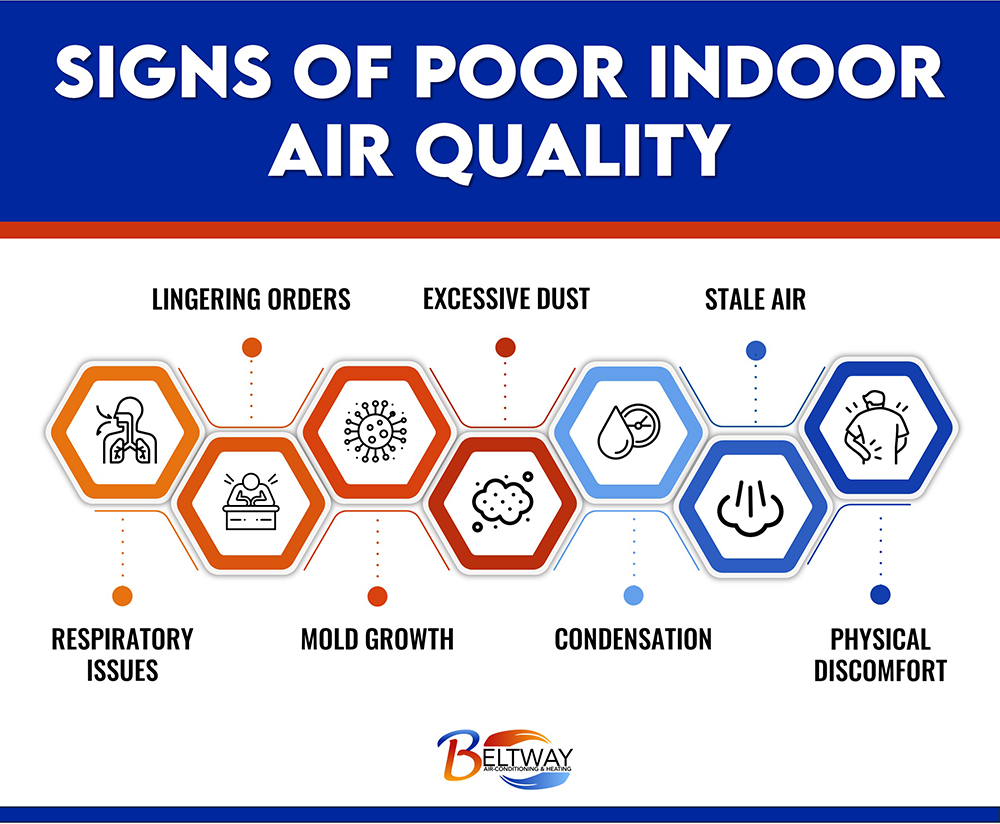
1. Frequent Allergies or Respiratory Issues

If you or the people in your home frequently endure issues such as sneezing, coughing, teary eyes, congestion, or asthma, it could indicate inadequate indoor air quality. These symptoms often arise due to pollutants in the air. Persistent and unpleasant smells in your abode, like musty or chemical scents, can also suggest subpar air quality. These odors may arise from mold, pet dander, or volatile organic compounds (VOCs). The growth of mold and mildew is another telltale sign. These fungi thrive in damp settings, releasing spores that can cause allergies and respiratory ailments. Excess dust on surfaces may also indicate poor air quality, as dust often carries allergens like pollen, mold spores, and pet dander.

signs poor IAQ

Condensation or high humidity levels can create an ideal environment for mold and bacteria, negatively impacting the air you breathe. Stuffy or stagnant air within your dwelling is another indication of compromised air quality. If you often experience headaches, fatigue, dizziness, difficulty concentrating, or general discomfort when indoors, it may be due to poor air quality.

2. Lingering Odors

Lingering smells within your dwelling, like musty scents, mold odors, or potent chemical fragrances, could signify substandard air quality. These odors might emanate from mold growth, pet dander, VOCs, or additional airborne contaminants. Identifying the source of these persistent smells is crucial for rectifying the issue. Mold spores, which thrive in damp environments, can be released into the atmosphere and trigger respiratory problems or allergic reactions. Pet dander, comprising microscopic flecks of skin, can also contribute to the presence of unpleasant odors and worsen air quality.

Furthermore, VOCs, originating from various household products and materials, release gases that can have detrimental effects on health. By addressing these sources and taking appropriate measures to improve ventilation, filtration, and cleaning practices, you can effectively combat the problem of lingering odors.

3. Mold and Mildew Growth

Mold and mildew flourish in moist surroundings and emit spores that trigger respiratory problems and allergies. Detecting observable mold growth on walls, ceilings, or various surfaces serves as an indication of excessive dampness, which, in turn, suggests inadequate air quality.

Addressing these mold and mildew concerns is crucial for maintaining a healthy indoor environment. Eliminating the excess moisture and rectifying the underlying cause are vital steps in mitigating the problem. This may involve improving ventilation, addressing water leaks or seepage, and employing dehumidifiers or air purifiers to reduce humidity levels and airborne contaminants.

4. Excessive Dust

Excessive dust buildup in your home goes beyond mere visual inconvenience; it can serve as a clear indicator of compromised indoor air quality. You may notice a thick layer of dust settling on furniture, countertops, shelves, and floors, signaling potential issues. However, what makes this accumulation concerning is the hidden dangers it harbors. Dust particles consist of tiny airborne substances and debris, creating the perfect environment for various contaminants to thrive. Among these contaminants are pollen, pet dander, mold spores, bacteria, viruses, fungi, insect droppings, chemical residues, and a host of other allergens. It’s like a microscopic party happening right under your nose, and unfortunately, it’s not a party you want to attend. The trouble arises when these dust particles are disturbed, becoming airborne once again and posing a risk for inhalation.

5. Condensation or High Humidity

Excessive humidity within your home can result in condensation forming on windows, walls, or pipes, which provides an ideal environment for the growth of mold and bacteria. These microorganisms release airborne particles, including spores and VOCs. You can inhale them and trigger respiratory issues such as allergies and asthma.

Condensation poses risks beyond health concerns, extending into potential structural damage. When moist air encounters cooler surfaces, tiny water droplets form, leading to condensation. Over time, these accumulated water droplets can seep into building materials, such as wood or drywall, causing deterioration and weakening of the structure. Prolonged exposure to moisture can result in rotting, warping, or even mold growth, compromising the integrity of the building.

6. Stale or Stuffy Air

If your dwelling feels stuffy, deprived of proper ventilation, or if the atmosphere seems motionless and devoid of freshness, it could serve as an indication of subpar indoor air quality. Inadequate circulation of air can confine impurities within your living space, resulting in a heightened density and detrimentally impacting the air that you inhale. This lack of proper airflow creates an environment where pollutants amass, posing potential health hazards. By allowing the air to become stale or stuffy, you inadvertently create conditions that encourage the accumulation of various contaminants.

These contaminants may include allergens, dust particles, pet dander, VOCs, and other detrimental substances. As a result, the air quality within your home deteriorates, potentially leading to discomfort and adverse health effects. Headaches, fatigue, dizziness, difficulties in concentration and an overall sense of discomfort may arise due to the inadequate freshness of the air you breathe.

7. Physical Discomfort or Fatigue

Experiencing physical discomfort or fatigue could be clear signs of compromised indoor air quality, and they should not be ignored. When the air you breathe is contaminated, it can lead to a range of symptoms that impact your well-being. Headaches, for instance, can become persistent and debilitating, making it difficult to carry out your daily activities. The feeling of fatigue can set in, leaving you drained of energy and struggling to find motivation. Concentrating on tasks becomes challenging, affecting productivity and overall performance. Moreover, the general discomfort that accompanies poor air quality can leave you feeling unwell and unsettled in the very place you call home.

It is important to recognize these symptoms, especially if they seem to arise primarily while indoors. Poor indoor air quality can be caused by various factors, such as inadequate ventilation, the presence of pollutants or allergens, or even mold growth. These factors can contribute to an unhealthy indoor environment and exacerbate the discomfort you experience.

If you find yourself frequently facing these physical discomforts within your home, it may be time to investigate and improve your indoor air quality. Taking proactive measures, such as improving ventilation, regularly cleaning and dusting, maintaining humidity levels, and addressing potential sources of pollutants, can significantly enhance the air quality within your living space.

Contact Us Today!

Our team in Hanover, Maryland, provides ductwork, duct cleaning, and air purifiers for your home. Our well-skilled team also provides heating, cooling, and oil-to-gas conversion services. Contact Beltway Air Conditioning and Heating for more information today!

Thermostat placement in Hanover, MD

Choosing the Best Spot for Your Home’s Thermostat

A thermostat acts as the central hub of your home’s heating, ventilation, and air conditioning (HVAC) system, making decisions based on the temperature it senses in its immediate surroundings. A strategically placed thermostat facilitates accurate temperature readings, improving your comfort and potentially saving on your energy bills. External factors such as direct sunlight, air drafts, and furniture positioning can all influence the thermostat’s ability to register climate conditions accurately. Consider the following tips for finding the best spot for your home’s thermostat.

Central Location

The central location of your home typically represents the average temperature of the entire house, making it an ideal spot for the thermostat. If the technician positions the thermostat in the center of a room, it can easily sense and regulate the temperature throughout the home, providing consistent comfort.

This strategic placement helps eliminate hot and cold spots, creating a balanced and comfortable environment. In addition, centrally placing the thermostat can contribute to efficient energy usage, as it prevents the HVAC system from unnecessarily overworking. It’s important to ensure that the chosen central location is not exposed to direct sunlight or drafts, as these can affect the thermostat’s readings.

Away From Heat Sources

Heat emissions trick your thermostat into thinking that your home is warmer than it is, causing it to turn off the HVAC system prematurely. This can lead to inconsistent temperatures around the house, uncomfortable living conditions, and potential energy waste. For instance, if your thermostat is near a fireplace, the heat from the fire can cause the thermostat to read a higher temperature. As a result, during winter, the HVAC system might not heat your home adequately, leaving other rooms cold. Similarly, if the thermostat is close to kitchen appliances like ovens and stoves, it may register higher temperatures, causing cooling issues in summer. Your technician will be able to help you choose an appropriate place for the thermostat.

Avoid Drafty Areas

Drafty areas pose a challenge to the proper functioning of thermostats. These areas are usually found near doors, windows, or other openings that allow air to flow in and out of your home, creating a temperature fluctuation that can mislead the thermostat. If a thermostat is placed in such areas, it may sense this cooler or warmer draft as the home’s overall temperature, causing the HVAC system to overwork or underwork. Overworking can result in higher energy consumption and, consequently, inflated bills. On the other hand, an underworking unit can lead to discomfort as the heating or cooling in the home may become insufficient.

Consider an Interior Wall

Locating your thermostat on an interior wall can contribute greatly to its accuracy. Outdoor weather conditions can affect exterior walls, potentially leading to false readings. By contrast, interior walls are typically more representative of your home’s overall temperature. They are less likely to be affected by external weather factors such as direct sunlight or wind chill. Thermostats on interior walls can better regulate your HVAC system, ensuring a more comfortable and energy-efficient environment.

Most Used Room

Consider installing the thermostat in the room your family uses most frequently. This ensures that the space where you spend most of your time is always comfortable. The thermostat will take readings from this room, adjusting the HVAC system to keep this room’s temperature at your desired setting. Keep in mind, however, that different rooms may require different temperatures to provide optimal comfort. If your home is unusually large, it is possible to use more than one thermostat to get the desired effect.

5 Feet Above the Ground

Thermostats should be installed approximately 5 feet from the ground. This height is ideal because it reflects the temperature zone people inhabit, not the floor or the ceiling. Remember that heat rises and cool air falls. If a thermostat is installed too high, it will read the warmer air near the ceiling, causing the HVAC system to think your home is hotter than it is. Conversely, if installed too low, it senses the cooler air near the floor, tricking the HVAC system into thinking the house is colder than its actual temperature. This can lead to energy inefficiencies and uncomfortable temperature fluctuations.

Avoid Areas With Plumbing

Areas with plumbing fixtures can also lead to false thermostat readings. Hot water from these sources can register as your home’s temperature, causing the HVAC system to overcool or overheat your living space. To ensure accurate readings and efficient energy usage, installing the thermostat away from areas like bathrooms, kitchens, and any spot with hot water and steam is best.

First Floor in a Two-Story Home

The second floor is often naturally warmer than the first floor as heat rises. By placing the thermostat on the first floor, you ensure that the system doesn’t prematurely shut off before the lower level has properly warmed up, keeping an effective balance in temperature regulation. However, if there’s a significant temperature disparity between the floors, consider installing a second thermostat on the upper floor for more precise control. It is important to note that you should typically avoid placing the thermostat in a finished or unfinished basement. Basements can be drafty. Additionally, basements that are partially underground can lead to cooler temperatures that are not representative of the entire home.

Avoid the Empty Hallway

An empty hallway can be a tempting spot to install your thermostat, as it would appear to provide an unobstructed view of the average temperature in your home. Unfortunately, this area often doesn’t maintain a consistent temperature due to drafts from windows or outside doors. This makes it difficult for the thermostat to accurately measure the temperatures throughout your home, leading to inefficient HVAC system operation.

Keep the Thermostat Maintained

Once you’ve found the ideal spot for your thermostat, it’s important to remember that its accuracy can be affected by factors such as dust or dirt accumulation, low batteries, and extreme temperatures. Routine maintenance can ensure your thermostat is always functioning properly, so have a technician from Beltway Air Conditioning and Heating check on it occasionally and clean it as needed. Since the weather in Hanover, MD and surrounding areas can be unpredictable, having a properly functioning thermostat is essential to maintain comfortable temperatures in your home.

Contact Us

Choosing the perfect spot for your thermostat is a task that requires careful consideration. Location, drafts, and heat sources are all important factors in ensuring accurate climate control and energy savings. The team at Beltway Air Conditioning and Heating can help make sure you get it right by guiding you through the installation process and helping you pick out the best possible location so you can enjoy a comfortable and energy-efficient home. We offer dependable AC furnace and heat pump installations, repairs, maintenance, and tune-ups. Other licensed and trained professionals also offer indoor air quality and ductwork solutions. We have an A+ rating with the Better Business Bureau. Contact Beltway Air Conditioning and Heating today for all your HVAC service needs in Hanover, MD, and surrounding areas.

AC Maintenance in Hanover, MD

Making Your AC Unit Last Longer

As the sweltering heat of summer approaches, we rely on our trusty air conditioning units to keep our homes cool and comfortable. However, constant usage and inadequate maintenance can take a toll on these essential appliances, shortening their lifespan and leading to costly repairs or replacements. Fortunately, there are proactive steps you can take to help extend the life of your AC unit, ensuring its optimal performance and efficiency for years to come.

Regular Maintenance and Cleaning

Over time, dust, dirt, and debris accumulate on the various components of your AC unit, including the evaporator coils and air filters. This build-up restricts airflow and reduces the unit’s efficiency. By regularly cleaning these components, you allow your AC unit to operate at its full potential, reducing strain on the system and prolonging its lifespan.

A clean AC unit not only cools the air but also helps maintain a healthy indoor environment. When dirt and allergens accumulate in the system, they are recirculated throughout your home, negatively impacting air quality and potentially causing respiratory issues. Regular cleaning of filters and vents removes these contaminants, promoting cleaner and healthier air.

Likewise, regular AC maintenance and cleaning provide an opportunity to identify and address minor issues before they escalate into major problems. Our technicians can inspect your AC unit, check for leaks, test electrical connections, and lubricate moving parts. By catching and resolving issues early on, you can prevent costly repairs and extend the overall lifespan of your AC unit.

Additionally, a clean and well-maintained AC unit operates more efficiently, resulting in lower energy consumption. When your system is free from dirt and debris, it doesn’t have to work as hard to cool your home, leading to reduced energy bills. Regular maintenance and cleaning are, therefore, not only beneficial for your AC unit but also for your wallet.

Efficient Usage and Temperature Control

Setting your thermostat to an appropriate temperature can have a significant impact on your AC unit’s lifespan. Avoid extreme temperature settings as they force the unit to work harder and longer, leading to increased wear on the components. Instead, aim for a comfortable temperature that isn’t too demanding on the system, allowing it to operate more efficiently and reducing strain.

Equally, programmable thermostats offer a convenient way to regulate your home’s temperature, ensuring efficient usage of your AC unit. With programmable settings, you can adjust the temperature based on your schedule, allowing the unit to run less when you’re away or asleep. This not only saves energy but also reduces the overall workload on the AC unit, prolonging its lifespan.

Furthermore, proper insulation and sealing of your home are crucial for efficient temperature control. Insulating your walls, windows, and doors helps keep the cool air inside, reducing the workload on your AC unit. Additionally, sealing any air leaks or gaps prevents the infiltration of hot air, ensuring your AC unit doesn’t have to work harder to maintain the desired temperature.

Lastly, using ceiling fans can complement your AC unit’s cooling efforts by improving air circulation and creating a wind-chill effect. By utilizing ceiling fans, you can set your AC unit at a slightly higher temperature without sacrificing comfort. This reduces the strain on the AC unit and extends its lifespan.

Adequate Airflow and Ventilation

One of the first steps to ensure proper airflow is to keep the vents and registers unobstructed. Blocked vents restrict the flow of air, causing the AC unit to work harder to maintain the desired temperature. By regularly checking and clearing any obstructions such as furniture, curtains, or debris around the vents, you can allow unrestricted airflow and reduce strain on the system.

Another important aspect is to maintain a clean and debris-free outdoor unit. The outdoor condenser unit is responsible for releasing the heat absorbed from inside your home. If the unit is clogged with leaves, dirt, or other debris, it hampers the heat dissipation process, leading to reduced efficiency and increased strain on the system. Regularly inspect and clean the outdoor unit to ensure proper airflow and ventilation.

In addition to keeping the vents and outdoor unit clear, it’s crucial to have good indoor air circulation. Proper ventilation helps distribute the cooled air throughout your home, preventing hot spots and ensuring consistent cooling. Make sure that your home has adequate ventilation, such as open windows or functioning exhaust fans, to allow air to circulate effectively. This not only improves the performance of your AC unit but also helps maintain a comfortable indoor environment.

Consider the layout of your furniture and room arrangement. Blocked or obstructed air pathways can impede airflow and disrupt the efficiency of your AC unit. Arrange furniture in a way that allows air to flow freely, avoiding the blocking of vents or return air registers.

Filter Replacement and Indoor Air Quality

One of the primary functions of air filters is to protect the internal components of your AC unit from dust and debris. Over time, these filters become clogged with pollutants, reducing airflow and causing the system to work harder to cool your home. By regularly replacing the filters, ideally every one to three months, depending on usage and filter type, you ensure optimal airflow and prevent strain on the AC unit. This not only extends the lifespan of your AC unit but also improves its energy efficiency.

In addition to filter replacement, maintaining good indoor air quality contributes to the longevity of your AC system. When pollutants such as dust, pet dander, mold spores, or volatile organic compounds (VOCs) are present in the air, they can accumulate on the AC unit’s components, leading to reduced performance and potential breakdowns.

To enhance indoor air quality, consider using air purifiers, keeping your home clean and free of dust, and minimizing the use of products with harsh chemicals or strong odors. These measures help reduce the contaminants that can negatively impact your AC unit and its overall lifespan.

Professional Inspections and Repairs

Professional inspections provide an opportunity to identify any underlying issues that may be affecting the performance of your system. Maintenance plans from Beltway Air Conditioning and Heating can detect problems such as refrigerant leaks, clogged filters, or worn-out components that could lead to more significant malfunctions if left unaddressed.

Moreover, when a problem arises, it’s essential to address it promptly and accurately. Neglecting necessary repairs can lead to further damage, potentially shortening the lifespan of your unit.

By relying on Beltway Air Conditioning and Heating, you can have peace of mind knowing that your AC unit is in capable hands. We have the expertise, tools, and knowledge to fix issues correctly and prevent any unnecessary strain or damage to the system. We offer heating and cooling services such as furnace and heat pump repair, air conditioning installation and replacement, and indoor air quality solutions in Hanover, Maryland and the surrounding areas. You can trust our technicians to clean and tune up your system, ensuring that it runs smoothly and efficiently, saving you money in the long run.

At Beltway Air Conditioning and Heating, we also offer financial solutions with competitive interest rates to help you invest in the comfort of your home. Contact us today to learn more about us and the services that we offer in the Sandy Springs, Annapolis, and Hanover areas.

Everything You Need to Know About the Frequency of Duct Cleaning

When it comes to maintaining clean and healthy indoor air quality, you should consider the cleanliness of your air ducts. Air ducts are crucial in delivering clean air to your home or commercial building. Over time, however, these ducts can become filled with dirt, dust, debris, and other contaminants, impacting the air you breathe and potentially leading to health issues. This article will explore how often you should clean your air ducts to ensure optimal indoor air quality.

Why Is Air Duct Cleaning Important?

Your home’s HVAC ductwork plays a vital role in circulating air throughout your home. However, these ducts can become a breeding ground for dust, allergens, and other pollutants. Regular air duct cleaning is essential to maintain the cleanliness and efficiency of your HVAC system. Here are a few reasons why air duct cleaning should not be overlooked.

Improved Indoor Air Quality

The air circulating through your ducts can carry dust, pollen, pet dander, and mold spores. When these contaminants accumulate in your ducts, they can be released into your home, contributing to poor indoor air quality. This can lead to respiratory issues, allergies, and other health problems. Cleaning your air ducts regularly can significantly improve your home’s indoor air quality.

Enhanced Energy Efficiency

When your air ducts are clogged with dust and debris, airflow can be obstructed, making your HVAC system work harder to maintain the desired temperature. This can result in increased energy consumption and higher utility bills. Keeping your air ducts clean ensures that your HVAC system operates at maximum efficiency, saving you money on energy costs.

Prolonged HVAC System Life Span

A clean and well-maintained HVAC system can last longer than a neglected one. When dust and debris accumulate in your air ducts, they can find their way into the HVAC system components such as the blower fan, motor, and coils. This can cause unnecessary wear and tear, leading to premature failure of these parts.

Factors Affecting the Frequency of Duct Cleaning

The frequency at which you should clean your air ducts depends on several factors. While the general recommendation is to clean them every three to five years, certain circumstances may warrant more frequent cleaning. Below are some of the factors.

Number of Residents and Pets

The number of people and pets in your household can impact the cleanliness of your air ducts. More residents and pets mean more dust, hair, and dander circulating through your HVAC system. If you have a large family or multiple pets, consider more frequent air duct cleaning every two to three years to maintain optimal indoor air quality.

Allergy Season and Environmental Factors

If you or your family members suffer from allergies or live in an area with high pollen or allergen counts, you may need to increase the frequency of air duct cleaning. Allergens can accumulate in your air ducts and circulate throughout your home, triggering allergic reactions and compromising indoor air quality. Cleaning your air ducts more frequently during allergy seasons can help alleviate these issues.

Visible Mold or Mildew

Mold and mildew thrive in damp and humid environments, making your air ducts an ideal breeding ground. If you notice any sign of mold or mildew in your air ducts, such as discoloration or musty odors, it is crucial to address the issue promptly. Mold and mildew can cause respiratory problems and other health concerns. In such cases, professional air duct cleaning is necessary.

Pest Infestation

Rodents, insects, and other pests can find their way into your air ducts, contaminating the air circulating throughout your space. If you notice signs of pests, such as droppings or unusual odors, it is essential to have your air ducts cleaned immediately. Professional duct cleaning can remove pests and their debris, ensuring clean and pest-free air in your home.

Excessive Dust or Debris

If you notice excessive dust, debris, or visible particles blowing out of your vents, it may be a sign that your air ducts need cleaning. Over time, dust, pet dander, and other particles can accumulate in your ductwork, hindering the airflow and diminishing the efficiency of your HVAC system. Regular air duct cleaning every three to five years can prevent excessive dust buildup and maintain optimal airflow and performance.

Professional Air Duct Cleaning Process

When cleaning your air ducts, hiring a professional HVAC technician specializing in air duct cleaning is essential. Professional duct cleaning companies have the expertise and equipment to thoroughly clean your ductwork, removing all contaminants and ensuring optimal air quality. The process involves the following steps.

Inspection

A professional technician will first inspect your air ducts to assess the level of contamination and identify any issues such as mold growth or pest infestation.

Cleaning Preparation

The technician will then prepare the area for cleaning, ensuring that furniture and other belongings are protected.

Duct Cleaning

Using specialized equipment, the technician will remove the dust, dirt, debris, and contaminants from your air ducts. They may use brushing, vacuuming, or air pressure techniques to ensure a thorough cleaning.

Sanitization

If mold or mildew is present, the technician will sanitize the ducts to eliminate any remaining spores and prevent future growth.

Final Inspection

Once the cleaning process is complete, the technician will conduct a final inspection to ensure all contaminants have been removed and the ducts are clean and ready for use.

Signs Your Air Ducts Need Cleaning

You need to know the signs that indicate your air ducts need cleaning. Recognizing these signs early on can prevent further damage to your HVAC system and improve indoor air quality. Here are some common signs that it’s time to clean your air ducts.

Visible Dust and Debris

If you notice dust buildup on your vent covers or pet hair trapped in your vents, your air ducts are due for cleaning. Additionally, if you observe a thick layer of dust on the grill of your return air registers, it’s time to schedule a professional air duct cleaning service.

Clogged Air Filters

The condition of your air filters can provide valuable insight into the state of your air ducts. Your ductwork is likely contaminated if your air filter is clogged with dust and debris. Cleaning or replacing the air filter is a temporary solution, but professional air duct cleaning is necessary to remove the accumulated dirt from your system.

Dust in the Furnace Compartment

Inspecting the furnace compartment is another way to determine if your air ducts need cleaning. If you notice a significant amount of dust on the blower fan, motor, or furnace controls, it indicates dirty air ducts. Dust in these areas can hinder the performance of your HVAC system and lead to various issues.

Dusty Air Conditioning Coil

The air conditioning coil is responsible for cooling the air that passes through your system. If the coil is dusty or has dust clinging to the housing walls, it indicates that your air ducts are not clean. A dirty air conditioning coil can reduce the efficiency of your HVAC system and impact its ability to cool your home effectively.

You should not ignore these signs, as they indicate a buildup of dust, dirt, and contaminants in your air ducts. Scheduling a professional air duct cleaning between one to three years will help restore the cleanliness and efficiency of your HVAC system.

Regular air duct cleaning is essential for maintaining a healthy indoor environment and ensuring the optimal performance of your HVAC system. While the general recommendation is to clean your air ducts every three to five years, you should consider factors affecting the frequency of duct cleaning. Our team is always ready to assist you with air conditioning and heating services in Hanover and the surrounding areas. From fixing broken AC units to furnace maintenance, we can quickly get you back to your comfort zone. We perform installations as well. Contact us at Beltway Air Conditioning and Heating today for more information.

Reasons Your AC is Freezing Up and What to Do

AC Repair or Replacement? What to Consider

On a hot and humid summer day, you might look forward to relaxing in the air conditioning after work, or you may plan to spend a relaxing and cool afternoon at home. A malfunctioning air conditioner, however, can ruin your peace and comfort. When this situation arises, you’ll need to schedule an appointment for service and might need to decide if repairs are warranted or if it’s time to replace the air conditioner.

Professional Guidance

One of the best ways to know if you should repair or replace your air conditioning unit is to simply ask one of our team members. By doing so, you can get professional and honest guidance on which option is right for your home. You can also learn how much more life you might expect to get out of your unit if you opt for repairs instead of replacement. This information allows you to make a sound and informed decision.

Safety Concerns

Make safety a major priority when determining whether to repair or replace the unit. While some issues can be repaired, those fixes might only be temporary. In other words, the problem with safety may come back in a short while. Safety issues, such as electrical problems, that threaten the lives of you and your family warrant a replacement.

Unit’s Age

Another major determining factor is the age of the unit. Replacing a brand-new air conditioner, for example, is typically a frivolous expense. However, you should check if the unit is covered by warranty. In that case, getting a replacement without an additional charge is a possibility. Keep in mind that if your air conditioning unit is already quite old, replacement may be the best option. The unit may be eligible for repairs now, but that status could change soon.

Availability of Replacement Parts

If you have an older air conditioner, replacement parts might be more difficult to find and potentially costlier as a result. You can also ask the technician if the parts are likely to become more challenging or even impossible to procure in the future. Getting a new air conditioner could be the smarter idea so that you’re not in a situation where replacement parts are no longer available.

Status of Your Warranty

You should also check the status of your warranty when deciding between a repair and a replacement. Even when your unit doesn’t require massive repairs right now, you could end up having to pay large sums of money in the future if your warranty is expired. Starting fresh with a new unit and warranty could work well for your budget and your home’s comfort level.

Frequency of Maintenance

Take into account how diligent you’ve been in scheduling regular AC maintenance for your air conditioning. If many years have gone by without maintenance, it may be time to replace the unit to avoid having to deal with the problems that might have been building up.

Cost Considerations

If you’re like many homeowners, cost plays a significant role in any upgrades or replacements. Keep in mind that you should consider the long-term effects in terms of cost as well. For example, having the unit repaired is typically less expensive than purchasing a replacement. However, depending on the state of the unit, you might need to pay for repairs yet again shortly. In short, the unit might keep requiring repairs. Even though you will likely have to spend more money upfront for a replacement, you could save funds over time.

Major Repairs

When you’re thinking about the costs, you should also compare the price of major repairs to the price of a new unit. If your current air conditioner has issues with a big component, such as the compressor, the cost of the repairs might be high. Buying a new unit entirely might not be that much more expensive than repairs. When the prices are close together, consider the benefits of opting for the new unit.

Energy Efficiency

Our team members can also evaluate how energy efficient your current air conditioning unit is. If your air conditioner is using up an excessive amount of energy, getting repairs might not be worth it. Instead of putting money toward repairs, you could purchase a new unit that is more energy efficient. Opting for a more energy-efficient model can help you to save on monthly bills as well.

Indoor Air Quality

Poor indoor air quality can lead to or exacerbate health issues for you and your loved ones. Our staff members can conduct an indoor air quality check and determine if your air conditioner is contributing to any issues. In such cases, replacement may be the best option. Repairs might temporarily resolve the issues with air quality, but the hazards could soon return.

Comfort Level

Depending upon the age and condition of your air conditioner, the unit may simply not be able to function at maximum capacity. While the technicians might be able to make repairs to keep the unit safe and functional, the system could lack the ability to get your house as cool as you want the space to be. The purpose of an air conditioner is to keep you comfortable on hot days, and if the unit isn’t able to serve its purpose, replacement is likely the better option.

Future Housing Plans

You should also factor in how long you’re planning to live in the house. If you’re going to put the house on the market soon, spending the money on a brand-new air conditioning unit may very well not be worth it. Of course, you also have to consider the condition the unit is in. An air conditioning unit in bad shape might mean that your house is less attractive to potential buyers and that you can’t get the sale price that you want. Checking out comparable sales in the neighborhood can give you a sense of what choice makes the most financial sense.

Repairable Issues

Some issues with air conditioning units can be reasonably repaired. For example, the unit might have a minor leak that our team members can take care of. The unit might also have suffered minor physical damage during a storm or cold winter. In addition to getting the repair work done, you can also learn how to prevent these problems from happening again in the future.

At Beltway Air Conditioning and Heating, we serve heating and cooling needs in Hanover and the surrounding areas. We offer repair, replacement, and maintenance services for heating and cooling units. Our team members can also conduct an indoor air quality check and tackle ductwork projects. If you’re interested in furnaces, an oil-to-gas conversion or heat pumps, we can complete that work too. To schedule an appointment to improve your home, contact Beltway Air Conditioning and Heating today. You can also book an appointment online and get a virtual estimate.

AC Maintenance in Hanover, MD

5 Important Benefits of Preventive Air Conditioning Maintenance

During the hot summer weather, you rely on your air conditioner unit in order to keep your home or place of business comfortable and pleasant. If service issues arise, they can greatly inconvenience you and create costly repairs. However, just like routine maintenance for your vehicle, preventive air conditioning maintenance can help you ensure that your AC unit performs reliably and optimally. In the information below, we are going to outline five key benefits of preventive air conditioning maintenance. Let’s take a deep dive into the advantages that preventive air conditioning maintenance has to offer.

1. Saves Money

During the summer, your air conditioner can become one of the greatest contributors to a high energy bill. Moreover, the consistent use of your AC unit places a heavy load on the various mechanisms that allow your air conditioner to function. These components can be quite expensive, and if one of them breaks down, it can create a serious strain on your finances.

When you conduct regular preventive air conditioning maintenance, you can reduce your chances of a breakdown by 95%. This can create a sense of security that helps you protect your financial expenditures during the summer season. Moreover, preventive maintenance ensures that your HVAC system performs at peak efficiency. The US Department of Energy determines that efficient AC units can help you save up to 30% on your energy utility bill.

In addition to these benefits, HVAC manufacturers often require proof that your air conditioner receives routine maintenance. If you make a warranty claim without scheduling routine maintenance, you might have to pay for the repair or replacement out-of-pocket. Since many of your air conditioner’s components are expensive, you want to ensure that these components are covered by your warranty. Scheduling preventive air conditioning maintenance will help you keep these components covered by your warranty.

2. Improved Air Quality

Your air conditioning unit plays a heavy role in the quality of air that exists in your household or place of business. The EPA estimates indoor pollutant levels can be two to five times higher than outdoor pollutant levels. These common airborne agents can include dust, dust mites, pollen, pet dander, mold, and cigarette smoke in some cases. If your air conditioner unit doesn’t receive preventive services, it can impede the filtration of air and obstruct the flow of clean air into your indoor environment.

With preventive air conditioning maintenance, you can maintain cleaner air inside your indoor environment. The routine maintenance services will help you maintain clean ductwork that minimizes any chances of unwanted mold. Preventive maintenance technicians can also replace your filters if necessary, which is critically important to maintaining your air quality and to ensuring optimal performance from your AC unit. These measures not only help ensure that the air in your home or place of business remains clean, but they also help maintain the constant airflow that is necessary for peak performance.

3. Increases Equipment Life Span

Utilizing preventive air conditioning maintenance is the best way to ensure that you obtain maximum longevity from your HVAC system. If properly maintained, your HVAC system could last up to 20 years. The procedures that go into preventive air conditioning maintenance minimize the impact of the environmental stressors that your AC unit deals with. HVAC technicians will work to ensure that your AC unit is cleared of debris, dust, mold, and other unwanted agents that can increase the amount of wear and tear on your system. These simple but important procedures can help your air conditioner last as long as possible, ensuring that you get the most value and longevity from your AC system.

4. Lessens Environmental Impact

One of the key goals behind scheduling preventive air conditioning maintenance is to help your AC unit perform as efficiently as possible. Not only does this help reduce your energy costs and increase the life span of your air conditioner, but lowered energy consumption from your HVAC system also helps you minimize your carbon footprint throughout the summer season.

In addition to reducing your carbon footprint, you can work with your HVAC technician to discuss options that can allow you to utilize more environmentally friendly refrigerant options for your air conditioner. The EPA is focused on phasing out chemical agents that are harmful to the environment, and HVAC technicians are required to have an EPA Section 608 Certification for the controlled refrigerants they utilize. Upon request, your HVAC technician will inform you about the type of refrigerant you currently use, its impact on the environment, and any available changes you can make in the future.

5. Enhancing Reliability and Safety

With all of the aforementioned benefits, it’s easy to see how preventive air conditioning maintenance enhances the reliability of your HVAC system. Procedures such as ductwork cleaning help your air conditioner maintain even cooling of the air in your indoor environment. By maintaining cleanliness and updating the various mechanisms in your air conditioner unit, preventive maintenance ensures that you can rely on your HVAC system to keep your home or place of business comfortable.

The presence of excess debris and mold does not only compromise your air conditioner’s ability to properly cool your home, but it can also lead to problems that can have a greater impact on your home or place of business. The obstruction to airflow that dirty ducts and outdated filters produce can contribute to further problems such as water leakage. These issues not only present greater compromises to the performance of your air conditioner, but they can possibly harm the infrastructural integrity of your home as well.

While there are times when you will need to replace your air filters on your own, ductwork cleaning is best performed by your HVAC technician. Scheduling preventive air conditioning maintenance not only helps you keep your AC unit in optimal condition, but it can also help you protect your home from any collateral damage that it can receive from faulty air conditioner performance.

How to Schedule Preventive Air Conditioning Maintenance

Preventive air conditioning maintenance can be one of the most important decisions you can make for your home or place of business. It’s a relatively small investment that not only ensures optimal performance from your HVAC system, but it can also vastly improve your ability to maintain a safe, healthy and secure indoor environment. Considering all the benefits that preventive maintenance offers, we encourage you to contact us at Beltway Air Conditioning and Heating about our preventive maintenance services.

We specialize in providing Hanover, Maryland and its surrounding areas with thorough preventive air conditioning services that include inspection, filter replacement, ductwork cleaning, tune-ups and much more. We are here to inform you about any areas of concern that your unit might have and work closely with you to discuss the best course of action for upgrades, repairs and replacements. To get in touch with us at Beltway Air Conditioning and Heating, simply use our online contact form or call us by phone during our normal service hours.

AC Repair in Hanover, MD

3 Signs That Your Air Conditioning System May Need Repairs

When working properly, your AC should be able to easily keep your home fully cool on even the hottest days. An AC that won’t turn on or can’t keep your home cool is an obvious sign that the system needs to be repaired. It is also important that you watch out for these other issues as they are also good indicators that your AC needs to be repaired.

1. Screeching, Grinding, Rattling or Other Unusual Noises

Your air conditioning will always make some noise when it’s on. However, loud or unusual noises, whenever your AC is running, is usually a sure sign that the system needs some type of AC repair.

For instance, you may hear a loud screeching or squealing noise coming from either the outdoor AC unit or from the blower fan inside your home. If the noise is coming from the outdoor unit, it indicates that there is a problem with the unit’s fan motor. Most newer AC units have a direct-drive fan motor, which has internal bearings that allow it to spin. In this case, the screeching or squealing noise usually indicates that the bearings are worn out and need to be replaced. If your AC unit is much older, the fan motor is likely belt-driven. If you hear screeching or squealing coming from a belt-driven motor, it indicates that the fan belt is either worn out or misaligned. If you hear a screeching or squealing coming from the blower inside the home, it also typically means that either the bearings need replaced or the fan belt needs adjusted or replaced depending on whether the motor is belt-driven or direct-drive.

Your AC could also make a loud grinding noise that sounds like metal scraping against metal. If the noise is coming from the outdoor unit, it typically means that either the fan assembly is loose or one of the fan blades is misaligned. Both of these issues can cause the fan to scrape against the side of the unit and produce a loud grinding sound. Similarly, if the noise is coming from inside the home, it typically means that the blower is loose or misaligned and scraping against its housing.

Rattling noises coming from the outdoor AC unit often indicate that some component is loose and needs to be tightened or replaced. Another possibility is that one or more of the rubber isolation feet that the unit sits on has started to wear out. When this happens, the unit can become unbalanced and start to vibrate and make a loud rattling sound whenever it is running.

A humming noise coming from the outdoor unit is often a sign of a much more serious problem as it usually indicates that there is an issue with the AC compressor motor. This type of noise is definitely not something you want to ignore as it could lead to the compressor motor burning out if you continue to run your AC without having it inspected and the issue repaired.

You may also hear either the outdoor AC unit or the blower make a repeated clicking noise when it tries to start. If you hear this noise and the AC unit or blower won’t run, it indicates that the unit’s start capacitor has failed and needs to be replaced. The start capacitor stores a powerful electrical charge that it releases to essentially kick start the AC fan and compressor motor or the blower motor. If the capacitor fails, the unit typically won’t have enough power to start. A failed capacitor will almost always produce an audible clicking noise when the unit tries to run. You may also hear the motor make a humming sound along with the clicking noise, and this humming is a result of the motor trying to start on its own without the additional power supplied by the start capacitor.

A hissing or bubbling sound when your AC is running is also a serious problem you will want to have checked out immediately. In this case, it typically indicates that there is a refrigerant leak somewhere in the system.

2. AC Is Short Cycling

Short cycling is when an AC system turns on and then shuts back down before it completes a full cooling cycle, i.e. before it has fully cooled the home to whatever temperature the thermostat is set to. Even on mild days, it should still take your AC at least 15 minutes to complete a full cycle. If the unit only ever runs for five or 10 minutes, it is an obvious sign that something is preventing it from working correctly. When a unit is short cycling, it will also typically only stay off for a few minutes before turning back on again.

Short cycling is a serious problem as constantly turning on and off puts a lot of additional strain on the AC unit and will contribute to increased wear and tear on all of its components. If the unit continually short cycles, it can also drastically shorten its lifespan. Short cycling will also contribute to much higher energy costs. All AC units use around three to five times more energy when first starting up than they do when running. If the unit constantly cycles on and off multiple times in an hour, it will use far more energy than it would if it completed two or three full cycles in an hour as it should when working correctly.

Short cycling can result from a variety of different issues. One possibility is that the unit is oversized and too powerful for the home. An oversized AC will typically always short cycle, which means it will use much more energy and not cool as effectively as a properly sized unit. Unfortunately, the only solution to this problem is to have the unit replaced with an AC that is the proper size for your home.

Short cycling can also occur due to electrical issues such as frayed or damaged wiring or loose electrical connections. An AC can also short cycle due to overheating, as the unit will always shut down if it overheats to prevent possible damage to the compressor motor and other components. The only way to know for sure why your unit is short cycling is to have an AC technician fully inspect it.

3. AC Runs Continuously

If you turn your AC on when the temperature inside your home is more than 5 degrees higher than the thermostat setting, the unit may take up to an hour to complete a full cycle and cool the home to the desired temperature. However, your AC still should never run continuously for hours at a time. If the unit does start to run for much longer periods, you should first replace the air filter. A dirty air filter will restrict how much warm air can be drawn into the system and drastically reduce the rate of cooling.

If replacing the air filter doesn’t solve the problem, you’ll want to have your entire AC system inspected as soon as possible. This problem could mean that the blower motor is beginning to wear out or has some other issue that is preventing it from circulating enough air. Another possibility is that there are major leaks in the ductwork, which can also limit the blower’s ability to circulate sufficient air. The outdoor unit may also be overly dirty or clogged with debris, as this can prevent the unit from dispersing heat properly and lead to the refrigerant temperature staying too high for the system to cool effectively.

At Beltway Air Conditioning and Heating, we work on all AC makes and models and our team can help you overcome most all AC issues. We specialize in HVAC repairs and maintenance as well as air conditioning and heating installations, and we can also help if you need any heating, ductwork or indoor air quality services in the Hanover area. Give us a call today if you need AC repairs or if you have any questions.

AC maintenance in Hanover, MD

Is Regular AC Service Essential to Keep My Warranty Active?

If the air conditioner in your Hanover, MD home ever malfunctions or fails, it could be costly to repair or replace. However, if you have an active manufacturer warranty, you may be able to sidestep the cost of repairs entirely. In most cases, to ensure that warranty protection is always available, you must schedule regular AC service with a licensed professional. Read on to find out why and to learn more about keeping your warranty valid.

Air Conditioner Warranties Are Two-Party Agreements

Equipment warranties are easy to overlook. Whenever you receive one with a purchase, you may simply tuck the related documentation away until you need to file a claim. However, product warranties aren’t just promises and provisions from manufacturers to consumers. Instead, they are mutually binding agreements. Just as they list the warranty protections offered by the manufacturer, these contracts also lay out the terms and conditions that consumers must adhere to.

Many air conditioning equipment manufacturers require a professional tune-up every 12 months to keep the equipment warranty active. Homeowners are often advised to schedule their annual AC maintenance just prior to the warm weather to optimize the benefits of this service. When you read through your warranty documents, you’ll likely find that your air conditioner manufacturer has strict guidelines for filter changes, HVAC air duct maintenance, and other preventative maintenance tasks.

Other Warranties Requiring Annual AC Service

Scheduling annual air conditioner maintenance isn’t just necessary for preserving your AC manufacturer warranty. These services are also a common requirement in home insurance policies and home service agreements. If you purchased a home warranty that covers your HVAC system, your home warranty company could request documented evidence of yearly tune-ups when processing your claims. Many home insurance companies make similar requests. Home warranty providers and insurance companies can deny claims outright if AC inspections uncover proof of general neglect.

Understanding Your Warranty Coverage

Product manufacturer warranties cover AC repair and replacement costs when air conditioner problems result from substandard manufacturing practices or defective materials. Home insurance plans may pay for air conditioner problems resulting from floods, lightning strikes, fires, and other covered perils.

If you have an older air conditioner, a home warranty agreement may cover age-related issues. It might even cover the entire replacement cost when your air conditioner reaches the end of its lifespan. Together, these three protections can help you avoid overwhelming out-of-pocket spending throughout the lifetime of your cooling system. Thus, paying for an annual tune-up service to maintain compliance with these agreements is worth the cost.

How Product Manufacturers Know When Annual AC Service Has Been Skipped

Professional AC tune-up service is a strategic requirement for insurance companies and warranty issuers. After all, annual AC maintenance is the best way to reduce the likelihood of claims. Air conditioners that are professionally maintained have few to no airflow issues, perform more efficiently, and sustain much less wear and tear than ill-maintained cooling systems. All of this leads to a longer lifespan for the system.

Having to file frequent claims with home service companies, product manufacturers, or home insurance companies is often an indication of insufficient maintenance. If you have a relatively new air conditioner and have two repair issues during the same cooling season, your warranty issuer will probably request a copy of your maintenance records. In fact, each time you file a claim, there is always the likelihood of having companies request this documentation.

Even when presenting maintenance records isn’t a requirement for claim processing, warranty issuers and home insurance companies still have ways of verifying that homeowners have been compliant. When approving payment for warranty repairs or covered replacements, the notes that HVAC service providers supply are carefully reviewed. If the HVAC company that performs your AC repair discovers a thick build-up of lint-like debris on your air filter, in your HVAC air ducts, or in your home’s air vents, they will report this information as required. Conditions like these develop and fester when homeowners fail to change the filter often enough and aren’t scheduling regular tune-ups with a professional HVAC technician.

Other Common Situations That Void AC Warranties

Reading and understanding your warranty agreements completely is the best way to keep their available protections intact. Not only do these documents detail the exact requirements for equipment maintenance, but they also help consumers avoid common and incredibly costly missteps. Other conditions that insurance companies and warranty issuers require may include:

  • Licensed HVAC companies to install all AC equipment
  • Air conditioners to be sized properly for their service areas
  • All system repairs to be performed by licensed HVAC professionals

You may even discover that making equipment upgrades, performing repairs with generic parts, and adding certain integrated accessories require special permissions. Many equipment modifications are outright prohibited by these contracts.

One all-too-common mistake homeowners make is letting minor AC problems fester before scheduling repair service. This could be as simple as ignoring strange sounds or odors while your air conditioner is on, neglecting to report hot or cold spots in your home, or continuing to use your air conditioner even though it’s rapidly cycling off and on.

How to Avoid Out-of-Pocket Expense for Annual AC Tune-Up

The good news is that annual AC tune-up service might not require any out-of-pocket spending on your end. For instance, if you have a home service agreement, this plan could cover the cost of one annual service visit. Your home insurance plan might also cover a yearly tune-up.

Cut Costs With an HVAC Preventative Maintenance Plan

Another way to cut the costs of mandatory AC service is by investing in a preventative maintenance plan. These annual plans often include free service visits, priority scheduling, and discounts on equipment repairs. At Beltway Air Conditioning and Heating, our preventative maintenance program includes loyalty credits, priority service, a bi-annual check-and-clean service, and up to 15% off most AC repairs. Best of all, our clients can book service online and pair these discounts with our coupons and other seasonal savings.

A preventative maintenance plan makes getting regular tune-up service and timely repairs much cheaper. It will also make it easier to stay compliant with warranties and home insurance policies. When you join our service club, you will get early reminders when the time to schedule service is drawing near. You can also work with us to track the lifespan of your cooling equipment and make advanced preparations for replacement before you need a new AC system.

At Beltway Air Conditioning and Heating, we are proud to serve the residents of Hanover, MD and the surrounding areas. In addition to furnace, heat pump, and air conditioner services, we also offer custom ductwork, whole-house humidifiers, and advanced indoor air quality solutions. Our experts will help you navigate the world of warranties to determine which HVAC products suit your needs. To schedule your annual air conditioner tune-up service or learn more about our preventative maintenance plan, get in touch with Beltway Air Conditioning and Heating today!

Air Purifier System in Hanover, MD Residential Home

Improving Your Indoor Air: The Role of Air Purifiers

Do you ever wonder how the air in your home or office can affect your health and well-being? Air pollutants such as dust, pollen, and pet dander can aggravate allergies and asthma, while chemicals and volatile organic compounds (VOCs) can cause headaches, nausea, and other unpleasant symptoms. Fortunately, an air purifier can help clean the air and improve indoor air quality. But exactly how does an air purifier work? Read on as we explore the inner workings of air purifiers.

What Is an Air Purifier and How Does It Work?

An air purifier is an electronic device designed to remove contaminants from the air inside a room or building. These contaminants can include smoke, dust, pollen, and other airborne particles that can negatively affect indoor air quality and cause health problems.

Air purifiers draw air through an intake vent and pass it through a series of filters or other purification technologies. The clean air is then released into the room through an exhaust vent. Some air purifiers also have sensors that can detect the level of pollutants in the air and adjust the fan speed or purification settings accordingly.

Types of Air Purifiers

Different types of air purifiers use various technologies to clean the air. Below is a description of five popular types of air purifiers.

HEPA Purifiers

HEPA air purifiers are the most popular and widely used type of air purifier today. HEPA stands for high-efficiency particulate air. HEPA purifiers can trap particles as small as 0.3 microns, including most airborne allergens, dust, and pollutants. HEPA purifiers force air through a fine mesh that traps airborne particles. They are very effective at removing allergens, dust, and other particles from the air, but they do not eliminate odors or harmful chemicals.

Activated Carbon Air Purifiers

Activated carbon purifiers utilize a highly porous material treated with oxygen to create an extensive network of tiny pores between carbon atoms. The purpose of these pores is to trap chemicals, gases, and unpleasant odors. The untreated air passes through the activated carbon layer to eliminate pollutants and contaminants. The tiny pores then capture the unwanted substances, thus purifying the air.

UV Air Purifiers

UV purifiers use ultraviolet light to kill bacteria, viruses, and other microorganisms in the air. UV purifiers work by exposing the air to UV-C light, which is the most effective type of UV light for killing germs. UV light disrupts the DNA of the microorganisms, rendering them harmless. UV purifiers effectively kill bacteria and viruses but don’t remove particles or odors from the air.

Ionizers

Ionizers are air purifiers that emit negative ions into the air. Negative ions bind with particles that carry a positive charge, including common irritants like dust and allergens, leading to an increase in their overall weight and a subsequent drop to the ground. Ionizers effectively remove particles from the air but do not remove odors or harmful chemicals.

Ozone Air Purifiers

Ozone is a highly reactive gas that interacts with pollutants and contaminants in the air, breaking them down into harmless substances. Ozone generators work by producing ozone and releasing it into the air. Ozone generators are effective at removing odors and killing bacteria, but they can also harm humans and pets if not used properly.

Benefits of Air Purifiers

Improved Respiratory Health

Contaminants like smoke, dust, and pet dander can irritate the lungs and exacerbate asthma and respiratory distress. One of the most important benefits of air purifiers is their ability to remove harmful pollutants from the air, which can significantly impact respiratory health.

Allergy Relief

Common allergens, such as pollen, dust mites, and pet dander, can trigger allergic reactions and cause symptoms that include sneezing, itching, and congestion. Air purifiers can pull these allergens from your environment and provide significant relief for people who suffer from allergies.

Improved Sleep

Poor indoor air quality can lead to sleep disturbances, including snoring, coughing, and congestion. By removing pollutants, air purifiers can create a more comfortable sleeping environment, allowing for better sleep quality and more restful nights.

Reduced Risk of Illness

Bacteria, viruses, and other pathogens can be transmitted through the air and cause various illnesses, from the common cold to more serious respiratory infections. Air purifiers can help reduce the risk of illnesses by removing these harmful contaminants from the air.

Improved Indoor Air Quality

Finally, air purifiers can improve overall indoor air quality by removing pollutants and allergens from the air. This results in multiple benefits, from reducing unpleasant odors to creating a more comfortable and healthy indoor environment.

5 Factors To Consider When Choosing an Air Purifier

There are several factors to consider before purchasing an air purifier to meet your needs. Here are five things to think about:

1. Room Size

Air purifiers are designed to work within specific square footage, and using an air purifier that is too small for a room will not effectively clean the air. On the other hand, using an air purifier that is too large for a room can result in unnecessary energy consumption and expense.

2. Noise Level

Air purifiers can produce noise, and some people find this distracting. If you plan to use the air purifier in a bedroom or another quiet space, consider the amount of noise it produces before you purchase it. Look for models with a low decibel rating or a night mode that runs at a quieter level.

3. Energy Consumption

Air purifiers can use a significant amount of energy, so it is crucial to choose an energy-efficient model. Look for air purifiers with an ENERGY STAR® certification or a low wattage rating.

4. Maintenance

Air purifiers require regular maintenance to continue functioning effectively. Additionally, consider the cost of replacement filters, as this is an ongoing expense to factor into your decision. Some models have washable filters, while others require replacement filters every few months. Choose a model that is easy to maintain and has replacement filters that are readily available and affordable.

5. Additional Features

Some air purifiers come with additional features that may be useful for your specific needs. For example, some models have built-in air quality monitors that display the current air quality level. Others have multiple fan speeds or a timer that you can set to turn the purifier on or off at specific times. Consider which additional features are important to you and choose a model that includes those extras.

Call Professionals Today!

Are you concerned about the indoor air quality in your home or office? Look no further than Beltway Air Conditioning and Heating! Our team of experienced professionals is dedicated to providing top-notch heating and cooling services to keep you comfortable year-round. We also specialize in improving indoor air quality through air purification systems, duct cleaning, whole-house humidifier installation, and more. Customers in Hanover and the surrounding areas trust us to keep their spaces healthy and comfortable. Contact Beltway Air Conditioning and Heating today to schedule a consultation!

AC Maintenance in Hanover, MD

4 Reasons to Consider Getting an AC Tune-Up Before Summer

It is essential to maintain your air conditioner to keep your Hanover, MD home comfortable and safe. Like any other appliance, AC units require occasional tune-ups and repairs. Investing in an AC tune-up enhances performance and can save you money in the long term. Here are four reasons why getting an AC tune-up is worth it.

1. Prevent Emergency Repairs

Your air conditioner is a complex system with multiple components. It is crucial to detect and address potential problems ahead of time to ensure it runs smoothly. Otherwise, you risk an AC malfunction, which could require costly emergency repairs.

A regular AC tune-up is similar to changing your car’s oil. It is a preventative measure that anticipates problems before they occur rather than a reactive approach that forces you to pay for breakdowns. Investing in a tune-up is usually more cost-effective than repairing or replacing a broken air conditioner.

2. Save Energy

As part of the air conditioner tune-up, our technician will inspect the filters to ensure they’re clean. Clean filters play a crucial role in maintaining AC efficiency. Dirty filters can significantly reduce airflow, impacting the system’s performance. Depending on factors such as constant usage or the presence of pets, our technician may recommend more frequent filter changes.

Proper maintenance of the AC coils, including the evaporator and condenser coil, is also essential for energy savings. Dirt accumulation on the evaporator coil reduces airflow and heat absorption, forcing the unit to work harder. Similarly, the outdoor condenser coil can get dirty due to a dusty environment or nearby foliage. Clearing the area around the coil and removing dirt can significantly enhance energy efficiency.

3. Improve Indoor Air Quality

Your home’s indoor air quality is directly affected by your HVAC system, including your air conditioner, which is critical in maintaining a healthy environment. Exposure to polluted air can cause various health problems from mild eye irritation to respiratory and cardiovascular issues. Regular AC tune-ups help ensure there is clean air in your home.

Regularly replacing the filters guarantees that the air circulating through your AC system is clean. During a tune-up, our technician will ensure that you are using the correct filter and that it is in good condition. If you are concerned about air quality, ask our technician about using MERV or HEPA filters for added protection.

A tune-up can also be an opportunity to have your air ducts cleaned by a professional. Over time, dust and debris can accumulate in the ductwork, leading to the recirculation of polluted air in your home.

When conducting an AC tune-up, our technician can inspect your unit for leaks, damaged components, and other issues that may affect its ability to cool your home, regulate humidity, and prevent the proliferation of harmful bacteria. Appropriate maintenance and servicing can potentially decrease the prevalence of dangerous allergens and particles in your indoor air.

4. Keep Your Warranty Valid

Most warranties provided by manufacturers vary from one another, but some clauses are standard. One crucial aspect shared by most warranties is that they will only cover the parts if the homeowner assumes responsibility for professional maintenance. Neglecting to maintain your air conditioner could result in a voided warranty, leaving you responsible for any repair costs. Thus, you must ensure that your AC unit is properly maintained regularly.

What Happens During an Air Conditioner Tune-Up?

An air conditioner tune-up is a comprehensive process that covers various aspects of your system’s maintenance. While some procedures may vary depending on your unit’s make and model, we follow several standard steps.

Our technician will inspect electrical components and tighten connections. We will evaluate and adjust the thermostat settings and control systems. Cleaning the condenser and evaporator coils is part of the tune-up, ensuring optimal performance by removing debris.

Our technician will remove clogs, mold, or debris from the condensate drain line. Checking the refrigerant level and detecting any leaks are also parts of the process. If needed, we will top up the refrigerant.

The blower motor, belt, and fan will be cleaned. We will measure the supply/return temperature differential, monitor the compressor, measure amperage and voltage draw, and check the wiring connections. Our technician will check the unit for time delay relay and isolation pads and inspect the suction line for proper fittings. We will review all fittings for signs of oil leakage and check the lines and fittings with a refrigerant leak detector.

Our technician may change the filter if necessary to maintain proper airflow. We will check all moving parts of your AC unit and apply lubrication where needed. Any bent fins will be straightened with a specially designed comb, and potential problems will be identified and resolved before they become significant issues.

How Frequently Should You Get an AC Tune-Up?

The frequency of AC tune-ups depends on factors such as usage and the system’s age. Typically, it is advisable to have a tune-up performed once a year, with many homeowners scheduling it during spring when technicians are less occupied. If you use your air conditioner continuously, it may require more frequent maintenance. Similarly, if your system is approaching its maximum lifespan of 10 to 15 years, it may need more attention.

An air conditioning tune-up typically lasts between one and two hours. However, the duration may fluctuate based on various factors. The size of your residence, the type of air conditioning system you own, and the time that has elapsed since your last service can all impact the duration of the maintenance. AC tune-up times can also vary depending on the complexity and scope of any necessary repairs.

What Are Signs That Your Air Conditioner Needs a Tune-Up?

You can look for several signs to determine if your air conditioner needs a tune-up. Strange sounds coming from the AC, such as a hissing, whistle, buzz, or bang, may signal the need for a tune-up, especially if it is different from normal. An increase in utility bills without any significant increase in usage activity could indicate that your AC is drawing more energy than usual, which shows a lack of maintenance. If your AC is not cooling correctly or giving off a foul odor, it may require a tune-up.

A weak airflow coming from the AC may indicate clogged filters or ducts. An inability to control room humidity can indicate a low refrigerant level. Water leaking from your AC could be due to a clogged drain pipe or a refrigerant leak.

Working With Expert HVAC Technicians in Hanover

At Beltway Air Conditioning and Heating, we have been providing exceptional HVAC services to the Hanover area for years. We proudly offer our customers energy-efficient products, including furnaces and air conditioners. Customer satisfaction is our top priority. We are a locally owned and operated company with trained, licensed technicians. We pride ourselves on delivering speedy and dependable service to our commercial and residential customers.

Our services include HVAC repair, maintenance, and replacement. We install heat pumps and provide duct cleaning, custom ductwork, air purifiers, whole-house humidifiers, and indoor air quality testing. Contact us at Beltway Air Conditioning and Heating today and see the benefits we offer as a premier home and business comfort solutions provider.

Book Online

"*" indicates required fields

This field is for validation purposes and should be left unchanged.