Author: Kevin

Duct work in Arbutus, MD

6 Benefits of Getting Duct Cleaning

How clean is the air you breathe? Many people don’t realize just how polluted indoor air can be. They also fail to realize the benefits of cleaner air for their health and overall lifestyle. Breathing healthier air keeps your body operating at optimal performance levels. But how do you improve indoor air quality?

Getting your home’s ductwork cleaned is an easy and effective way to quickly improve the quality of air inside your home. Duct cleaning will benefit you and your family in several helpful ways.

1. Breathe Cleaner Indoor Air

Heated and cooled air making its way through your home’s ductwork will mix with any dirt, dust, and debris that it comes into contact with. Keeping each duct clean will, of course, minimize the chance of airborne cross-contamination. As a result, you’ll breathe cleaner indoor air.

2. Get Rid of Bad Smells

Tobacco smoke can embed itself into ductwork. The same goes for odors from cooking. The dirtier the duct, the easier it is for the smell to attach itself to it. The smells can coat the ductwork, causing the entire home to wreak of putrid odors. With duct cleaning, a professional will use special cleaning agents to completely remove any coating on the ductwork as well as any odors.

3. Decrease Exposure to Allergens

Whether you’re heating or cooling your home, the HVAC filter captures allergens and other types of contaminants to keep them from recirculating back into the air. As the filter gets dirty, it becomes less effective at capturing tiny particles. These particles can make their way into the ductwork, thus compromising your home’s indoor air quality. This is why it’s so important to clean or replace the air filter as needed.

In addition to changing the filter, getting the ductwork cleaned will serve as an extra layer of protection against the spread of pollen, dust mites, and other irritants. In homes where allergy or asthma sufferers reside, regular duct cleaning is particularly vital to the occupants’ health.

4. Enhance Energy Efficiency

If you keep your air ducts clean and fresh, your monthly energy costs will go down. Your air conditioner and heater work best in dust-free settings, which is why cleaning the ducts once a year is so important to their overall efficiency.

5. Minimize Moisture and Condensation

The development of condensation is never a good thing. With too much condensation come excess moisture levels. And with too much moisture comes the growth of mold and mildew. If the ductwork itself becomes damp, this can result in black mold spreading throughout your entire home.

There are several types of mold remediation services. You’ll need to obtain them if mold ever becomes present in your home. To keep this from happening, get your ductwork cleaned at least once a year to ensure it doesn’t get full of moisture.

6. Live in a Cleaner Home

Cleaner ductwork translates into a cleaner house. As air flows through clean ducts, it won’t have any dust or dirt to mix with, meaning you can keep your home dust-free for longer periods of time. Anytime you notice your home getting dustier in shorter time periods, make sure to contact a professional to inspect the ductwork. There’s a good chance it’s full of dust.

How Messy Is Duct Cleaning?

Duct cleaning is not a task to do yourself. It requires professional cleaning with professional equipment. If mold becomes present in the ductwork, extreme safety guards must be in place to remove the mold during the duct cleaning process.

What Happens If I Don’t Clean the Ductwork?

You’ll face a lot of consequences if you don’t get the ductwork cleaned on a regular basis. For starters, you’ll increase the risk of mold development. As mold spores spread throughout the dirty ductwork, they will harm your respiratory health.

Dirty ductwork also impairs the efficiency of your heating and cooling systems. The longer you go without cleaning it, the dustier it will become. Eventually, the ducts will clog, hindering airflow and reducing heating and cooling efficiency. The HVAC system will have to work harder to keep the room at the temperature you want, causing it to wear out faster than it should. This will result in costly repairs and increase energy usage. If completely ignored, all of the ductwork will eventually clog and keep the HVAC unit from cycling on.

Another thing that will happen if you don’t clean dirty ductwork is that it will become a haven for pests and rodents. Whether it gets full of cockroaches, mice, spiders, or all three, these pests will have full access to the entire house through the ductwork.

Should I Get Ductwork Cleaned Every Year?

Your home’s indoor and outdoor humidity levels impact how often to clean the ductwork. Duct cleaning is recommended once a year in high-pollen, high-moisture locations. The same holds true if there are smokers, pets, or allergy or asthma sufferers in the house.

4 Signs It’s Time for Duct Cleaning

It’s not all that easy to overlook the importance of duct cleaning. The longer they go without getting cleaned, their dirtiness becomes more noticeable. Here are four warning signs to invest in duct cleaning:

1. Dusty Vents and Grills

Wall and ceiling air ducts are normally covered with a grill. If you notice the grills keep getting dusty, there’s a good chance dust in the ductwork is getting stuck to the grills as air flows through them. This only happens if there is an excessive amount of dust, indicating that it’s time to clean the ductwork.

2. Poor Airflow

Airflow impacts HVAC efficiency as well as temperature control. Dirty ductwork hinders proper airflow by reducing the amount of air that makes its way through the HVAC system. If you notice less air flowing through the system, this is a sign to have a professional check the ductwork for dust and grime buildup.

3. Bad Smells

If you detect a foul odor in your home, observe whether the odor improves or worsens when the HVAC system turns on and off. If it gets worse when cycling on, you probably have dust burning in the ductwork. The dust gets stuck in the ductwork, and heat from the HVAC system burns it. The only way to fix this problem is to get the ductwork cleaned.

4. Constant Dusting

Minimal dust buildup is natural in all homes. If you find yourself having to dust on a daily basis, though, you may want to consider duct cleaning. With fresh ductwork, you can reduce your weekly cleaning time.

Take Advantage of Duct Cleaning Today!

Consider duct cleaning a regular aspect of home upkeep. Maintaining clean air ducts is an easy way to save money on utilities and extend the life of your home’s infrastructure. Contact Beltway Air Conditioning and Heating now to schedule a duct cleaning appointment. We offer a variety of indoor air quality, heating, and cooling services.

AC Maintenance in Hanover, MD

Should You Change Your Filters Regularly?

Your home’s HVAC system works hard to keep you comfortable in a consistent indoor climate, no matter what the weather is outside. One of the few things you need to do for it is to change the air filter regularly. This helps the system run efficiently and lower your utility bills. Sadly, it’s such an easy task that many homeowners forget about it for months, resulting in maintenance headaches and more significant energy bills. Just how regularly should you change your HVAC filters? There’s no set answer, but guidelines can help determine how often and why you should do it.

How Often You Should Change Air Filters in Your Home?

You need to change your home’s air filters regularly. However, what that basis is varies dramatically based on several different factors. For instance, if you’re using economic fiberglass filters, you should probably change your filter every 30 days. The upside of these filters is that they are among the most affordable options, but the drawback is that you must replace them far more frequently.

If you use high-end pleated filters, you might get up to six months out of them. However, that would be based on average usage. Even pleated air filters should be replaced in 90-day intervals for maximum benefit. The longer a filter remains, the more allergens, dirt, and dust will get trapped. That’s the point of a filter, but accumulations will eventually clog the filter and lower the efficiency of the filter and your entire HVAC system.

You might need to change your filters even more frequently than the general recommendations based on filter materials. Ask yourself specific questions. Depending on the answers, you might need to replace your filters more often.

For starters, does your home have anyone with asthma or allergies? Your home’s indoor air quality is just as crucial as air quality when you go outside, but indoor air might be worse. Anyone with sensitivities to airborne particulates will be exposed to them nonstop inside. If your household has anyone like this, you should consider changing your filters every six weeks to maintain a high indoor air quality.

Second, are there any pets in your home? If you own a dog or cat, you’re already familiar with the seasonal changes in shedding and all the odors that might come with having a furry family member around. Change your air filters in two-month intervals, especially when winter transitions to spring or summer moves to fall.

Third, does your household include young kids? The youngest among your family are still growing and developing their lungs and immune systems. They need the best indoor air quality possible to stay comfortable and healthy. Change your air filters every two to three months to keep your home clean and pristine.

What Do AC Filters Do?

An AC filter is typically made using pleated cloth, paper, or spun fiberglass that’s held inside a frame. Many HVAC systems have this in the return air duct. However, if you have a furnace that shares ducts with an air conditioner, the air filter might be in front of your furnace, close to the bottom. In either case, the filter’s primary function is cleaning out the air through the HVAC system.

The filter material is created to capture and then hang onto various contaminants and particles that might enter your home. When the filter traps these particles, they don’t spread throughout the HVAC system. That protects your family’s health and helps keep your AC equipment in better condition.

Air filters are designed to gather dust, dirt, pollen, and allergens. However, they can also collect fibers, lint, hair, and animal fur to keep them from moving throughout your home. Very tiny wood particles, plaster, and metal are other physical materials that an effective air filter can keep from spreading. They can even prevent the spread of mold, mold spores, bacteria, and other various microorganisms.

An HVAC system without clean filters will start running less efficiently. That will drive up your energy bills every month. You’ll also face maintenance, repairs, and replacement costs throughout the system faster than you otherwise would.

How Can You Tell When It’s Time to Change the Filter?

All the air that your HVAC system circulates goes through your air filter at some point. This is just as true for cooling as it is for heating, and that’s why you need to always have clean air filters and change them out regularly. Even knowing the guidelines listed above, you must check your air filters every month to see if you need a clean one installed. Turn your system off momentarily, and then remove the air filter from its place in the air handler. Hold it up in front of a bright source of light. By looking at it, you should be able to see with your own eyes if it’s clogged or dirty. It might look fine in its system position, but if you can’t see any light coming through it when you hold it up, it’s time to replace it with a new one.

Other Factors That Impact Your Air Filter Lifespan

Air filters in your home’s HVAC system might last for longer or shorter periods of time based on other factors besides who lives in your home and what sensitivities they might have. For one, how much you run your system will impact the utility of your filter. If your local climate is relatively mild, and you only run your system for several hours a day, your filter might last an entire season or up to a whole year. Alternatively, constantly running the system will mean the filter needs to be changed more regularly. Your filter might last longer in the winter if you don’t use the heat much but not as long in the summer if the AC has to run more frequently.

The size of your home also comes into play. A smaller home, such as a single-story bungalow, won’t need as much air pumped for heating and cooling as a home with multiple floors and lots of bedrooms. Having said that, smaller homes might also have smaller HVAC systems to start with, so the filter might already be correspondingly smaller to start with.

Treat Your Home to a Professional Touch

You can probably change your AC filters on your own, and there are even things you can do to clean them. However, there are also benefits to letting professionals handle this. Your HVAC system might be more complicated than you think, and sometimes just finding the filter is a chore. If you want to skip looking for the filter or even figuring out what kind you need, turn to our team of professionals at Beltway Air Conditioning and Heating. We handle many heating and cooling needs for residential and commercial clients in Hanover and the surrounding areas, including duct services. Rely on our expertise to keep your home’s air clean and flowing freely.

Furnace Maintenance in Arbutus, MD

When Is It Time to Reset Your Furnace?

Your furnace is the powerhouse of your home heating system. It’s the place where heat is actually generated and distributed to the ducts throughout your home, allowing you to remain nice and toasty when it’s cold outside.

Like any appliance, however, furnaces can have performance issues. Some of these involve the reset button. It can trip on its own; it can require tripping from a professional. The latter is usually after a small furnace issue has snowballed into a much bigger one.

What do you need to know about your furnace’s reset button? When is the right time to press it? Consider this your guide to understanding one of the most important controls on your furnace.

The Purpose of a Furnace’s Reset Button

The first question to ask is why do furnaces need reset buttons in the first place.

Usually, the reset button is triggered when the furnace gets too hot. The furnace itself will detect the danger and engage its reset button as a safety feature. Once the button has been tripped, the furnace will shut down. This also protects your circuit breaker

Another common reason for a shutdown is when there’s a malfunction of some kind within your furnace or your home. For example, if there are loose wires causing power fluctuations, that can short out the circuit boards within your furnace’s control board and cause it to shut off automatically.

Last but not least, you can manually press the reset button. You might need to do this after a storm or something else that’s caused a power outage. It’s also recommended in certain situations like tests or inspections of the unit. A furnace reset is a bit like a computer reset in the sense that it can boot everything up fresh.

The Potential Problems With Furnace Resets

If the reset button is a useful safety feature, what’s wrong with using it? The answer lies in how often it’s tripped. A malfunctioning furnace might trip a reset repeatedly and in circumstances where the unit isn’t even overheating.

Here are just a few reasons why your furnace might keep resetting itself:

  • Overuse
  • Faulty wiring within in your home
  • Overheating from clogged filters or blocked gas valves
  • A fuel shortage in your gas furnace
  • Leaks, breaks, or other issues causing problems internally

A furnace that constantly resets itself is more than just a nuisance. It can wear down parts even faster than usual, decreasing the longevity of your unit. It can mask other problems and prevent you from noticing or fixing them in a timely manner. It can also spike your energy bills since the furnace is powering on and off again repeatedly.

Where to Find the Reset Button

Reset buttons are usually rather obvious on a furnace. They’re located inside of the blower compartment, often near the blower motor, and they’re painted red or yellow to stand out. When they’ve been tripped, they will stick out, allowing you to see the edges instead of lying flat against the furnace.

If you have an older model, finding the reset button on your furnace might be a bit more complicated: The placement of the blower motor can hide it from view. You might need to grab a flashlight, crane your neck to look behind and below the motor, and see if the reset button is tucked away on the back end.

It’s easiest to find the reset button on an electric furnace. Gas and oil models, especially older ones, are the hardest.

When to Consider a Furnace Reset

Sometimes, a furnace can benefit from a reset. Minor problems can fix themselves when you turn everything off and back on again. For example, a wispy pilot light might reignite much stronger, or a thermostat taking strange readings might re-calibrate itself and work like new again.

Resets can also be necessary components to tests, inspections, and evaluations. A technician might want to observe how long it takes the furnace to come on or how it behaves under newly-introduced conditions or stressors. During a repair, a reset can determine the compatibility of a new part. During an inspection, a reset can tell you if a home’s HVAC system is buy- or sell-ready.

Anyone can hit the reset button on a furnace. However, you’re highly encouraged to call a professional for the job. Not only is it safer to trust your furnace resets to a pro, it can also help save you money.

The Dangers of Resetting a Furnace

Depending on the type of furnace that you own, it can require a multi-step process to reset it. It may also require you to safely disengage other aspects of your HVAC system before you start messing around with the furnace and its power source.

If you have a gas furnace, for example, the first step of a reset is turning off its pilot light. The next step is dialing its connected thermostat to its lowest setting. If there’s an electric ignition system, the circuit breaker will need to be disconnected to cut off power. One particular gas line should remain open, but another should not. Some furnaces might require pressing the reset button in specific ways before it’ll engage.

It’s a lot to remember, and it’s easy for things to go wrong. For these reasons, it’s best to leave furnace resets to professional HVAC technicians. Not only do they have the training to safely handle things like gas supply lines, but they’re also the best people for diagnosing your furnace’s problems. They’ll be able to tell you if you have a closed gas valve or a dirty flame sensor causing your intermittent resets. Additionally, they’ll be able to recommend further courses of action if your furnace needs repairing or replacing. They might even be able to do it themselves.

How Many Times Can a Furnace Be Reset?

This is another question with an answer that depends on the type of furnace that you own. With oil-burning models, for example, it’s generally recommended that you don’t hit the reset button more than twice. This is because each hit will pour oil into the burner chamber, which will accumulate with nowhere to go when the ignition isn’t engaged. When you finally get the furnace turned on again, the results can be explosive.

Additionally, all furnace types can have issues that are exacerbated by continuous resetting. Their electrical issues can trip circuit breakers. Their worn-out parts might break down even faster as you force their power on and off again.

All in all, resetting should be a last and occasional resort, not an everyday troubleshoot for a furnace that clearly needs repair. If you’ve had to reset your furnace more than once or twice, it’s time to call in the experts.

Getting the Most Out of Your Furnace

Furnaces can be tricky appliances, and they’re prone to turning smaller issues into bigger ones over time. If you suspect problems with yours, it’s best to contact an HVAC professional right away. Reach out to us at Beltway Air Conditioning and Heating in Hanover for heating and cooling services that include installation, repair, maintenance, and more.

Mom and Daughter After Indoor Air Quality Service in Hanover, MD

Why You Need a Whole-House Humidification System to Combat Dry Air in Your Home

Maintaining a balanced level of humidity in your house is important for protecting both your home and your family. Seasonal changes severely affect the humidity levels in your home. Colder seasons like autumn and winter cause humidity levels to drastically decrease, which makes the air in your home incredibly dry.

Humidity levels in most homes should be around 40% to 50%, but dry weather has been known to plummet humidity levels in homes down to 25% or lower. Humidification systems in your HVAC unit allow you to maintain healthy humidity levels throughout your entire home no matter what season it is. Here are all of the benefits you’ll enjoy by installing a whole-house humidification system in your HVAC unit.

Lower the Risk of Viruses and Other Airborne Illnesses

Viruses and bacteria thrive in environments with low humidity. In a home where it’s warm and dry, your family has a higher chance of catching terrible illnesses. What makes a dry home environment even worse for bacteria and viruses is that the air is fairly stagnant. In autumn and winter, most people don’t open their windows because it’s too chilly outside. The heating system only circulates the air instead of introducing fresh air into the home. A humidification system keeps moisture levels in the home at a moderate level to keep viruses and bacteria down and keep everyone in the house healthier.

Improve Respiratory Health

Dry air is a nightmare for people with respiratory problems like asthma, allergies, COPD and lung disease. When the moisture levels in the air are low, it dries out the mouth, nasal passages and throat, which causes them to become irritated and makes it more difficult to breathe comfortably. Even temporary respiratory issues such as colds and respiratory infections become much more difficult to recover from when breathing in dry air.

A whole-house humidification system continuously introduces moisture to the air to soothe your breathing passages and reduce the severity of symptoms caused by most respiratory conditions.

Avoid Waking Up with Sore Throats and Nosebleeds

When you’re sleeping in a room with dry air, your throat and the mucus membranes in your nasal cavity dry out, causing you to wake up with sore throats and nosebleeds. No one wants to wake up in such a miserable state, and humidifiers are the perfect tool for preventing these conditions. Ensuring that there is a healthy level of moisture in the air as you sleep keeps both your throat and nasal passages moist enough to avoid developing sore throats and nosebleeds.

Reduce Snoring

Speaking of being miserable when you wake up in the morning, dry air also causes and exacerbates snoring. Increased moisture in the air helps lubricate the air passages in your nose, reduces inflammation in the throat and helps you breathe easier, which lessens the frequency and volume of snoring. In some cases, it eliminates snoring entirely, allowing you and your partner to get a good night’s sleep.

Prevent Dry and Cracked Skin

Your skin needs hydration to stay smooth, healthy and flexible. When skin dries out, it becomes rough and hard, and cracks and rashes start to form as a result. Dry air even makes areas such as the eyes and lips irritated after a short amount of time. Humidification systems keep your skin hydrated and healthy to eliminate painful cracking, uncomfortable roughness and itchy rashes.

Make Pets More Comfortable and Happy

Even pets suffer from living in a home with dry air. They experience many of the same symptoms that humans do such as irritated allergies, coughing, itchy and cracked skin, respiratory issues and more. Maintaining a good humidity level in your home with a humidification system helps your best animal friends stay happy, healthy and comfortable at home.

Save Money on Your Heating Bills

You have likely noticed that the hotter months of summer always feel more insufferable when the humidity is high outside. This is because high humidity makes it more difficult for sweat to evaporate, making it feel warmer when the humidity is high than when moisture levels are low. The same principle applies in wintertime. When there is an adequate amount of humidity in the air, it feels warmer. The warmer you feel, the less likely you are to turn up the heat and use it as frequently, which saves you money on your energy bills.

Protect Your Home

Dry air can do just as much damage to your home, furniture and other possessions as it can to you and your family. When there is little moisture in the air, wooden furniture splits, planks in wood floors warp, and leather items flake and crack. Musical instruments can split apart at glued joints, warp and start to develop severe sound quality issues. Additionally, books warp and flake, wallpaper starts to peel, and photos curl and become discolored. The high levels of static electricity that come with dry air may also permanently damage electronic devices. Keeping a good amount of moisture in the air helps protect everything in your home from becoming severely damaged.

Save Your Plants

Not even your houseplants are safe from the damaging effects of dry air. Without a healthy amount of humidity in the air, plants dry out more quickly and have a much higher chance of dying. Instead of scrambling to constantly water the plants to make up for the lack of moisture, you can rely on a whole-house humidification system to keep plants hydrated at a normal rate and ensure they stay healthy for much longer.

No Need to Refill

While it’s certainly been established that humidifiers are beneficial for any home experiencing low moisture levels, there are many more benefits to choosing whole-house HVAC humidification systems instead of portable humidifiers. For instance, you never have to refill water reservoirs in whole-house humidification systems as you do with portable units. Humidification systems installed in the HVAC unit take water directly from the water lines within the home.

Little to No Sound

Unlike portable humidifiers that can get incredibly loud and affect sleep quality, whole-house humidification systems create little to no noise. You can sleep soundly, concentrate on work or school better and simply be more comfortable enjoying your home at any time of day.

Easy to Use

Once you install a whole-house humidification system, you can almost put it entirely out of your mind most of the time and not worry about a thing. Since the unit is integrated into your HVAC system and has a lot of automation, whole-house humidification systems keep your house at a healthy humidity level without needing much assistance from you besides the normal maintenance your overall HVAC system receives every year.

If you’re suffering from dry air in your home, our skilled technicians at Beltway Air Conditioning and Heating will install, maintain and repair a humidification unit for your HVAC system quickly, professionally and with as little inconvenience as possible. We also provide installation, maintenance and repair services for heat pumps, furnaces, air conditioners, air purifiers, air ducts and much more. To learn more about these and other services we provide to the Hanover and Arbutus, Maryland areas, contact us at Beltway Air Conditioning and Heating today.

Commercial HVAC Services in Hanover, MD

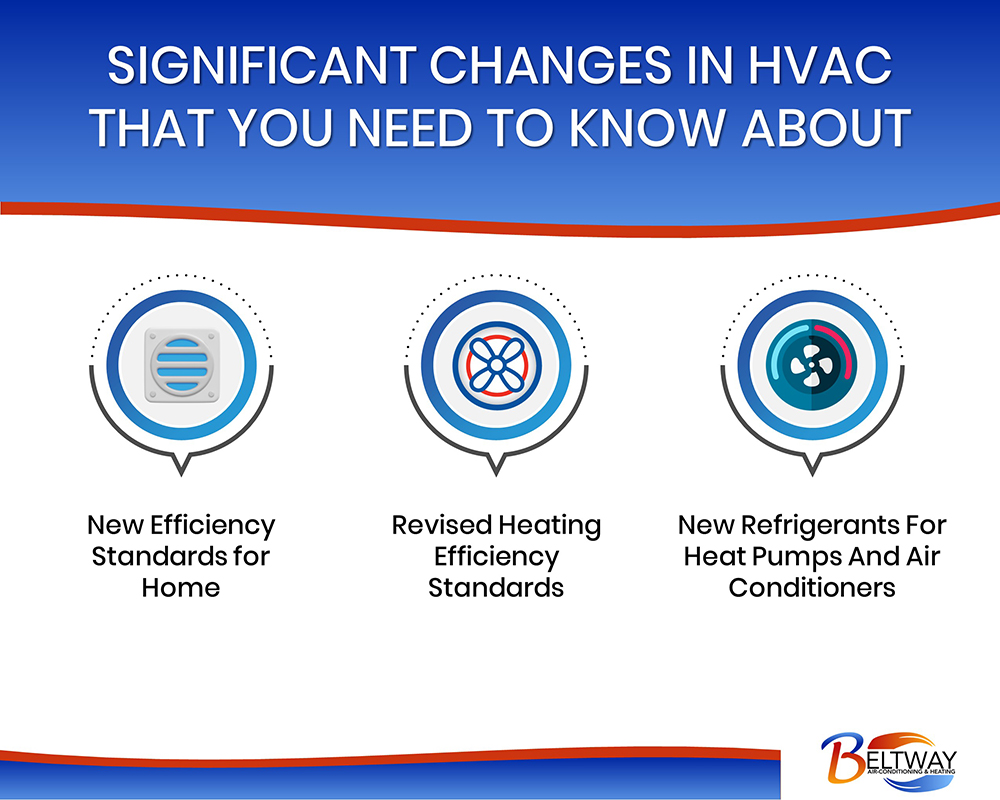
3 Significant Changes in HVAC That You Need to Know About

Energy efficiency remains a high priority in the heating, ventilation, and air conditioning (HVAC) industry to slow climate change and protect the environment. The US Department of Energy (DOE) oversees regulations that manufacturers must follow, and they have recently implemented three significant changes. Servicing Columbia, MD, and the surrounding areas, Beltway Air Conditioning and Heating offers expert advice to navigate these changes and decide if now is the best time for a new HVAC system.

Here are three changes introduced by DOE and how they may affect your decision to invest in a furnace replacement.

1. New Efficiency Standards for Residential Systems

Residential cooling and heat pump systems are labeled with seasonal energy efficiency ratio (SEER) ratings. The ratings indicate how efficiently a unit operates within a specific region. Manufacturers are required to clearly label HVAC equipment to help you choose the most energy-efficient unit for your budget. DOE increased the required SEER ratings for residential heat pumps, air conditioning systems, and ductless mini-split systems. The new rating system is referred to as SEER2. SEER2 ratings represent an 8% to 10% increase in efficiency regulations. Most HVAC systems do not meet the new requirements. Units that do meet the SEER2 requirements are likely to be more expensive for the average homeowner. Finding replacement parts may be difficult initially.
Changes in HVAC that need to know about


The good news is that you don’t need to replace your current system if it’s working properly. If you need a new HVAC system, you can expect to have lower energy costs each month.

2. Revised Heating Efficiency Standards

Because heat pumps are used for cooling and heating, the units are labeled with SEER and heating seasonal performance factor (HSPF) ratings. DOE has increased HSPF requirements for heat pumps. The minimum rating requirements for heat pumps are 14 for SEER and 8.8 for HSPF. Changes to these ratings may mean spending more upfront for your new heat pump, but DOE believes that the savings in monthly energy costs will help you recoup the cost over the lifetime of the unit. If you need to replace your heat pump, we can help you find a unit that meets the new DOE requirements and fits comfortably into your budget.

3. New Refrigerants for Heat Pumps and Air Conditioners

Heat pumps and air conditioners use refrigerants to cool the air during the summer. The first refrigerants were developed in the 1920s and contained chlorofluorocarbon, which has been linked to climate change. Known as R22, the refrigerant was phased out and replaced with R-410A refrigerant. Unfortunately, the hydrofluorocarbon in R-410A has been linked to climate change and environmental damage. New DOE regulations require that R-410A be replaced with R-454b, and many manufacturers have already begun this transition. As with the changes to SEER and HSPF ratings, manufacturing HVAC equipment to accommodate the new refrigerant may take some time. The refrigerant will not work with systems that are designed to use R-410A or R22 refrigerant. If you are looking for a new HVAC system for your home, now is the best time to make the purchase. You benefit from the advantages of the new SEER 2 and HSPF ratings, and many systems on the market use R-410A.

How Much Will the New HVAC Regulations Affect Your Budget?

Because the changes in HVAC regulations are relatively new, it is hard to say how much more the average consumer will spend on new HVAC equipment. Some sources indicate that you could see a 30% increase compared to new units that don’t meet all the requirements. A reduction in energy use offsets the upfront cost. The US Energy Information Administration estimates that the new regulations will result in savings of $2 to $12 billion over the first 30 years. At Beltway Air Conditioning and Heating, we understand that staying within your budget is important, and we also want to ensure that you maximize your monthly energy savings. We help you find a good balance between the cost of your new system and the average monthly savings.

Going Beyond Ratings and Refrigerants

Although ratings and refrigerants are essential factors when you are choosing a new HVAC system, there are other considerations. You may be tempted to purchase the system that fits well within your budget. The downside is that your new system may be too small for your home. In this situation, the HVAC system works harder, and you may need frequent, expensive repairs, or the system may not last for its expected lifetime. It is best to purchase a unit that is sized for your home with SEER and HSFP ratings that will maximize your savings each month. We also recommend other updates to your heating and cooling equipment, such as air purifiers, zone systems, whole-home humidifiers, and programmable thermostats.

Navigating the New HVAC Regulations – Don’t Do It Alone

Choosing an HVAC system for your home is overwhelming, and the process is even more complex with the new DOE requirements. At Beltway Air Conditioning and Heating, we recommend that homeowners focus on maintaining their equipment if it is in good working order and less than 15 years old. We provide routine maintenance HVAC services and repair services. As manufacturers normalize their production operations for the updated DOE requirements, the cost of new systems may decrease. Additionally, the inventory of replacement parts will increase and reduce the cost of repairs. If your system needs to be replaced sooner rather than later, schedule an appointment with one of our expert technicians. We perform in-house evaluations to help you find a heating and cooling system that fits your needs and budget. Expect the new unit to have a larger footprint than your current unit.

Are There Other Changes to HVAC Regulations?

The recent updates to SEER, HSPF, and refrigerants are the only changes being introduced this year. There are changes planned for the next two years. Next year, a 40% phase-down is expected for hydrofluorocarbon refrigerants, such as R-410A. As these products are phased out, supply will become limited, and you may pay more for repair issues that involve the refrigerant. In 2024 and 2025, A2L refrigerants, such as R-454B and R-32, are expected to become the standard for heat pumps and air conditioning systems. A2L refrigerants need to be handled with special precautions, and you may need to add some auxiliary equipment to your HVAC system, such as larger recovery hoses, gauges to monitor the refrigerant, and components to effectively recover refrigerant.

Rely on the Beltway Air Conditioning and Heating Technicians

Updates to DOE HVAC requirements help protect the environment and maximize efficiency, yet these changes may overwhelm you. The heating and cooling experts at Beltway Air Conditioning and Heating in Columbia, Hanover, Severn, and Arbutus, MD are always here to help. We offer both heating repair and furnace maintenance services for your current HVAC system as well as indoor air quality solutions, custom ductwork, and duct cleaning. When you are ready to replace your heating and cooling system, we help you find the best equipment, and our expert technicians perform the installation. Call us today to learn more.

Indoor Air Quality in Arbutus, MD

13 Benefits of Investing in an Air Purifier

According to the Environmental Protection Agency, indoor air can be two to five times as contaminated as the air outside. This is a big concern because Americans spend 90% of their time indoors. If you are concerned about the quality of the air in your house, air purifiers are an excellent solution. Here are 13 reasons you need to invest in one for your home.

1. Prevent Asthma Attacks

People living with asthma have irritated bronchial passages. When dust mites, pollen, or pet dander irritate their airways, it makes it harder for them to breathe.

Numerous cat and dog breeds shed year-round. These animals spread a great deal of fur and dander into the air when they scratch themselves. Even if you don’t have pets, other asthma triggers, such as dust mites and pollen, exist.

Pollen particles are carried in by the breeze via open windows or attach to your clothing when you go outside. Dust mites, which thrive in humid environments, are the most widespread indoor allergens. The lack of fresh air raises interior humidity levels, creating an ideal breeding habitat for dust mites.

Invest in an air purifier with HEPA filters that will trap all of these contaminants and provide you with clean air to breathe. HEPA filters are made up of multi-layered meshes with tiny, hair-thin fiberglass threads. These meshes catch pet dander, dust mites, and pollen floating about in your indoor atmosphere, allowing you to breathe clean air.

2. Improve Sleep

In addition to aggravating asthma, allergens can cause various issues in those without asthma. Common allergy symptoms include frequent sneezing, coughing, nasal congestion, sore throat, and watery eyes, which can interrupt your sleep.

Inadequate sleep promotes daytime drowsiness, which reduces productivity the next day. To prevent these sleep interruptions, utilize HEPA air purifiers to filter out the majority of allergens in your room. You’ll sleep better at night when the air is cleaner.

3. Have a Cleaner Home

You could find yourself dusting more often than you’d like if the quality of the air within your home is poor. In that situation, you’ll need to get an air purifier. With consistent use of an air purifier, the amount of airborne dust will reduce, meaning less dust will accumulate on your counters and furniture. You’ll be able to put the duster away and unwind in your house while breathing in the fresher air.

4. Reduce the Likelihood of Airborne Illnesses

Airborne infections like the flu and common cold are spread by microscopic bacteria that float around your indoor atmosphere. When one household member has the flu, it is not unusual for the rest of the family to become ill as well. This occurs because everybody is inhaling the same air, which is contaminated with germs and viruses.

Air purifiers, particularly those with HEPA filters, can capture particulates containing these germs and viruses. When you eliminate the source of airborne infections, you protect yourself and your household from them. Air purifiers are essential if you live with the elderly, children, or anybody with a compromised immune system.

5. Remove Unpleasant Smells

Some chemicals, like formaldehyde, benzene, and gasoline, degrade at room temperature and emit an odor. Volatile organic compounds (VOCs), as they are often known, are found commonly in aerosol sprays, paints, upholstered furniture, and air fresheners. VOC odors can produce nausea, shortness of breath, and even impair cognitive function.

Other studies have found that low VOC levels in the atmosphere boost productivity and performance. Activated carbon and HEPA filters in air purifiers are good at trapping gases and particles, reducing pollution in your indoor environment.

If you have company around, you won’t have to worry about them being bothered by smoke or the smell of cooking spices and oil. Air purifiers can help eliminate all odors, leaving your space fresh and clean.

6. Reduce Pollutants Emitted by Fireplaces

If you’re using a fireplace or wood stove, you are inhaling wood smoke contaminants. This might aggravate pre-existing conditions such as asthma or allergies, as well as create a generally uncomfortable environment. An air purifier can help you continue to use your wood stove or fireplace as you like.

7. Control the Effects of Craft Supplies on Air Quality

You have to cope with various substances getting into the air if you or somebody in your home is an artist or crafter. The supplies you use, such as resins, glues, and paints, produce fumes throughout your house. Despite appearing harmless, those airborne compounds have an effect on the quality of your air. Any problems your art supplies can generate can be removed by investing in an air purifier to use in your workshop or throughout your house.

8. Maintain Clean Air During Home Improvement Projects

Home renovations generate dust and introduce other contaminants. Fibers from new carpets, varnishes, stains, paint, commercial adhesives, and other building products have an influence on your indoor air quality. To maintain cleaner air and benefit from healthier air, use an air purifier before, during, and after remodeling.

9. Control Pollution Caused by Attached Garages

You may keep a variety of hazardous materials in your garage. When you start your automobile inside or use such hazardous chemicals, the pollutants can enter your house if you have a connected garage. Air purifiers may remove these hazardous pollutants from your indoor air.

10. Reduce Wildfire Smoke in the Air

If you live in a wildfire-prone location, an air purifier can assist in preserving the air quality in your house. Wildfires, whether small or large, controlled or uncontrolled, can send smoke into your home. Breathing in the smoke might be hazardous to your lungs and heart. A purification system with a HEPA filter will help decrease the indoor pollutants that a wildfire can bring in.

11. Filter Out Industrial and Vehicle Pollution

You’ll need an air purification system if you live close to a busy road or an industrial region. EPA studies have shown that breathing in contaminants from motor vehicles can lead to heart and lung issues. Automobile and industrial pollutants can also aggravate asthma.

12. Control Mold in Rooms

Mold can grow as a result of moisture damage or floods. While you’ll need to handle the issue by making repairs and thoroughly removing the mold, a purification system can still assist in reducing the spread of mold spores. Mold spores go into the atmosphere, which is bad for your health and your house. Use an air purifier in damp areas, such as bathrooms or basements, to help you reduce mold.

13. Remove Dangerous Radon

Radon gas is produced by the breakdown of naturally existing radioactive elements like uranium present in rocks, soil, and water. The odorless and colorless gas can enter your home through cracks in the foundation, walls, and flooring of your home. Radon gas causes cancer by damaging the lungs’ cell linings. Use air purifiers to lessen the danger of radon contamination. Activated carbon and HEPA filters capture radon gas and particles, shielding you from its negative effects.

Get Air Cleaning Solutions From the Pros

Are you looking for ways to clean the air in your home? Beltway Air Conditioning and Heating can assist you if you reside in Hanover, MD. We provide a full range of air quality services and solutions, including air purifiers, whole-home humidifiers, and duct cleaning. Our team also provides installation, maintenance, and repairs for residential and commercial HVAC systems. We have the region’s top technicians and strive to offer stellar customer service at all times. Contact Beltway Air Conditioning and Heating today to learn more about the benefits of air purification.

Furnace Maintenance in Arbutus, MD

6 Reasons to Never Use Your Furnace Without a Filter

There’s a lot that goes into maintaining your Hanover, Maryland home. So much so, in fact, that it’s easy to overlook the seemingly minor tasks. Although changing out a furnace filter takes just minutes, it’s a job that some homeowners regularly neglect. Furnaces should never be used without clean, functional filters. The following are six reasons why.

1. Your Furnace Filter Isn’t for Protecting Your Indoor Air Quality

Regularly changing out HVAC air filters is often the first recommendation you may hear for improving indoor air quality (IAQ). Although this is certainly an effective way to limit the amount of airborne allergens floating throughout your home, it’s often misleading. HVAC air filters aren’t actually meant to improve the quality of your indoor air. Instead, these components are primarily designed to protect your HVAC equipment.

A clean furnace filter will prevent large-sized debris from entering your actual heating system. A filter will catch things like pet hair, lint, dirt, dander, and more. Without it, all of these particulates could find their way onto and even into your furnace’s most sensitive interior components. Massive build-ups of debris will pose a serious fire hazard. They’ll also have a significant impact on how your home smells when your furnace is in operation. For instance, if you turn your heater on and your living environment is filled with a burning, dusty aroma, you likely have a dirty or missing furnace filter.

2. You Could Lose Essential Protections

Sadly, some homeowners wind up spending hundreds and even thousands of dollars to repair furnace problems that are both preventable and filter-related. Dirty HVAC air filters are consistently ranked among the most common causes of a furnace malfunction. This is why home insurance companies, furnace manufacturers, and home warranty companies have clearly outlined requirements in their policy documents, contracts, and agreements concerning filter maintenance.

If you purchased a home warranty covering your furnace, this agreement likely requires you to change its filter once every one to three months. The same is true if your furnace has an existing manufacturer warranty. Whenever companies cover heating systems, they want to know that homeowners are doing all they can to prevent and mitigate potential problems. In addition to requiring regular filter changes, these entities will definitely require you to keep a filter in. If you use your furnace without a filter, the HVAC company that handles your covered repairs will know it. HVAC technicians will invariably find dirt and other debris covering the unit’s components. Thus, to avoid losing essential protections, always keep a clean filter in your heating system.

3. Airflow Problems Will Arise

Coatings of dust and other build-ups will eventually cause your furnace to overheat. If your home is dusty or your heating system is already ill-maintained, this might not take long. However, there’s another problem that can arise from having unfiltered air enter your HVAC system. This is the gradual decrease in airflow. As air movement becomes increasingly restricted by accumulations of debris on air registers, air grilles, or even on various surfaces throughout your HVAC air ducts, you’ll notice less warm air making it into the rooms of your house.

Restricted air movement places extraordinary stress on furnaces by forcing them to work both harder and longer. The end result is that your furnace will overheat, and it may shut down.

4. Your HVAC Air Ducts Will Be Inundated By Dirt and Other Debris

Air ducts are naturally dirty environments. After all, there are a lot of contaminants that regularly bypass standard HVAC air filters. HVAC air ducts are also known for harboring high levels of humidity. Together, these two things are a recipe for disaster. Taking the filter out of your furnace and then continuing to run it will only make the situation worse. Larger particulates will lead to larger build-ups and a greater likelihood of mold and mildew development. Although HVAC air ducts only require professional cleaning about once every three to five years, if you’ve ever run your furnace without a filter in, you should schedule duct cleaning right away.

5. Your Indoor Air Quality Will Plummet

Although furnace filters are largely intended to protect furnaces, they do offer a fair amount of protection for household members as well. When your furnace is on and lacks a filter, the concentrations of airborne dust particulates, pet hair, dander, and other allergens will rapidly increase. This can lead to:

  • Coughing
  • Sneezing
  • Wheezing
  • Itchy, watery eyes
  • Irritated nasal passages
  • Skin irritation
  • Headaches
  • Fatigue

Running a furnace without a filter can be particularly harmful to any building residents with chronic respiratory ailments. For added protection, ask us about our indoor air quality solutions.

6. Your Furnace Could Fail

The costs of resolving filter-related furnace problems are often far greater than simply swapping a dirty filter out or making sure that one is in. The most devastating consequence of using your home heating equipment without this essential component is replacing your furnace entirely. Although this is unlikely to be the case after just several minutes of filter-free operation, for some furnaces, even short-term use could prove to be the last straw.

Standard furnace filters aren’t expensive. Moreover, if you’ve been using a higher-rated and more costly filter type, you can always revert back to a more affordable option in a pinch. With some households requiring filter changes every thirty days, keeping a few extra in stock is always a good idea.

Why People Sometimes Operate Their Furnaces Without Filters

Although many homeowners have run furnaces with dirty filters at some point in their lives, you may find it difficult to believe that there are also people who’ve turned their furnaces on with absolutely no filters at all. Surprisingly, this isn’t an uncommon mistake, and it’s actually very easy to do.

If you’ve ever started to change your furnace filter and been distracted by an unexpected guest or phone call, there’s a possibility that you left the job unfinished. Sometimes people put new furnace filters in but fail to put them in correctly. There are also homeowners who’ve installed filters in the wrong place or purchased filters that were the wrong size. Using a filter with any of these issues is akin to using a furnace without a filter.

If you recently purchased a home, take a minute to make sure that your furnace has a filter. The former owner may have taken this component out and forgotten to replace it. With a new home, it’s always best to give your heating system a quick inspection before attempting to use it. Small oversights like this can have expensive consequences if they aren’t caught and corrected early on.

What to Do If You’ve Been Using Your Furnace Without a Filter

Whether you’ve been intentionally running your furnace without a filter or have just discovered that your furnace filter is missing, hope is not lost. We can remove build-ups of dirt and grime on your furnace’s interior components. We can also clean your HVAC air ducts and share some of the latest and most effective indoor air quality solutions.

Contact the Professionals

At Beltway Air Conditioning and Heating, located in Hanover, MD we offer heating and cooling system replacement, maintenance, and repair services. We also provide air duct cleaning, custom ductwork, and indoor air quality services. If you’ve been running your furnace without a filter or have questions about what type of filter to purchase, we can help. Call Beltway Air Conditioning and Heating today to schedule an appointment.

Beltway HVAC Technician in Hanover, MD.

Some Helpful Tips on Finding the Best HVAC Contractor

At Beltway Air Conditioning and Heating, in Ellicott City, MD, we understand that you need to find the best contractors for your needs to perform much-needed HVAC work on and around your home. That’s why we have compiled a list of qualities of top HVAC contractors that we ourselves strive to be every day in our work.

First, we will dive into why you might want to hire a top contractor rather than attempt HVAC work yourself. Then, we’ll look at those tips for your research in finding a contractor to perform work for you.

Why Would I Want a Top HVAC Contractor to Perform Work?

You may be wondering why you need a top contractor to perform work on your home. That’s a fair question, as you probably want to save money getting HVAC work done. However, the work that you start out to do could be botched if a professional isn’t handling it.

First, you will need to spend lots of time doing exhaustive research to ensure that you understand the nature and type of work that needs to be done. After you perform the diagnostics yourself, you could be working off of a faulty premise. For example, if you misdiagnose a heater problem and attempt to fix the wrong components, you may actually just be adding to the list of HVAC issues you’re experiencing.

A common issue that homeowners run into when doing their own HVAC work is warranty coverage. When you buy a new HVAC appliance, it will come with its own factory warranty. Typically, it will last a number of years, and the sponsoring company will pay for certain types of repairs needed before the termination of the warranty. If you set out to do work on your own HVAC appliances, you may be putting yourself out of a warranty. Speaking of that, you could also be making unnecessary work for yourself; some of the work that will need to be done on your HVAC appliances will likely be covered by the warranties already on them. However, the money to perform the repairs and maintenance will only be payable to professionals to ensure that the work is done properly.

All of the risk of doing HVAC work yourself simply isn’t worth the worry. Go with your gut, and trust the professionals at Beltway Air Conditioning and Heating to do the work right the first time!

Tips on Finding Top HVAC Contractors in Your Area

Finding the top HVAC contractors in the beltway region doesn’t need to be a hassle! Looking for these characteristics in any company you end up hiring can help you weed out the best people for the job.

First, you should look for a company that’s local to you. HVAC professionals familiar with the beltway region will be able to accurately take into account various factors like the climate and other location-specific items that top contractors will take into account when they do the job.

Second, you should look for a company that is well-reviewed online. A bad Internet presence often means that there are limited resources spent on ensuring easy customer access. This is often a bad sign, as it may reflect that a contractor isn’t willing to work with people.

Third, you should always review the licensure of the HVAC contractors you’re hiring for any job. If a company isn’t licensed and insured, you run many risks. Hiring someone without these items could actually make you legally liable in court later on if there is an issue with the work being done. If a company isn’t willing to take the time and make the effort to get the appropriate licensure and insurance, then how would you be able to have faith in that company’s ability to do the work well and within budget?

Also, you need to make sure that the HVAC company you choose can do the work you need done. If you have a company that doesn’t advertise that they perform a service, they may not do it often or be able to do it. At Beltway Air Conditioning and Heating, we strive to provide quality service in a number of domains, but certain companies may not be able to do this as well. You should beware if there isn’t any online documentation of the HVAC work you got done. Documentation is key to proving the company worked on your unit.

The Ideal Process to Follow When Choosing an HVAC Company

We will now go over the steps to take when you’re looking at companies, all the way from initial inquiry to finishing up the work. The difference between choosing your Maryland experts in HVAC and a company that simply employs workers who act more as technicians than craftsmen can have an immense effect on your home’s well-being.

First, you should consult Maryland’s state license board to ensure that you’re looking at a contractor who has a license, like us. The company should be current and not have any pending licensure complaints. Once you’ve verified that you’re looking at a licensed company, you can move to the next step.

Second, you need to ensure that your chosen contractor offers home visits. In these visits, the contractor will need to do an evaluation to ensure that they can do the work safely. Picking a company that is known to be honest during these evaluations can prove critical to your home.

Third, you need to look up reviews of the company online. Make sure that they are as scrupulous as they claim. As was discussed earlier, a great online presence with plenty of articles and media about the company is the way to go in this respect. While you’re at it, feel free to ask the contractor for references and previous jobs done. Getting to see the great work of a quality company can help you to set expectations for the work you’re looking to have done in your own home.

Fourth, you’ll need to book an appointment with the company you’ve chosen. That means you can use an online form or call the company, whatever is easiest. Having a scheduled time that works for you is one of the reasons to schedule the appointment, but it will also ensure that the contractor is able to do the work at that date and time.

Fifth, you will need to be available at the time of the appointment. Being physically present is crucial since as the homeowner, you are best qualified to point out important factors you may know about your own home that can be crucial for the work being done.

Contact the Profesionals at Beltway Air Conditioning and Heating

By using us, you guarantee quality work done in a variety of domains in HVAC. We do plenty of work on heating and air conditioning units, but we also offer other services in our family umbrella of services. We can work on everything, from boilers to heaters to air conditioning units to keep everything in your home running smoothly. Don’t delay, and call us or use our online form to make your online appointment today!

Happy Couple Looking Over Finances in Hanover, MD

What’s the Cost of Having Heat Installed in Your Home?

Any Hanover, Maryland home without heat is hardly a home at all. If you’ve recently purchased a property that lacks a functional heating system, or if your existing heating system has just gone down, paying to have new equipment installed is your first priority. However, you may be worried about the cost. Following are several things to know as you prepare your budget.

The Cost of Heating Installation Can Vary Significantly

In general, homeowners should be prepared to pay several thousand dollars to have new heating equipment put in. However, the actual cost of these projects can vary greatly from home to home based on several factors such as:

  • The removal of existing equipment
  • The preferred heating system type
  • The addition of smart technologies and integrated accessories
  • System efficiency ratings

Building layouts, building sizes, and the structural integrity of existing air distributions systems matter as well. Thus, the only way to get an accurate estimate of how much your project will cost is by requesting a quote.

The Removal of Old Equipment and the Refinement of Storage Areas

If your home already has a furnace or boiler, you might think that this project is as simple as pulling the old unit out and putting a new one in. However, home heating needs have changed significantly over time. Home heating equipment has evolved as well. If you have an older property with an older furnace that’s housed in a relatively small-sized storage area, it may be necessary to make several structural modifications to accommodate a significantly larger heater. When assessing your home and calculating your needs for heating power, we’ll take note of how accessible your old heating equipment is, and of how much we’ll have to streamline the current furnace storage area to suit.

Your Home’s Air Distribution System

HVAC ductwork is a critical consideration when installing new central heating equipment. Older ductwork may not have the capacity to support the design and demands of a new heater. Moreover, if you haven’t replaced your home’s HVAC ductwork in a while, ragged, torn ducting will quickly render a brand-new heater inoperable.

In a best-case scenario, your new heater will work seamlessly with the well-maintained ductwork you already have. However, it is often necessary for homeowners to pay for ductwork modifications, repairs, or replacement, in addition to the costs of having new heaters installed.

Multi-Functional Heating Solutions

Having your old heater replaced is an opportunity to consider options in new and highly efficient heating equipment. Some people choose to upgrade their properties with radiant floor heating, others opt to have heat pumps installed instead. Heat pumps provide more energy than they use via their highly efficient heat transfer process. By some estimates, many of these units can transfer 300% more the energy than they consume. Comparatively, even high-efficiency boilers and furnaces are only capable of converting 98% of the energy they use into heat.

There’s also the fact that heat pumps are capable of both providing heat in the winter and cooling in the summer. They eliminate the need to have a separate air conditioner installed. Moreover, given that heat pumps have a single, outdoor condenser, they free up considerable amounts of space indoors. When cutting project costs isn’t your primary concern, you’ll have a lot of options in innovative heating to explore.

Economy vs. Efficiency

System efficiency ratings and cost go hand in hand. A high-efficiency boiler or furnace will cost less to use from year to year, but it will also cost more upfront and more to install. High-efficiency heaters additionally tend to be a bit larger than medium-efficiency heaters. If you have spatial concerns, paying less for a medium-efficiency heater can also mean paying less for building modifications during the install process.

Advanced HVAC Technologies

Home heating systems have come a very long way in recent years. Not only are they more efficient, but they’re also far more technologically advanced. This has made things a lot easier for consumers by introducing features that allow for remote system monitoring, energy use tracking, and smart home integration. Even smart and programmable thermostats are no longer exclusive to high to mid-range and luxury homes. If you’re looking to add value and marketability to your property, and if you want to keep your home on par with current market standards, it’s important to consider some of the latest options in efficiency and convenience-related HVAC technologies.

Having a new heater installed, especially if you’ll be having your HVAC ductwork replaced or modified at the same time, is also a great time to have integrated HVAC accessories put in. If you have major indoor air quality concerns due to building residents with chronic respiratory ailments, you might want to add:

  • An air purifier
  • An air scrubber
  • A media filter
  • A whole-house dehumidifier or humidifier

In some households, integrated humidification/dehumidification equipment is absolutely necessary for resident comfort, resident health, and the preservation of building materials. If you’re able, it’s a good idea to build your heater installation budget with room for integrated accessories that may prove essential.

Requesting a Quote

Requesting a quote for your heating system is about far more than calling in and asking for a general cost estimate. In-person assessment of your property is vital for ensuring correct heater sizing. This is how HVAC companies avoid installing heaters that are too large or too small for the intended service area. These visits are a great opportunity to talk about your goals and about any cost-related concerns that you might have.

Preparing for This Expense

The best way to stave off the need for heater replacement is by taking good care of the heating you equipment you currently own. Your furnace, boiler, or heat pump should be professionally serviced at least once each year. Your HVAC ductwork should be professionally inspected and cleaned at least once every three to five years. When ductwork rips or tears are identified or when your heating equipment stops performing reliably, having timely repairs performed can extend the lifespan of your heater as well. When repairing damaged equipment is a feasible, short-term solution, it may be possible to put an untimely heater replacement off. However, old and failing heating equipment often proves more troublesome to retain than it is to replace.

If your heating system has already failed and you aren’t quite ready to replace it, exploring your options in financing is far preferable to relying on inefficient space heaters. When you work with us, we can help you find a feasible, affordable plan for restoring heat to your Maryland home. We offer multiple heating system types, and we have high-performing options at different price points. We also have a Family Plan that’s designed to help our clients cut their HVAC-related spending, and affordably access the services and equipment they need.

At Beltway Air Conditioning and Heating, we offer an expansive range of home comfort services and solutions. Residents of Hanover, MD and the surrounding area can turn to us for furnaces, heat pumps, air purifiers, and more. We also provide cooling, indoor air quality, and duct cleaning service. If you need help finding the right heating system for your home, give us a call today.

Furnace in Hanover, MD

6 Possible Reasons Why Your Furnace Isn’t Heating

When temperatures plummet in Hanover, MD, your furnace becomes one of the most critical appliances in your home or business. Even if you have the right clothes to keep your body warm while indoors, you’ll still need a properly functioning furnace to heat your space. When an ideal temperature is maintained in your home, there will be a reduced risk of illnesses, and you and your family will enjoy better sleep, among other benefits. You’ll also have high productivity rates in your workplace since employees enjoy working in a comfortable environment.

Unfortunately, you may turn on your heating system only to realize it doesn’t warm your indoor space as expected. This is a frustrating experience, especially when you hear the furnace clicking on but the system doesn’t blow that toasty hot air into your building. In this article, we’ll go through some of the common reasons that may cause your furnace to stop heating.

1. Thermostat Issues

The wrong thermostat setting is one of the simple reasons your furnace might not emit heat. Since the thermostat is the control center of your heating unit, an incorrect setting means your system won’t work as expected. Make sure you set the thermostat at the ‘Heat’ or ‘Auto’ position and about five degrees above the temperature in your house. Also, try switching the fan to the ‘On’ position for the furnace to blow hot air continuously. If the furnace still doesn’t work, you will have to rely on the expertise of our team at Beltway Air Conditioning and Heating to check for other issues.

Sometimes, the problem could be the thermostat batteries. Once the batteries die, the thermostat will no longer control your heating system. Replacing the batteries at least once per year is an excellent way of avoiding this problem. In other cases, a thermostat may malfunction, making it impossible to control how the furnace works or how much heat it generates. We can help you replace it with a modern and more reliable device that will give you hassle-free service for years to come.

2. Clogged Air Filter

If your furnace fires up but doesn’t heat your building, it could be due to clogged air filters. The filters in your heating system trap dirt, dust, and other debris like pet dander and hair. Although this is great for your indoors, these particles block or restrict vital airflow through your heating unit over time. Blocked airflow can lead to overheating in the system’s heat exchanger, and your equipment won’t work as it should.

The most efficient way of solving this problem is by changing the dirty air filters. We recommend replacing your furnace filters every one to three months to keep your home clean, warm, and safe during cold days. Also, ensure your air registers and vents remain unobstructed. They shouldn’t be blocked.

3. Faulty Ignition Sensor

A faulty pilot light or ignition sensor is another common culprit and could be the reason why your gas furnace might fail to produce heat. When you have a faulty ignition sensor, you will hear your heating system initiating the start cycle or clicking on, but it fails to fire up. Clogs or dirt in your furnace can result in your ignition sensor going out.

While diagnosing this issue, our professionals will turn off the gas furnace and locate the ignition sensor near the burners. We will first clean the ignitor if it’s dirty, fix it precisely as it was before, then turn up the heating unit. Alternatively, if we notice your system has a cracked, warped, chipped, frayed, or damaged ignitor, our team will replace it. Note that to avoid damaging the furnace and your property you shouldn’t try fixing the pilot light yourself.

4. Dead Blower Capacitor

The blower capacitor in your heating system usually looks like a big battery. Once the thermostat instructs the furnace to turn on, the capacitor starts the heating system. If your system has a broken capacitor, it can’t start the furnace. Also, due to the capacitor’s tolerance levels, running the blower at excessively low RPM can easily lead to a malfunction.

After assessing your system, our trained technicians can easily tell if the capacitor in your furnace is the cause of the problem. The best solution for this issue is to replace the faulty blower capacitor. After the replacement, we’ll also take time to test your unit to ensure it’s heating your building effectively.

5. Gas Line Issues

Your heating unit might also fail to heat your home or business due to gas line issues such as malfunctioning gas valves, gas leaks, or blocked gas lines. A closed gas line means your unit doesn’t receive fuel and, consequently, doesn’t heat your house. You can check whether the gas line is turned on at the shut-off valve outside your house. Another way to tell whether you have gas supply issues is by starting different gas-burning appliances in your home, such as a stove.

If the gas line is not the issue, you’ll have to seek assistance from our team to assess your heating system. Plus, if you believe there is a leak or a smell of gas around your furnace, call our technicians to evaluate it immediately. A gas leak poses a significant danger to you, your family, and your property, so ensure you notify our team and the utility company as soon as possible.

6. Unprofessional or Poor Maintenance

Heating systems can last for several years. However, they can’t perform at their peak level without proper maintenance from a professional. Maintenance processes such as cleaning your furnace can go a long way toward keeping your system in tip-top shape. For instance, your unit can stop working if the filters and other critical components are dirty. Additionally, dirty blowers can lead to unexpected system failure. Sometimes the burners may have accumulated a lot of dirt after an extended period, so they won’t work as they should.

By scheduling regular maintenance, you can avoid having a furnace that isn’t heating your home or one that breaks down during winter. Our technicians will clean your unit and check every part of your system to ensure it’s in good condition. This way, you won’t have to worry about staying in the cold when temperatures drop significantly.

Your Furnace Repair Service Team

You can experience various problems with your furnace, but having a unit that won’t heat your house is decidedly the worst. Staying indoors without heat during the winter months can result in lots of discomfort for your family and other occupants in the building. Fortunately, you can always call our seasoned technicians to diagnose and fix your furnace.

At Beltway Air Conditioning and Heating, we offer speedy and dependable services to both residential and commercial property owners in Hanover and Arbutus. We’re a locally operated company committed to providing 100% satisfaction on every task. No matter how complex the issue may seem with your equipment, we’ll find the right solution. We train our technicians on all the new industry trends and provide all the necessary tools for their assignments so you can trust us to deliver quality services. Our team offers both heating and cooling equipment installation, repair, and maintenance as well as indoor air quality services and duct cleaning. Contact us at Beltway Air Conditioning and Heating today to book an appointment.

Book Online

"*" indicates required fields

This field is for validation purposes and should be left unchanged.